TMC, AAP seek sacking of Assam Guv for campaigning in Rajasthan polls
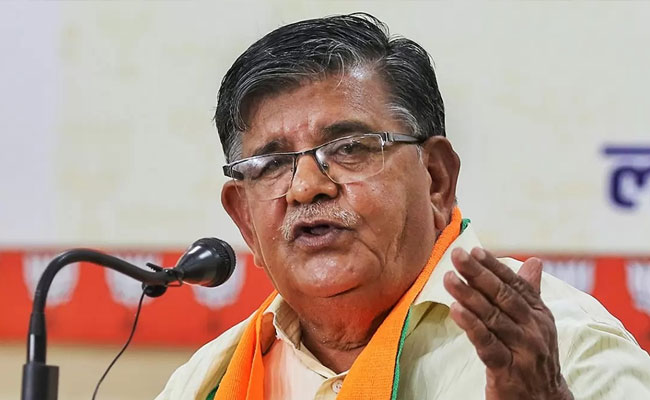
Guwahati (PTI): The Assam units of the Trinamool Congress (TMC) and the Aam Aadmi Party (AAP) have demanded that state Governor Gulab Chand Kataria be sacked for allegedly campaigning for a BJP candidate contesting in the Rajasthan assembly elections.
No immediate comments could be obtained from either Kataria or Assam Governor's Office on the issue.
Issuing separate statements, the two parties have sought the intervention of the President and the Election Commission of India for taking action against the governor, who relinquished all political posts before joining the constitutional post.
"Assam Governor Gulab Chand Kataria is busy campaigning for the BJP in Udaipur, Rajasthan. This is a challenge to democracy, the Election Commission of India should take action against him," Assam TMC President Ripun Bora said in a post on X.
He also said it is "extremely shameful" that despite being the custodian of the Constitution, Kataria is campaigning for the BJP.
"He should be immediately sacked from his post," Bora said.
Sharing a statement of Assam TMC, he further alleged that Kataria campaigned for BJP candidate Tarachan Jain in Udaipur and it is a violation of the election norms as he holds a constitutional post.
"A few days ago, Assam Assembly's Deputy Speaker Numal Momin campaigned in Mizoram for the BJP and now it's Kataria. This is a serious violation of constitutional norms. As head of the state, the governor should not support any political party," the Assam TMC said in the statement.
These two examples show that the BJP is misusing its power to run an autocratic and undemocratic government, it added.
"We demand immediate intervention of the President and the Election Commission of India for sacking Governor Gulab Chand Kataria," the statement added.
AAP Assam coordinator Bhaben Choudhury said a governor should uphold the Constitution irrespective of caste, creed and religion by keeping himself above politics.
"However, Kataria has indulged in anti-constitutional activities by campaigning for a political party in an election. It has demeaned the post of a governor. It has blackened Indian politics," he added.
Demanding his immediate resignation, Choudhury said the party will write to the ECI for taking action against Kataria.
Let the Truth be known. If you read VB and like VB, please be a VB Supporter and Help us deliver the Truth to one and all.
Karnataka: College student dies by suicide in Dharwad, 3 policemen suspended

Dharwad (Karnataka) (PTI): A college student allegedly died by suicide here, following which three policemen were suspended over allegations of harassment linked to his death by the victim's family.
Aditya Myageri, a BSc student at a private college here, was among 18 students detained by the Vidyagiri police on April 25 during an anti-drug drive, police said on Wednesday.
He hailed from Belur village in Bagalkot district, but was staying with his friends at a rented accommodation in Girinagar area of Dharwad city, police said.
Among the 18 students tested, Aditya was among the 10 who had tested negative for ganja consumption and was subsequently released.
Some of his roommates, however, tested positive.
According to police, Aditya's family alleged that despite testing negative, he was harassed by police. They also claimed some policemen demanded Rs 2,000 to settle the matter and threatened legal action if he failed to pay.
He had called his mother asking for money, but she could not arrange it immediately, the family claimed.
On Monday night, Aditya allegedly died by suicide by hanging from a ceiling fan at his rented accommodation, with his family alleging police harassment and pressure over demand for money drove him to the extreme step, a senior police officer said.
Police Commissioner N Shashi Kumar told PTI that an unnatural death case has been registered at Vidyagiri police station. Three policemen have been suspended over the allegations, and further investigation is underway.