TN assembly polls: Battle lines drawn, AIADMK switches to campaign mode
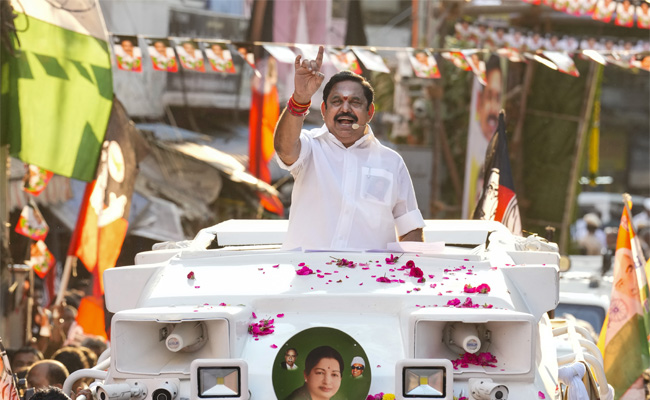
Chennai (PTI): With a month to go for Tamil Nadu Assembly polls, the battle lines are clearly drawn and the AIADMK camp is making apparent efforts to get a headstart ahead of the ruling DMK bloc by quickly finalising the seat-sharing deal, identifying constituencies for itself and allies and switching on to the campaign mode.
The Edappadi K Palaniswami-led AIADMK, which leads the NDA in Tamil Nadu will take on the DMK in certain urban centres considered to be the ruling party's stronghold.
The assembly polls will be held on April 23 and counting of votes taken up on May 4.
Determined to win over 210 out of the 234 Assembly constituencies in the state, the AIADMK has announced that it would contest from 169 seats, leaving the rest to allies, while the DMK has readied its poll battle machinery in as many as 175 constituencies. For its part, the Stalin-led party has set a target to secure over 200 seats.
DMK has announced that 'Rising Sun' will be in fray from 175 Assembly segments, indicating it would include smaller allies that would face the polls under the ruling party's poll symbol.
The AIADMK would take on the DMK in about 13 out of the 16 constituencies in Chennai, which has been electing Chief Minister M K Stalin, his son and deputy CM Udhayanidhi, Health Minister Ma Subramanian and Hindu Religious and Charitable Endowments Minister P K Sekar Babu, to name the very prominent persons in the DMK.
The AIADMK has allotted three seats to its allies while retaining 13 in the city. It has also announced its first list of candidates, with Palaniswami testing his electoral fortunes once again from Edappadi in Salem district, while a number of former ministers and sitting and ex-MLAs are also in fray.
While Seeman-led Naam Tamilar Katchi is in the fray in all the constituencies, actor-politician Vijay is gearing up to announce his TVK party candidates for 234 seats in the high-stakes poll battle.
Vijay, a top cinema star with a huge fan following, is likely to hit the campaign trail this week. Only these two leaders with a film background would take on the Dravidian majors that are backed with numerous political parties, respectively, in the election.
The AIADMK-led NDA has the BJP, which will contest from 27 seats. PMK will fight from 18 seats, AMMK from 11, TMC (M) from five (on BJP's Lotus symbol). Besides, Indhiya Jananayaga Katchi will filed candidates from two seats, while Tamizhaga Makkal Munnetra Kazhagam and Puratchi Bharatham, have been allotted one seat each. In all, AIADMK has apportioned 65 seats to its allies.
The Dravidian party has retained a lion's share of seats, accounting for 169.
Palaniswami finalised the seat-sharing pact with seven political parties in two days, starting from March 23. On March 25, he announced the constituencies from where the constituents would contest and launched the campaign for the NDA from Mylapore in Chennai, where the BJP is contesting.
In the DMK-led Secular Progressive Alliance, the Congress will enter the poll fray from 28 seats, DMDK: 10, VCK: 8, left parties: 5 each, and MDMK: 4, one seat each to SDPI, Mukkulathor Puli Padai Katchi (both parties contesting in Rising Sun symbol) and Manithaneya Jananayaga Katchi. The party has allotted 2 seats each to IUML, Kongunadu Makkal Desiya Katchi (KMDK) and the Manithaneya Makkal Katchi (MMK).
KMDK and MMK are set to contest polls under the DMK's symbol. The MDMK will contest in the 'Rising Sun' symbol in 3 out of the 4 seats it has been given by the DMK.
The campaign is likely to intensify from next week, when the filing of nomination papers will formally commence from March 30.
Let the Truth be known. If you read VB and like VB, please be a VB Supporter and Help us deliver the Truth to one and all.
Siddaramaiah stresses need to establish Supreme Court bench in South India
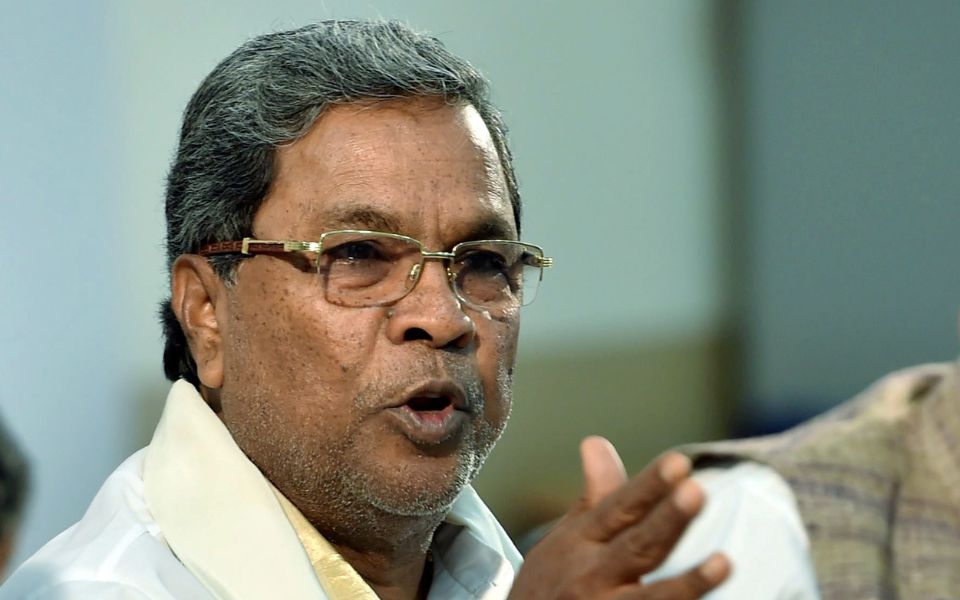
Bengaluru (PTI): Karnataka Chief Minister Siddaramaiah on Saturday stressed the need to improve accessibility to the highest court of the land, asserting that establishing a Supreme Court bench in South India would go a long way in ensuring justice.
Speaking at the 22nd Biennial State Level Conference of Judicial Officers with a theme 'Reimagining the Judiciary in the era of Artificial Intelligence', he said, the authority of a judge must never be overshadowed by the authority of an algorithm.
"Even as we explore these new frontiers, we must remain mindful of the enduring challenges facing our judiciary," the chief minister said.
"Pendency of cases continues to be a serious concern that affects the timely delivery of justice. While technology can provide tools to address this, it must be complemented by systemic reforms through strengthening infrastructure, increasing judicial capacity, and modernising court processes," Siddaramaiah said.
"There is also a strong and compelling need to improve accessibility to the highest court of the land. The establishment of a Supreme Court bench in South India would go a long way in ensuring justice," he said.
Chief Justice of India, Surya Kant, Supreme Court Judges B V Nagarathna and Aravind Kumar and Chief Justice of High Court of Karnataka Vibhu Bakhru were among those present.
The CM said, "We stand today at a defining juncture where law and technology are no longer separate domains, but interconnected forces shaping governance, rights, and the very nature of justice itself."
"Artificial Intelligence is emerging as a transformative force that challenges how we interpret evidence, how we understand facts, and how decisions are arrived at. It offers immense promise, aiding faster legal research, improved case management, and the possibility of reducing pendency through intelligent systems," he said.
"Yet, it also raises profound concerns. Algorithmic bias can undermine the guarantee of equality before law. Opaque systems may weaken the doctrine of reasoned decisions, which lies at the heart of our judicial process," he added.
Siddaramaiah said, Judicial independence, which is the cornerstone of our democracy, must be preserved not only from external pressures but also from subtle technological dependence.
"The authority of a judge must never be overshadowed by the authority of an algorithm," he said.
Pointing out that the emergence of AI-generated evidence presents new challenges for our legal system, the CM said, Deepfakes, synthetic data, and machine-generated content compel us to revisit established doctrines relating to admissibility, burden of proof, and authenticity.
"The courts will increasingly be called upon to determine what constitutes reliable evidence in a digital age. In doing so, we must ensure that truth remains grounded in verifiability and integrity, not merely in technological sophistication," he said.
Hoping that the judiciary will play a defining role in shaping the regulatory framework for artificial intelligence in India, he further said, "through well-established constitutional doctrines such as due process, proportionality, and the right to privacy, our courts will determine the contours within which AI must operate."
"The judiciary, therefore, is not only a user of technology but also the ethical compass that will guide its deployment in society," he added.
Noting that technology also offers meaningful opportunities to strengthen judicial processes, Siddaramaiah said, AI-assisted legal research may democratise access to precedents and reduce disparities in legal knowledge.
Siddaramaiah also said that blockchain technology holds promise in ensuring secure, tamper-proof judicial records. Stating that the intelligent case management systems can streamline court functioning and reduce delays, he said, "However, these innovations must be adopted with care, ensuring that efficiency does not come at the cost of fairness."
"In this transformation, the capacity of our judicial institutions becomes critical. Judges of the future must be equipped not only with legal acumen but also with a clear understanding of technological systems," he added.
Stating that the question is how artificial intelligence intersects with the fundamental principles of equality and social justice, the CM said, if not carefully designed and regulated, AI systems can replicate and even amplify existing social inequalities.
No algorithm can replace the human capacity for empathy, the wisdom that comes from lived experience, or the moral reasoning that defines judicial decision-making, he said, "Technology can assist, but it cannot replace the human conscience that lies at the heart of justice."
Siddaramaiah said, the Government of Karnataka remains committed to building robust judicial infrastructure, facilitating digital transformation, and creating an ecosystem where innovation and justice can progress together.