TN CM MK Stalin extends full support to Kerala on preserving fiscal federalism
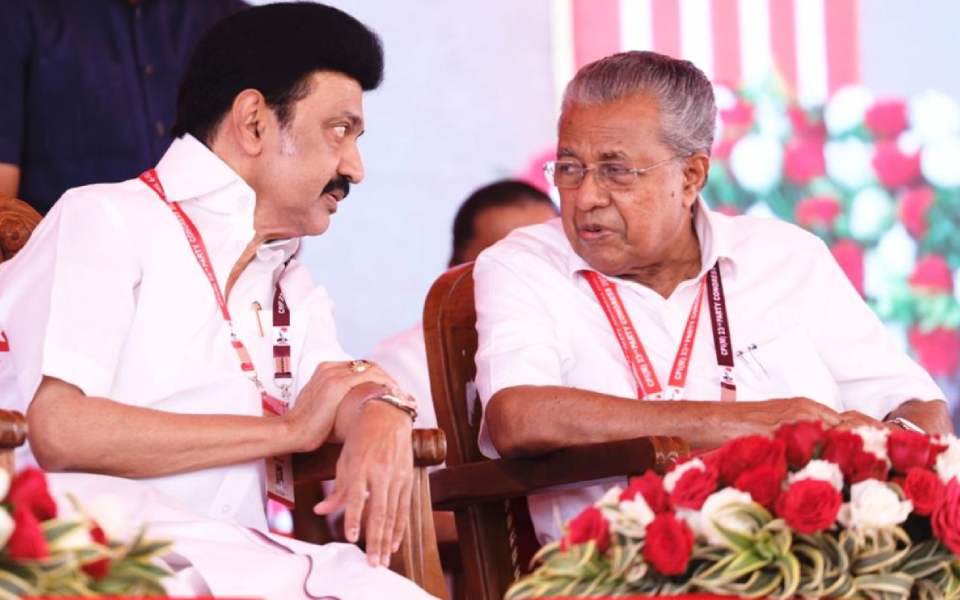
Chennai, Feb 6: Tamil Nadu Chief Minister M K Stalin on Tuesday extended full support to his Kerala counterpart Pinarayi Vijayan on preserving fiscal federalism and accused the Centre of restricting states' borrowing space by misusing its powers under article 293 of the Constitution.
Prior consent from the union government, mandated by this section, has been converted into a restrictive tool to limit deficit financing beyond the limits prescribed by the State Fiscal Responsibility and Budget Management Act.
"As a result, the fundamental principle of fiscal federalism envisioned by the Constitution makers is under grave threat," Stalin said in a letter addressed to Vijayan.
"I want to express my sincere appreciation for your efforts in drawing the attention of the Supreme Court to the pressing issue of the Union Government's attempts to stifle State Governments by exercising arbitrary and discriminatory control over their deficit financing," he said in the letter, a copy of which was made available to the media here.
Although this has been happening for quite some time, the situation has rapidly deteriorated in the last few years and there was a clear consensus emerging amongst progressive state governments that such indirect control over state finances needs to be done away with.
"As rightly pointed out by you, the subject of Public Debt for financing the public expenditure of States is within the exclusive purview of the State Legislature as per the Constitution of India," the CM said.
However, the central government has been misusing its powers under article 293 of the Constitution to restrict the borrowing space of the States.
In the case of Tamil Nadu also, such steps have caused a significant dent in mobilisation of funds for State initiatives. For instance: for 2023-24 year, the Centre has fixed the GSDP growth for calculating the net borrowing ceiling at a mere 8 percent, despite the state consistently achieving around 15 percent nominal growth in the last two years. This resulted in a loss of Rs 6,000 crore in borrowing space in the current year.
The mandatory condition of funding gross losses of State DISCOMs under the guidelines for additional borrowing for power sector reforms has forced Tamil Nadu to provide Rs 17,111 crore to TANGEDCO in the current year, thus severely constraining TN fiscal space this year. It was likely to affect the state in the future also, he said.
The Chief Minister cited the 'intentional delay' in approving the Chennai Metro Rail Phase-II project as a central sector project, as the third point in case, which has resulted in the entire debt of Rs 33,594 crore for the project being included within the state's net borrowing ceiling.
"These discriminatory and unconstitutional attempts are being pushed by the Union Government at a time when the fiscal autonomy of the States has already been seriously curtailed by the implementation of GST. A revenue shortfall of Rs 20,000 crore per annum is being faced by Tamil Nadu government in comparison to the pre-GST regime and the Union has been refusing to extend the compensation regime," Stalin said.
In summary, the Centre's intent seemed to be aimed at crippling states' ability to raise resources and fund crucial developmental initiatives as per their policy priorities, he said and added that this trend needs to be resisted by like-minded progressive states.
"I stand in full support of the Government of Kerala's commitment to preserving fiscal federalism," Stalin said in the letter and stressed that Tamil Nadu government was ready to extend its cooperation in this regard and looked forward to collaborate and synchronise its efforts to address this crucial challenge.
மாண்புமிகு தோழர் @PinarayiVijayan அவர்கள் எழுதிய கடிதத்தை, கேரள மாநில தொழிற்துறை அமைச்சர் மாண்புமிகு @PRajeevOfficial அவர்கள் என்னிடம் அளித்திருந்தார்.
— M.K.Stalin (@mkstalin) February 6, 2024
அதற்கான பதில் கடிதத்தில், மாநில அரசுகளின் நிதி நிருவாகத்தில் ஒன்றிய அரசு தலையிடுவதை எதிர்த்து உச்சநீதிமன்றத்தில் முறையீடு… pic.twitter.com/zlIFaiOQRP
Let the Truth be known. If you read VB and like VB, please be a VB Supporter and Help us deliver the Truth to one and all.
Iran foreign minister Araghchi meets Pakistan Army chief Munir
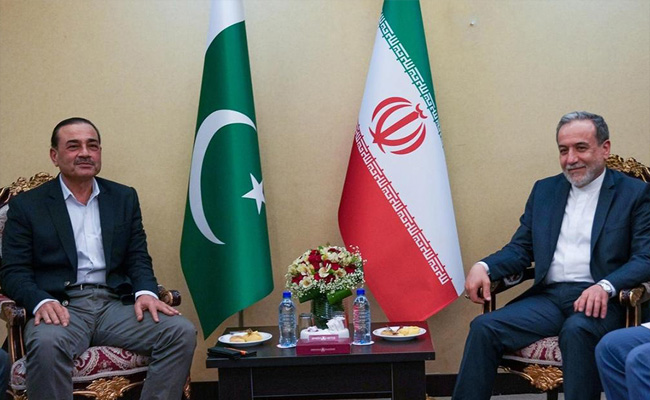
Islamabad (PTI): Iranian Foreign Minister Abbas Araghchi on Saturday met Pakistan Army chief Field Marshal Asim Munir here, as Islamabad continued its efforts to facilitate engagement between the US and Iran.
The meeting, according to a short video posted by the Iranian embassy on social media, was also attended by Iranian foreign ministry spokesperson Esmaeil Baghaei, and Iran's ambassador Reza Amiri Moghadam.
Araghchi calls on Munir, the embassy said in the video caption.
It did not provide further details about the discussions.
Araghchi arrived here late Friday for engagements with the Pakistani leadership. He was received by senior officials, including Munir, foreign minister Ishaq Dar and interior minister Mohsin Naqvi.
ALSO READ: Fire engulfs over 100 jhuggies in Delhi's Shakur Basti; no casualties
However, there is no clarity on whether direct talks between Washington and Tehran will take place during the visit.
"No meeting is planned to take place between Iran and the US. Iran's observations would be conveyed to Pakistan," Baqaei said in a social media post on Saturday.
Araghchi, before leaving for Islamabad, said that he was embarking on a timely tour of Islamabad, Muscat, and Moscow, and the purpose of his visits is to "closely coordinate with our partners on bilateral matters and consult on regional developments".
"Our neighbours are our priority," he said.
As the Iranian team landed in Islamabad, White House Press Secretary Karoline Leavitt said that US Special Envoy on the Middle East Steve Witkoff and President Donald Trump's adviser Jared Kushner would be leaving for Pakistan on Saturday "to engage in direct talks" with representatives of the Iranian delegation.
However, the US team has not yet arrived.
Meanwhile, Pakistan's Deputy Prime Minister and Foreign Minister Dar, in a social media post, expressed hope for "meaningful engagements" between the two warring parties to promote regional peace and stability.
The first round of US-Iran talks held on April 11 and 12 failed to produce a breakthrough, prompting a flurry of diplomatic efforts by host Pakistan to cool tensions and revive hopes for another round of dialogue.
On Tuesday, Trump extended the two-week ceasefire with Iran indefinitely to give Tehran more time to prepare a unified proposal to end the war, just hours before the truce was set to expire.
The Iran war began on February 28 with US-Israeli strikes.
_vb_19.jpeg)