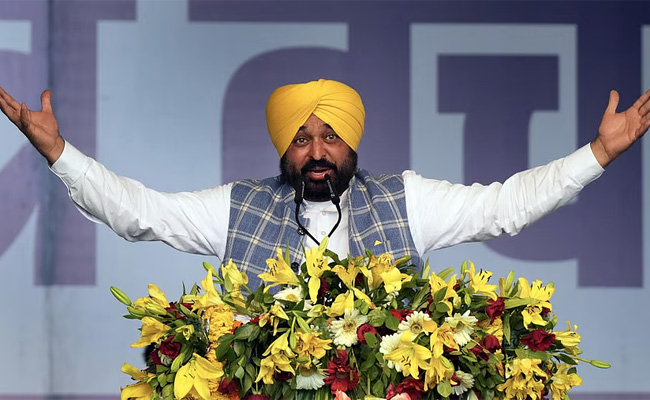
TN CM Stalin condemns Dharmendra Pradhan for his alleged NEP, 3-language policy rider for funds
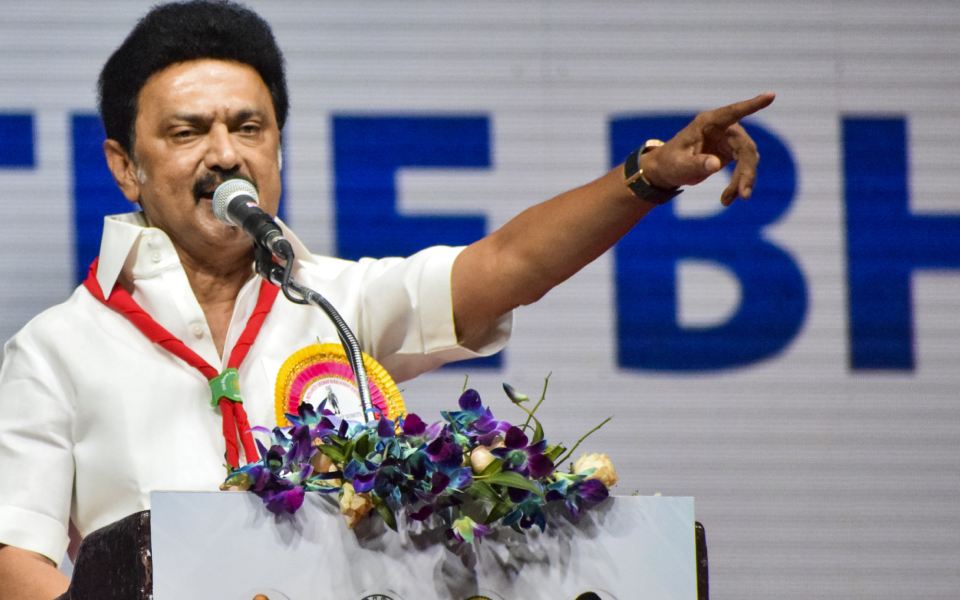
Chennai, Feb 16 (PTI): Chief Minister M K Stalin on Sunday accused Union Education Minister Dharmendra Pradhan of "blackmail" for allegedly taking a stand that Tamil Nadu would not be provided funds till such time it accepted the National Education Policy (NEP) and the three language formula.
Tagging a video clip of Pradhan speaking to reporters in Varanasi on February 15, Stalin, in a post on 'X' quoted Pradhan as saying that Tamil Nadu has to come to the terms of the Indian Constitution and that the three language policy is the rule of law.
Accusing Pradhan of "blackmail" for his alleged stand that Tamil Nadu would not be provided education related funds by the Centre till such time the state accepted the three language policy, the chief minister termed it as unacceptable, and Tamil people would not tolerate it.
The state sought its due from the Centre, which is its right, and if the Central minister spoke arrogantly as if the state claimed his personal wealth, then, in that case, Delhi would have to witness the trait of the Tamil people, the CM said.
Further, Stalin wanted Pradhan to specify the constitutional provision that made mandatory the three language policy of English, the respective regional language and Hindi.
States constitute the Indian union and education is on the concurrent list of the Constitution and hence, the union government cannot claim it to be their exclusive domain, the CM added.
Deputy CM Udhayanidhi Stalin and allies of the ruling DMK, including the Congress, Left parties and VCK condemned Pradhan.
Principal opposition AIADMK asserted that it is committed to the two language policy, and said whether the party is in power or not, it would never waver from its avowed policy.
TVK chief Vijay alleged that imposition of three language policy is tantamount to usurping the state autonomy.
School Education Minister Anbil Mahesh Poyyamozhi said he met Udhayanidhi and discussed the next course of action since the Centre has been betraying Tamil Nadu by not releasing funds under the integrated scheme for school education (Samagra Shiksha). Anbil accused the Centre of making efforts to impose Hindi.
Reacting to Stalin, Tamil Nadu BJP president K Annamalai asked why children in state government schools should not be taught Tamil, English and another Indian language when children or grandchildren of the chief minister and ministers could be taught three languages in private schools.
Annamalai claimed that in a majority of the private schools run by those belonging to the DMK across the state, the Central Board of Secondary Education's three language system is followed.
In a social media post, he wanted to know if the chief minister is of the view that only students in private schools should learn several languages. He wondered why the students of government run schools should be treated in a "partial" manner. "Is it fair to impose on Tamil Nadu children, your (DMK) policy of the 1960s, which has no relevance today?, he asked.
PMK chief Anbumani Ramadoss said Pradhan's insistence on NEP went against federalism and it was unacceptable and the Centre must not link the NEP with funds for Tamil Nadu. "Since the Central government has not allotted funds, several schemes related to the safety of girl children in government schools have not been implemented," Anbumani said, and urged the Centre immediately release funds to the state.
PMK was an ally of the BJP and it fought the 2024 Lok Sabha polls as a constituent of the NDA.
Naam Tamilar Katchi top leader Seeman said people may voluntarily learn any language, including Hindi, out of their own choice. Opposing Hindi "imposition," Seeman wondered if Hindi-speaking states would come forward to learn southern languages such as Tamil and Telugu.
Pradhan had alleged "political motivation" as the reason for the DMK regime not agreeing to the NEP. "They have to accept the NEP in letter and spirit," he said.
Let the Truth be known. If you read VB and like VB, please be a VB Supporter and Help us deliver the Truth to one and all.
Man dragged into river by crocodile in Vadodara; search ops underway
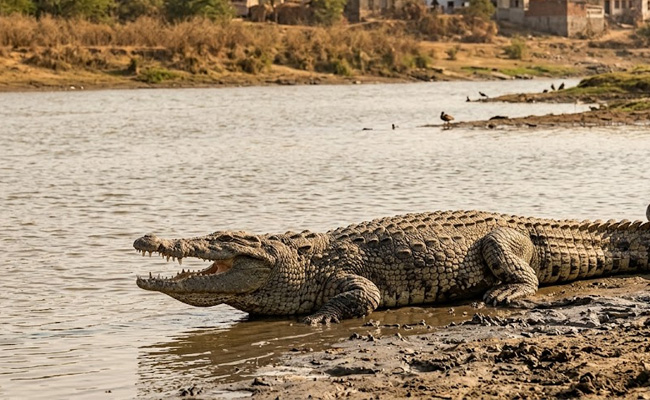
Vadodara (PTI): A 22-year-old man was dragged into a river by a crocodile in Gujarat's Vadodara district on Thursday and search operations are currently underway to locate him, a police official said.
The incident took place at 1:30pm when Mithun Vasava, a resident of Kagdipara village, had gone to take a dip in Dev river amid the stifling heat, the official told PTI.
"The crocodile suddenly attacked the man and dragged him into the river. Search operations are currently underway to locate Vasava," the official added.