TN Governor has referred anti-NEET Bill to Centre for President's assent: CM MK Stalin
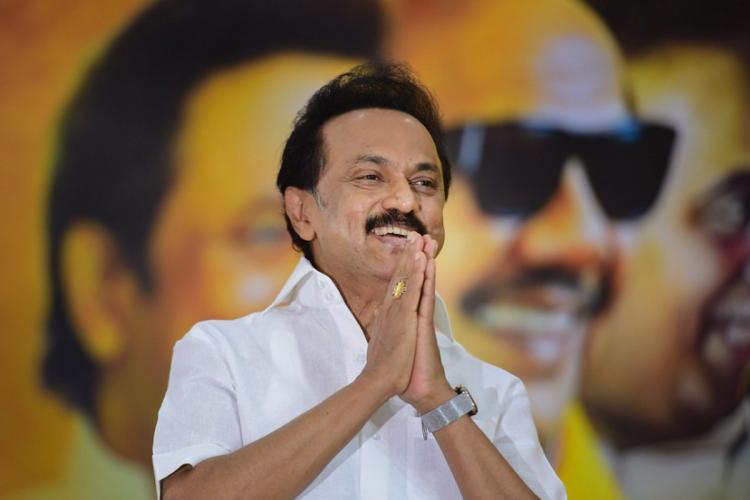
Chennai, May 4: The Tamil Nadu Assembly Bill seeking exemption to the state from the ambit of the National Entrance-cum-Eligibility Test (NEET) has been sent to the Centre for presidential assent by Governor R N Ravi, Chief Minister M K Stalin said on Wednesday.
Stalin told the state assembly that he has been informed by the Governor's secretary that the Bill has been sent to the Union Home Ministry to enable President' Ram Nath Kovind's assent for the same.
"As part of our struggle for NEET exemption, in the next step, we should jointly take all efforts to insist the Centre for presidential assent for the Bill," he said.
The assembly had in February adopted the ruling DMK-piloted anti-NEET Bill for the second time, after the Governor had returned the one resolved last year.
Maintaining that the persistent efforts of his government led to the present development, the Chief Minister recalled the several steps he took in seeking NEET exemption and said immediately after the Governor returned the Bill, his government convened an all-party meet and discussed the issue.
The Bill was passed in the Assembly and sent to the Governor to be forwarded to the Centre for presidential assent.
Apart from personally calling on the Governor and urging him to forward the Bill to the Centre, he took up the issue with Prime Minister Narendra Modi and Union Home Minister Amit Shah. An all-party MP delegation met the President and submitted a memorandum in this regard, Stalin recalled.
"In continuance of these efforts, the Governor, in a historical move, has forwarded the Bill to the Union Home Ministry for presidential assent," the Chief Minister said.
Let the Truth be known. If you read VB and like VB, please be a VB Supporter and Help us deliver the Truth to one and all.
Congress using hijab issue to pacify minority anger, alleges Karnataka LoP R Ashoka
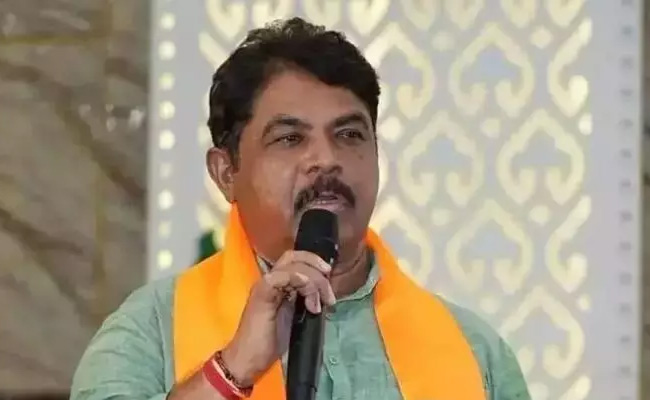
Bengaluru: Leader of Opposition in the Assembly R. Ashoka has accused the Congress government of using the hijab issue to placate what he described as discontent among minority voters after the Davanagere by-election.
In a post on X on Wednesday, Ashoka alleged that the state government, instead of addressing issues such as price rise, corruption, farmers’ distress and law and order, was attempting to retain its minority vote base by reviving the hijab issue.
Referring to the 2022 dress code introduced by the BJP government, which prohibited hijab in schools and colleges, Ashoka said the Karnataka High Court had upheld the policy and emphasised the importance of discipline in educational institutions.
He questioned the Congress government’s move to revisit the issue and asked whether setting aside the court-backed policy to benefit one community could be described as secularism.
Ashoka further alleged that while the government was willing to permit hijab, it continued to prohibit saffron shawls.
He accused the government of dividing students on religious lines rather than treating schools and colleges as spaces of equality.
Drawing a comparison with Mamata Banerjee’s government in West Bengal, Ashoka claimed that excessive appeasement politics had harmed the state and warned that the Congress in Karnataka could face a similar political response.
He said voters in Karnataka would teach the Congress a lesson for what he termed “vote-bank politics” and for compromising constitutional and judicial principles.