TN on high alert following reports of large-scale crow deaths in state
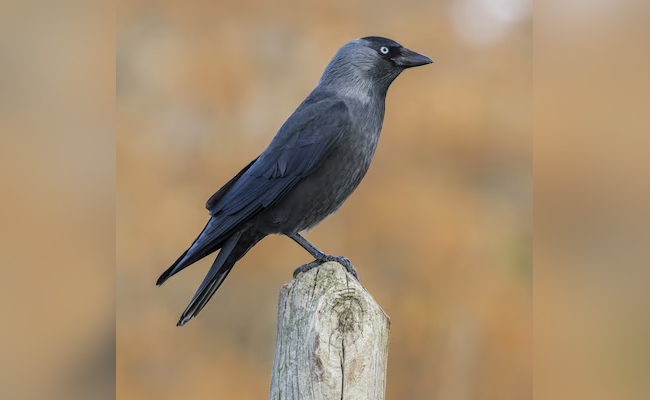
Chennai (PTI): The Tamil Nadu government on Friday sounded a high alert following reports of large-scale crow deaths in various parts of the state, triggering concerns over a potential outbreak of avian influenza.
In a swift response to the mounting biosecurity threat, the Department of Animal Husbandry, Dairying, and Fisheries issued a comprehensive advisory mandating stringent precautionary measures for poultry farmers and handlers of wild birds across the state.
Speaking to PTI, Director of Public Health, Dr A Somasundaram said, the Directorate of Public Health and Preventive Medicine (DPH) has also released a separate communication, appealing to the public to follow strict safety protocols.
"Based on the Central government's circular regarding the prevalence of Avian Flu in Tamil Nadu, we have issued the advisory," he added.
The DPH has advised individuals to seek immediate medical assistance if they experience flu-like symptoms, including cough, cold, fever, or breathing difficulties. Specific caution has been urged for those working in slaughterhouses and personnel handling sick or dead birds.
Meanwhile, the Animal Husbandry department has directed its officials to intensify surveillance and step up vigil to detect any unusual sickness or mortality among crows, migratory birds, and commercial poultry.
Sources said under the new protocols, veterinary staff have been strictly instructed to refrain from conducting autopsies of dead birds in the field. Instead, they have been advised to refer all carcasses to designated Regional Disease Diagnostic Labs to ensure clinical accuracy and containment.
To prevent the spread of infection through scavenging, the advisory further mandated that dead birds must be either burnt or buried deep.
The authorities have also urged the public to immediately inform the animal husbandry department of any unusual bird deaths to facilitate a rapid response and prevent a potential zoonotic spillover to humans.
Let the Truth be known. If you read VB and like VB, please be a VB Supporter and Help us deliver the Truth to one and all.
ICSE, ISC results: Girls outperform boys, pass rate over 99%

New Delhi (PTI): The Council for the Indian School Certificate Examinations on Thursday announced the Class 10 and Class 12 results for 2026, with overall pass percentages of 99.18 per cent and 99.13 per cent, respectively.
A total of 2,58,721 candidates appeared for the Indian Certificate of Secondary Education (ICSE), or Class 10, examination.
About 1,03,316 students took the Indian School Certificate (ISC), or Class 12, exam.
Girls outperformed boys in both examinations.
In ICSE, girls recorded a pass percentage of 99.46 per cent compared to 98.93 per cent for boys.
In ISC, girls achieved a 99.48 per cent pass percentage, while those of boys stood at 98.81 per cent.
Students can now access their scorecards on the official website cisce.org.