To browbeat, bully others is vintage Congress culture: PM Modi on lawyers' letter to CJI
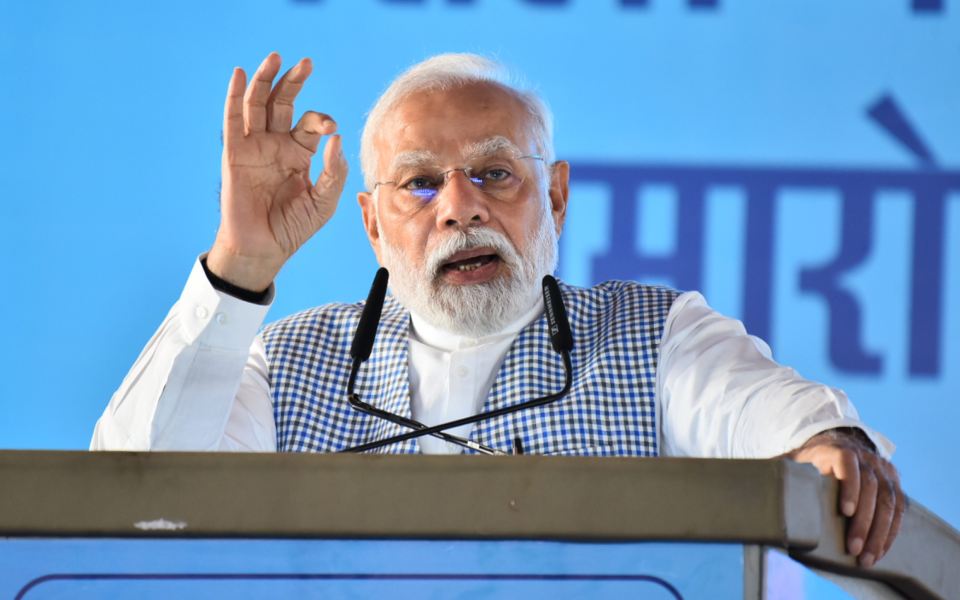
New Delhi: Prime Minister Narendra Modi on Thursday said it is a "vintage Congress culture" to browbeat and bully others, remarks that came in reaction to more than 600 lawyers writing to the Chief Justice of India, alleging that a "vested interest group" is trying to put pressure on the judiciary and defame courts.
"To browbeat and bully others is vintage Congress culture. 5 decades ago itself they had called for a "committed judiciary" - they shamelessly want commitment from others for their selfish interests but desist from any commitment towards the nation," Modi said on X.
To browbeat and bully others is vintage Congress culture.
"No wonder 140 crore Indians are rejecting them," the prime minister said and tagged a post that carried the letter written by the lawyers.
More than 600 lawyers, including senior advocate Harish Salve and Bar Council chairperson Manan Kumar Mishra, wrote to Chief Justice of India D Y Chandrachud, alleging that a "vested interest group" is trying to put pressure on the judiciary and defame courts, especially in cases of corruption involving politicians.
"These tactics are damaging to our courts and threaten our democratic fabric," the lawyers drawn from across the country said in the latter dated March 26.
CJI Chandrachud's leadership is crucial in these "tough times" and the apex court should stand strong, they said, adding it is not the time to maintain dignified silence.
The letter, shared by official sources, targeted a section of lawyers without naming them and alleged that they defend politicians by day and then try to influence judges through the media at night.
To browbeat and bully others is vintage Congress culture.
— Narendra Modi (@narendramodi) March 28, 2024
5 decades ago itself they had called for a "committed judiciary" - they shamelessly want commitment from others for their selfish interests but desist from any commitment towards the nation.
No wonder 140 crore Indians… https://t.co/dgLjuYONHH
Let the Truth be known. If you read VB and like VB, please be a VB Supporter and Help us deliver the Truth to one and all.
It's govt's responsibility to support youth who dare to dream: Omar Abdullah
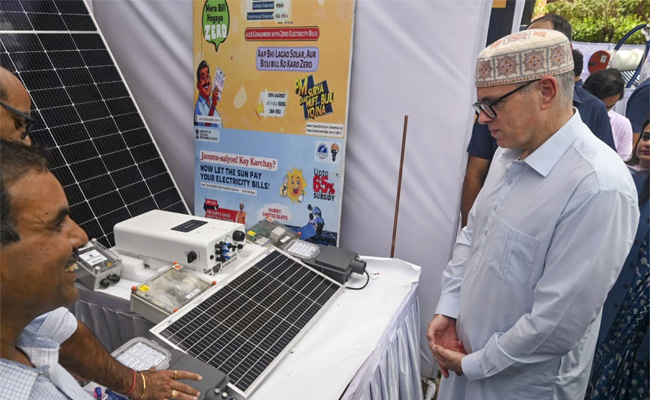
Jammu (PTI): Jammu and Kashmir Chief Minister Omar Abdullah on Monday said the government may not be able to provide jobs to everyone, but it can create an ecosystem for youngsters to become entrepreneurs and innovators.
It is the responsibility of the government to support youth who dare to dream, he said.
After inaugurating the 11th National Conference and Exhibition on Emerging and Innovative Trends in Engineering Technology (NCEEITET) at the Government College of Engineering and Technology (GCET) in Jammu, Abdullah said, “We may not be able to provide jobs to everyone, but we can certainly create an environment where our youngsters become entrepreneurs and innovators.”
The two-day conference is being organised by the GCET in collaboration with the Indian Institute of Technology-Kharagpur and the World University Consortium (WUC).
Addressing the gathering, Abdullah assured that all necessary steps would be taken to strengthen infrastructure and support systems at the GCET, ensuring that it continues to evolve as a premier institution.
The chief minister also inaugurated a new building for the School of Architecture in the college, built at Rs 19.71 crore.
Stressing the need to balance modernity with the region’s cultural and historical identity, Abdullah said, “Not every building needs to be made of glass and steel. Our structures must reflect our heritage and preserve our cultural ethos.”
Highlighting the role of emerging technologies such as artificial intelligence and machine learning, Abdullah said they could significantly improve tourism management, visitor experience and service delivery in Jammu and Kashmir.
However, he cautioned that technological advancement should complement human effort rather than replace jobs, especially in a region where unemployment remains a concern.
The chief minister said that attracting tourists to Jammu and Kashmir was not difficult, but ensuring repeat visits required consistently enriching experiences and better infrastructure across tourism segments, including pilgrimage, border and leisure tourism.
To address the infrastructure gaps in the college, Abdullah announced that funds would be provided this year for the construction of an auditorium.
He also assured support for setting up an incubation centre in GCET.
During the event, Abdullah also released the e-proceedings of the conference, comprising 28 shortlisted research papers.