To create jobs is the need of the hour: Vice President
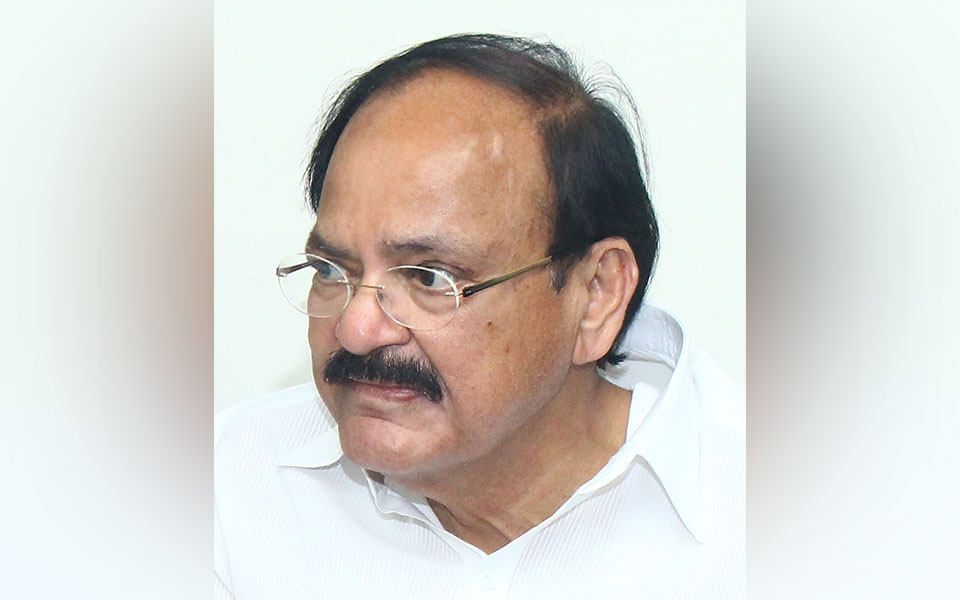
Hyderabad: Vice President M Venkaiah Naidu today said the expanding middle class will be the key driver of India's economic growth, and the need of the hour is to take full advantage of our demography by creating jobs.
He also said that while India must improve its tax-to-GDP ratio and curb tax evasion, there should be no needless harassment of tax-payers.
"The expanding middle class will be the key driver of India's economic growth in the coming years. With the large population of India, about 65 per cent under 35 years, the need of the hour of is to take full advantage of this demographic number by creating adequate job opportunities for the young population," Naidu said.
He was speaking at the inaugural session on a seminar on `Contemporary issues and challenges in Finance, Marketing and Taxation', organised by the Keshav Memorial Institute of Commerce and Science here.
"Merely turning out lakhs of students with degrees is not enough," he said, adding that they must be taught "life skills".
While the first and second rounds of major economic reforms were initiated by the governments led by P V Narasimha Rao and Atal Bihari Vajpayee, the third round of reforms by the present government is transforming the economy, he said.
Massive recapitalisation of public sector banks at Rs 2.11 lakh crore is expected to improve the credit growth and private sector investment, Naidu said, adding that introduction of the Insolvency and Bankruptcy Code has strengthened creditors' rights.
One of the major objectives of both demonetisation and Goods and Services Tax was to increase tax compliance, he said.
The expansion of formal economy will lead to increased tax collection and higher revenues, which will be used to accelerate development by building essential infrastructure, he said.
"While tax evasion has to be dealt with sternly, it should be ensured that there is no unnecessary harassment of tax payers by overzealous officials," he said.
The GST has changed the face of the indirect tax regime as it brings one tax instead of multiplicity of taxes, Naidu said.
India needs to ramp up its tax-to-GDP ratio, currently at 16.6 per cent, to fund a modern, twenty-first century government which can offer basic public facilities and social security to its citizens, Naidu said.
Demonetisation, a special investigation team for black money and the notification of the Benami Transactions Act would bring a wider range of economic activities in the tax net, while the war on black money needs to continue unabated, the vice president said.
Let the Truth be known. If you read VB and like VB, please be a VB Supporter and Help us deliver the Truth to one and all.
Noida International Airport appoints Nitu Samra as interim CEO
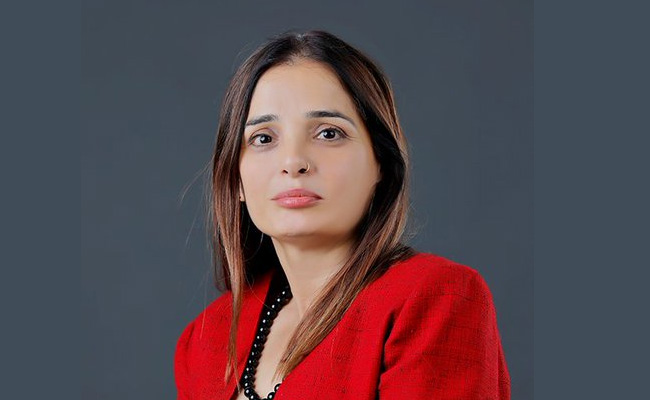
New Delhi (PTI): Noida International Airport on Friday announced the appointment of its Chief Financial Officer Nitu Samra as the interim Chief Executive Officer after authorities denied permission for foreign national Christoph Schnellmann to be at the helm.
"This change follows directions issued by the Bureau of Civil Aviation Security (BCAS) that the Chief Executive Officer of an airport in India is required to be an Indian national," NIA said in a statement.
Samra will replace Schnellmann, a Swiss national who has led Noida International Airport (NIA) as the CEO since August 2020.
The regulatory issue related to the requirement of having an Indian national as CEO has been delaying the start of commercial operations of the airport, which was inaugurated by Prime Minister Narendra Modi on March 28.
Schnellmann will join the airport's Board of Directors as Executive Vice Chairman. In this role, he will continue to support the project and its transition to operations, the statement said.
With immediate effect, NIA said Samra has been appointed as the CEO on an interim basis until the Board of Directors can conclude a formal selection process.
Samra has been serving as the CFO since October 2021 and was closely involved in the airport’s development journey, overseeing financial stewardship, governance, and strategic planning during a key phase of the project, the statement added.
NIA will be operated by Yamuna International Airport Pvt Ltd (YIAPL), a subsidiary of Zurich Airport International AG, under a public-private partnership.
Originally scheduled to commence passenger services in September 2024, NIA is being developed in four phases, along with a dedicated cargo terminal. It received an aerodrome license from the aviation regulator Directorate General of Civil Aviation (DGCA) in March.
YIAPL Chairman Daniel Bircher said that since the inauguration of the airport by the Prime Minister, the goal was to enable the start of operations as early as possible.
"This management change brings the airport into compliance with Bureau of Civil Aviation Security requirements while maintaining continuity in the airport’s leadership team. The newly structured team will support a smooth transition into operations, guided by clear and transparent governance and a strong corporate culture," he said.
On March 28, Civil Aviation Minister K Rammohan Naidu said commercial flight operations from the airport would start in the next 45 to 60 days.
Among the largest greenfield airport projects in the country, NIA will initially have a capacity to handle 12 million passengers per annum.
Once fully developed, the airport will have a total passenger handling capacity of 70 million.
The first phase of NIA has been developed at an investment of around Rs 11,200 crore. 'DXN' is the code for the airport.
The airport features a 3,900-metre runway capable of handling wide-body aircraft, along with modern navigation systems, including Instrument Landing System (ILS) and advanced airfield lighting.
The peak handling capacity in the first phase will be 30 flights per hour.
In the first phase, there will be 28 aircraft stands, and the projected cargo capacity is around 2.5 lakh tonnes.
Terminal 1 of the airport is spread across 1,37,985 square metres with 48 check-in counters. Over 40 acres of land have been earmarked for developing MRO (Maintenance, Repair and Overhaul) facilities at the airport.