Tobacco excise duty not extra tax, revenue to be shared with states: FM
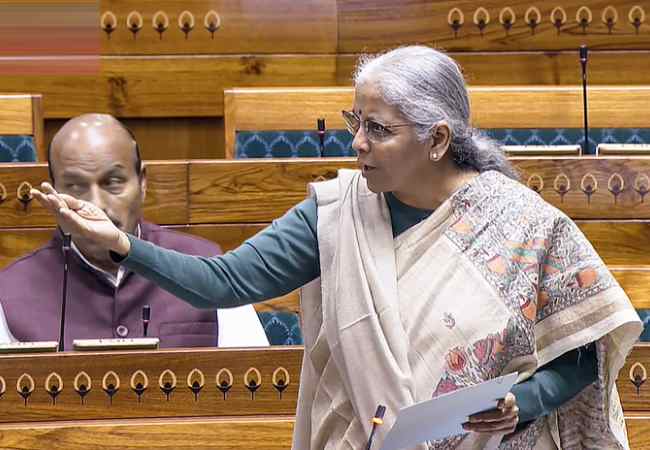
New Delhi (PTI): Excise duty sought to be levied on tobacco and its products through a new Bill will ensure that tax incidence on demerit items does not fall after the recent GST overhaul, Finance Minister Nirmala Sitharaman said, vowing to share revenues collected with states.
Replying to the debate on the Central Excise (Amendment) Bill in the Lok Sabha, Sitharaman said this is not an additional tax, and the tax burden, as currently applicable under the GST regime, will continue.
The Lok Sabha later passed the Bill with a voice vote.
The provisions of the Bill will come into effect once the GST compensation cess, which is currently levied on tobacco, comes to an end. The cess will cease to exist after the Rs 2.69 lakh crore loan taken to compensate states for revenue loss during Covid is repaid, which is likely to happen in the next couple of weeks.
"This is not a new law, this is not an additional tax or something that the Centre is taking away. Many MPs here observed that this is a Cess. This is not a Cess, this is Excise Duty. Excise duty existed before GST. The amount will be redistributed among states as per the Finance Commission's recommendations," Sitharaman said.
The Centre's tax revenues form part of the divisible pool, of which 41 per cent was shared among states.
By amending the Central Excise Act, 1944, the government seeks to levy excise duty of Rs 2,700 to Rs 11,000 per 1,000 sticks of various categories of cigarettes. The Bill also proposes a levy of 60-70 per cent on every kilogram of tobacco used for various purposes and 100 per cent per kg on chewing tobacco.
Quoting the World Health Organisation (WHO) observation that cigarette affordability has either stagnated or increased in the past decade in India, Sitharaman said that cess rates on cigarettes have remained unchanged since 2017, when GST was implemented.
She said that before GST, tax rates of tobacco were increased every year, so that high prices act as a deterrent to the consumption of the demerit good. After the sunset of compensation cess, the government is bringing back the excise duty, which existed prior to GST.
"Now, certainly, we don't want cigarettes to become affordable," she noted.
Pre-GST excise duty of Rs 1,585-2,850 per 100 sticks was levied on non-filter cigarettes. For filter cigarettes, the excise rate was in the range of Rs 1,585-4,170 per 100 sticks.
The minister said India's current total tax incidence on cigarettes is approximately 53 per cent of the retail sale price, which is substantially lower than the benchmark of 75 per cent. Besides, countries like the United Kingdom and Australia levy taxes on cigarettes well above 80-85 per cent of the retail price.
Under the GST regime, cigarettes attract a compensation cess of 5 per cent ad-valorem in addition to Rs 2,076-3,668 per 1,000 sticks, depending on their length. With the levy of GST and compensation cess on tobacco and its products, the rates of central excise duties were reduced significantly to allow for the levy of compensation cess without a substantial impact on tax incidence.
Sitharaman also clarified that there is no change in the tax incidence on beedi even after the levy of the excise duty.
With regard to concerns of MPs on the livelihood of farmers, Sitharaman said the government is trying to wean away farmers from growing tobacco and encouraging them to diversify to other crops.
"In order to ensure that the incidence is not lower than what it was during GST with the compensation cess, we are bringing this excise. In a way, we are saying cigarettes should not become affordable now because incidence has become less," the minister said while moving the Bill.
The Bill will replace the GST compensation cess, which is currently levied on all tobacco products like cigarettes, chewing tobacco, cigars, hookah, zarda, and scented tobacco. Currently, a 28 per cent GST plus cess at a varied rate is levied on tobacco.
Sitharaman said that at the time of the introduction of the GST on July 1, 2017, a compensation cess mechanism was put in place for 5 years till June 30, 2022, to make up for the revenue loss suffered by states on account of GST implementation.
The levy of compensation cess was later extended by 4 years till March 31, 2026, and the collection is being used to repay the Rs 2.69 lakh crore loan that the Centre took to compensate states for the GST revenue loss during the Covid period.
Let the Truth be known. If you read VB and like VB, please be a VB Supporter and Help us deliver the Truth to one and all.
CM Siddaramaiah alleges ‘criminal conspiracy’ in Sringeri recount, vows legal action
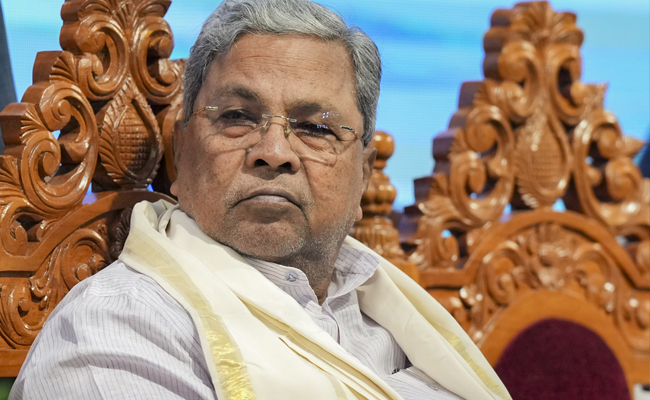
Bengaluru (PTI): Alleging a “criminal conspiracy” by BJP candidate D N Jeevaraj in the Sringeri Assembly poll recounting, Karnataka CM Siddaramaiah on Tuesday said the outcome was manipulated after valid postal ballot votes in favour of Congress leader T D Raje Gowda were tampered with during the recounting process.
Following a Karnataka High Court order on an election petition filed by Jeevaraj, challenging Raje Gowda’s election, the reverification and recounting were conducted on Saturday.
After the reverification and recount of postal ballots for the Sringeri Assembly constituency, votes polled in favour of Raje Gowda were reduced by 255, the returning officer said.
A report on the matter has been submitted to the Election Commission of India for further action, the officer added.
Congress leader Raje Gowda had won the 2023 Assembly polls from Sringeri by 201 votes, defeating his nearest rival Jeevaraj.
Addressing a press conference in Bengaluru, Siddaramaiah said the High Court had directed the recounting of postal ballots and that irregularities were noticed during the exercise conducted on May 2.
“This is a clear case of criminal conspiracy,” Siddaramaiah said, alleging that valid votes cast in favour of Raje Gowda were altered after being accepted by counting agents of all parties, including Congress, BJP, and JD(S).
He claimed that during the recounting of postal ballots, 255 votes were initially accepted as valid by all agents but were later tampered with by subordinate officials.
“There is a second mark on the votes polled in favour of Raje Gowda. They had accepted these as valid votes. Subsequently, another mark was made by officials. This is a clear case of criminal conspiracy,” he said.
When asked who was behind the alleged conspiracy, the CM replied, “It was hatched by Jeevaraj and others. It is planned.”
Siddaramaiah further alleged that the returning officer acted improperly by declaring the result despite the presence of an Election Commission observer during the recounting.
“Immediately after the counting, the returning officer announced the result. He should not have done so; this is against the law,” he said.
He pointed out that Raje Gowda had originally won by 201 votes, but after the recounting, the BJP candidate was declared the winner by 52 votes.
“The BJP has committed a criminal act of conspiracy. This is not vote chori but vote dacoity,” he alleged.
The CM said a police complaint had already been filed by Raje Gowda’s election agent, Sudhir Kumar, and emphasised the need for electoral integrity.
“We want transparency and free and fair elections. That is what our Constitution mandates,” he added.
Stating that the government would pursue legal remedies, Siddaramaiah said, “We are preparing an appeal challenging the returning officer’s announcement in a court of law.”
Responding to a separate query on elections in other states, the CM said there appeared to be an anti-incumbency factor in West Bengal, while results in Tamil Nadu were “surprising,” adding that Vijay’s party was emerging as the largest there.
Following the victory of party candidates in Bagalkote and Davanagere South, Siddaramaiah expressed confidence about future electoral prospects in Karnataka.
“Even in 2028, we will win the Assembly elections. We will come back,” the CM said.
Siddaramaiah added that he would order a forensic examination into the alleged tampering of postal ballots.