Tomato prices spike again on tight supply; Mother Dairy stores selling at Rs 259/kg
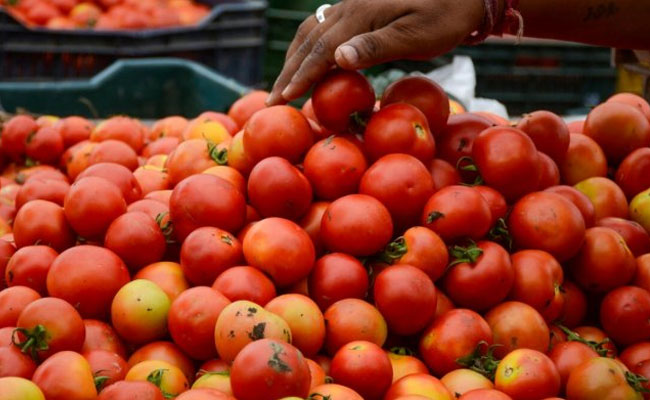
New Delhi (PTI): Tomato prices have again hit the roof in the national capital with Mother Dairy selling the key kitchen staple at a whopping Rs 259 per kg on Wednesday via its Safal retail stores.
Tomato prices have been under pressure for more than a month now on account of supply disruptions caused due to heavy rainfall in the key producing regions.
With central government's intervention through sale of tomatoes at a subsidised rate since July 14, retail prices in the national capital had begun softening recently but have again firmed up due to short supply.
As per the data maintained by the consumer affairs ministry, retail price of tomato touched Rs 203 per kg on Wednesday, whereas at Mother Dairy's Safal retail outlets, the price was ruling at Rs 259 per kg.
"Tomato supply has been affected across the country for last two months owing to weather abnormalities. In the last two days, arrivals in Azadpur, which is the main feeder for Delhi, has also dropped drastically. Due to short supply, prices have sharply shot up in wholesale, resulting in impact at retail prices too," a Mother Dairy spokesperson said.
Wholesale prices of tomato at Azadpur mandi here, Asia's largest wholesale fruits and vegetables market, were on Wednesday ruling at Rs 170-220 per kg, depending on the quality.
According to Azadpur Tomato Association President Ashok Kaushik, "In the last three days, the arrival of tomatoes has reduced as the crop has been damaged in the growing regions because of heavy rainfall."
Azadpur mandi saw arrival of only 15 per cent tomatoes on Wednesday as only six small trucks could get the supplies from Karnataka and Andhra Pradesh, he said, adding this has led to firming up of prices.
Kaushik however said the supply situation is expected to improve in the next ten days.
Let the Truth be known. If you read VB and like VB, please be a VB Supporter and Help us deliver the Truth to one and all.
CCTVs in police stations: SC asks amicus to convene meeting on utilisation of funds
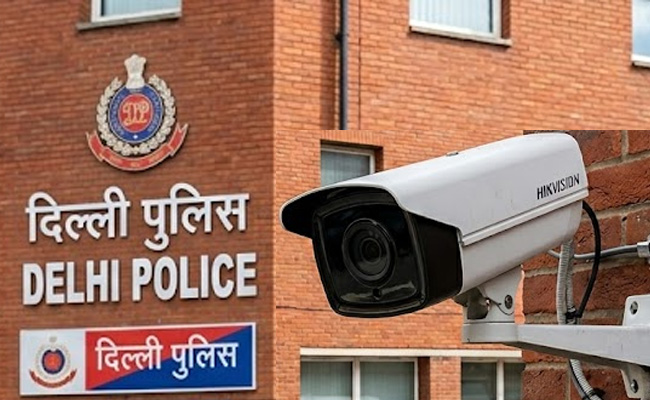
New Delhi (PTI): The Supreme Court on Tuesday said that a meeting be convened on May 6 to deliberate on the aspect of utilisation of funds by the states on installation of CCTVs in police stations across the country.
A bench of Justices Vikram Nath and Sandeep Mehta asked senior advocate Siddhartha Dave, who is assisting it as an amicus curiae in a suo motu matter concerning lack of functional CCTVs in police stations, to hold a meeting on May 6 with the Centre, all states and Union Territories.
"We are of the view that a meeting be convened by the amicus, as done earlier, in which the home secretary of the central government or his nominee not below the rank of joint or additional secretary and the home secretary of states/Union Territories will participate," the bench said.
The issue cropped up after the amicus flagged the aspect of utilisation of funds by the states.
Dave told the bench that in UTs, the Centre gives 100 percent funds while in hilly states, the central government gives 90 percent funding.
He said in remaining states, the Centre gives 60 percent while the rest 40 percent funding is by the respective state.
"Why don't we get responses of the states only on utilisation of funds?" the bench said.
The top court suggested that the amicus can convene a meeting with the Centre, states and UTs on the issue.
It posted the matter for hearing on May 13 and said that a report be submitted before it.
On April 7, the Centre told the top court that all issues concerning installation of CCTVs in police stations would be sorted out within two weeks.
Attorney General R Venkataramani had told the bench that he was taking stock of the issue and a lot of things were happening.
On February 26, the apex court directed the Centre and others to participate in a meeting to deliberate upon the feasibility, modalities and implementation framework of the issues, including creation of a centralised dashboard and standardisation of CCTV infrastructure in police stations.
The top court had earlier directed registration of a suo motu case over the lack of functional CCTVs in police stations after taking cognisance of a media report.
The apex court had in 2018 ordered the installation of CCTV cameras across police stations to check human rights abuses.
In December 2020, the top court directed the Centre to install CCTV cameras and recording equipment at the offices of investigating agencies, including the Central Bureau of Investigation (CBI), the Enforcement Directorate (ED) and the National Investigation Agency (NIA).
It said that states and UTs should ensure that CCTV cameras were installed at every police station, at all entry and exit points, main gate, lock-ups, corridors, lobby and reception, as well as in areas outside the lock-up rooms so that no part was left uncovered.
The top court said that CCTV systems must be equipped with night vision and have audio as well as video footage.
The court made it mandatory for the Centre, states and the UTs to purchase such systems which allow storage of data for at least one year.