Too early to comment on US tariff changes; commerce ministry reviewing situation: Sitharaman
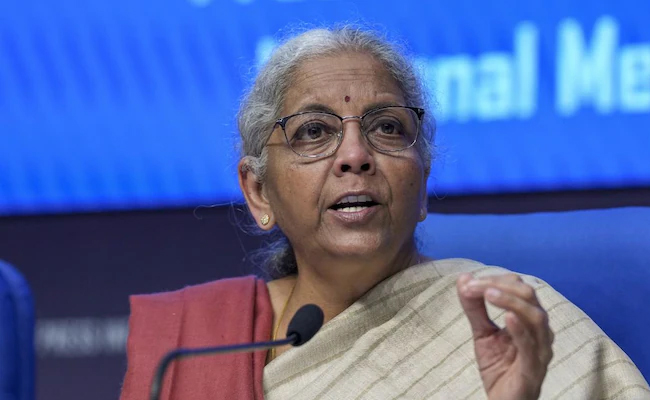
New Delhi (PTI): Finance Minister Nirmala Sitharaman on Monday said it is too early to comment on the tariff changes announced by the United States, and the Commerce Ministry is reviewing the situation.
On Friday, the US Supreme Court gave a verdict against the sweeping import tariffs imposed by the Trump administration on trade partners.
Following the ruling, President Donald Trump imposed a 10 per cent tariff on all countries, including India, for 150 days from February 24. Later on Saturday, Trump announced raising these tariffs to 15 per cent.
Asked about the impact of tariff changes on the Indian economy, Sitharaman said it is "a bit too soon" to comment.
ALSO READ: Delhi remains warm, temperature hits 30.5 degrees C
"But on the trade, particularly, aside from the Indian economy in general, the commerce ministry is reviewing the situation. The delegation will have to take a call on when they are going to go for further negotiations. So, it's a bit too early for me (to comment)," Sitharaman said.
On Sunday, India and the US decided to reschedule the proposed meeting of their chief negotiators, scheduled to be held in Washington from Monday, to finalise the text for the interim trade pact, according to sources.
Joint Secretary in the Commerce Ministry, Darpan Jain, is the chief negotiator of India for this agreement.
Talking to reporters after addressing the RBI's Central Board here, Sitharaman said India has been on a very clear path of wanting to have trade deals and has already inked pacts with Australia, New Zealand, the UAE, Qatar, Oman, the EU and the UK.
"So, therefore, our attempt to have a trade agreement will go on with countries, " she said, adding that India wants the economy to have the advantage of trading globally and being able to reach global markets.
Speaking on the issue, RBI Governor Sanjay Malhotra said, "The government has now a number of agreements for international trade that it has signed. So, that will help our current account even further going forward".
Even on the capital side, he said, it will help because trade and investments generally go together.
Over and above that, a number of policies that the government has come out on the FDI side, the latest being opening up 100 per cent insurance sector and commitment towards data centres, would help boost investment, he said.
"We have sufficient reserves. So, the external side is very strong, including the rest of the macroeconomic sector is very strong," he said.
With regard to setting up the National Financial Information Registry (NFIR), Malhotra said, "We have had multiple rounds of discussion with the government and with all the stakeholders and most of the contours and the framework of the NFIR have been finalised. We are giving final touches in the RBI".
After having done that, he said, the RBI will send its proposals, comments, and suggestions to the government.
Let the Truth be known. If you read VB and like VB, please be a VB Supporter and Help us deliver the Truth to one and all.
Yogish Gowda murder case: HC issues notice to CBI after hearing Kulkarni’s plea
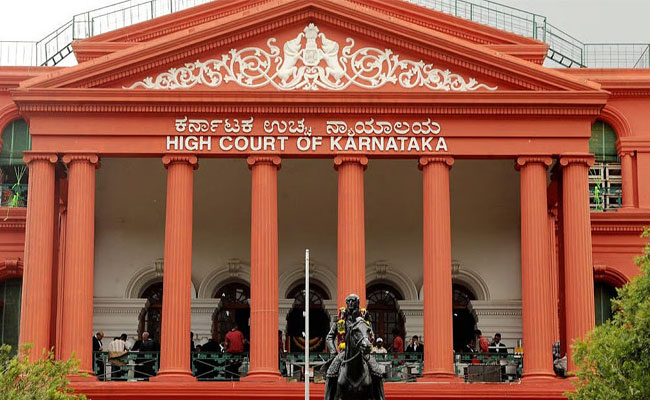
Bengaluru: Karnataka High Court has issued a notice to the Central Bureau of Investigation (CBI) following the filing of application by Congress MLA Vinay Kulkarni and Chandrashekhar Indi challenging the life imprisonment awarded to them by the Special Court for murder of BJP Dharwad leader Yogish Gowda.
The divisional bench comprising Justices Muhammad Nawaz and T Venkatesh Naik heard the pleas filed by Kulkarni on April 15 and Chandrashekhar Indi also called Chandu Mama on April 16.
The bench has now issued a notice to the CBI and also directed the HC Registry to obtain the trial court documents before adjourning the hearing.