Tourism in India generated USD 234 bn revenue in 2018: Minister K J Alphons
Ranked third in world tourism sector

Guwahati, Feb 3: Union Minister K J Alphons Sunday said the country's tourism sector fetched USD 234 billion revenue last year, registering a growth of over 19 per cent.
Delivering the inaugural speech at the 2nd ASEAN-India Youth Summit here, he said the country was ranked third in the tourism sector, according to the 2018 report of the World Travel and Tourism Council (WTTC).
"Last year, India generated USD 234 billion revenue from the tourism sector. While the global revenue growth was five per cent, it grew by 19.4 per cent in India," the Union tourism minister said.
This revenue was contributed by 87 per cent domestic and 13 per cent foreign tourists, Alphons said.
"From the foreign tourists we earned USD 27 billion, which grew by 14 per cent compared to global growth of seven per cent," he said, adding that around 82 million people are employed in the tourism sector.
About spiritual tourism, Alphons said 60-70 per cent of the total domestic tourists fall under this category.
"The Indian philosophy is yoga. We see all as one. Yoga is the way of life and it says the entire universe is part of me. If I want to be happy, others have to be happy -- this is the philosophy behind yoga.
"This is Indian philosophy. This is the common philosophy of ASEAN. Let us forget physical connectivity, this is the spiritual connectivity between us," the minister said.
Alphons also advocated for a peaceful and sustainable world, free of pollution and damage to the environment.
"Let us talk how we can bring sanity to world politics. Today, the world is being crushed under xenophobic politics. We need to think beyond our own countries," he appealed to the international gathering from the ASEAN nations.
On the occasion, Assam Chief Minister Sarbananda Sonowal said more collaboration on various fields between the countries are needed to strengthen the relationship.
"We have requested the MEA to negotiate with the ASEAN countries to have their consulates in Guwahati, which will soon become the gateway of India in the northeast. Already, Bangladesh and Bhutan have opened their consulates here," he said.
Let the Truth be known. If you read VB and like VB, please be a VB Supporter and Help us deliver the Truth to one and all.
Karnataka launches India’s first digital grievance system for gig workers
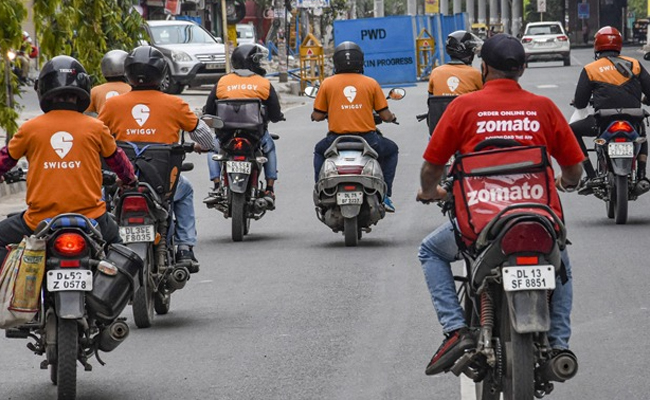
Bengaluru: In a first-of-its-kind initiative in India, the Karnataka government has launched a digital grievance redressal system for gig workers to provide structured support and protection to platform-based workers.
According to The Hindu, the system, developed by the Karnataka Platform-based Gig Workers’ Board in collaboration with the Department of e-Governance, allows workers to file complaints through the Integrated Public Grievance Redressal System (IPGRS).
Gig workers can raise issues related to pay, working conditions, and platform-specific disputes. Complaints will be routed to the Internal Dispute Resolution Committees (IDRCs) of respective platforms and are expected to be resolved within a defined timeframe. This is expected to bring transparency and legal recourse for a workforce that has so far operated without a formal dispute resolution framework.
Under The Karnataka Platform-Based Gig Workers (Social Security and Welfare) Act and Rules, every aggregator platform must constitute an Internal Dispute Resolution Committee (IDRC). Platforms such as Namma Yatri and Yulu have already integrated their IDRC contact details with the government portal.
Around 12 lakh gig workers have been identified in the state, and a unique identification system is being developed to remove duplicate entries. Officials said welfare schemes are also being designed based on type of work, working hours, and contribution.
Labour Minister Santosh Lad said that Karnataka, technology capital of the country, is leveraging this potential for worker welfare as well. “By launching this system, we are ensuring that the gig economy is no longer an informal space, but a structured one where every worker’s voice is heard,” he said.
“The schemes will vary based on the type of platforms. For example, cab rides are mostly undertaken by men whereas urban domestic activity is undertaken mostly by women. It may also be based on the contribution made, and the quantum of gig work done by a gig worker. Some gig workers work for more than eight hours while some may work on a few gigs. So, work load, nature of work, and time period of work could vary,” TH quoted G. Manjunath, Additional Labour Commissioner and CEO of the Board as saying.
“It has to be scientifically structured based on their effort and labour. We are working with experts, including academicians from Briston University, King’s College, and IISc, and other stake holders, including board members,” he said.
Officials added that aggregator platforms will be required to contribute 1 per cent towards worker welfare, with implementation beginning July 5.