Trade pact opens doors for AYUSH practitioners in EU-member states: PM Modi
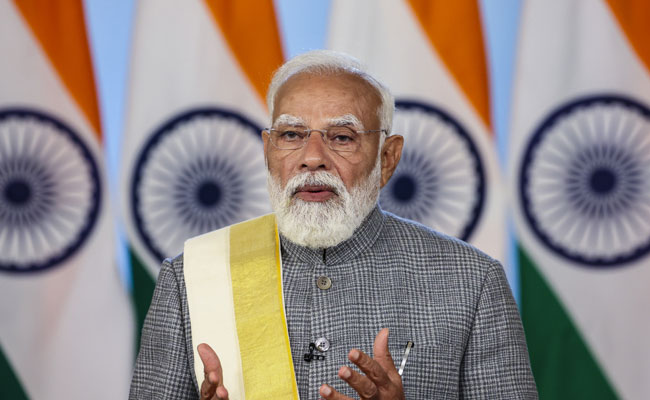
New Delhi (PTI): Prime Minister Narendra Modi on Wednesday said the practitioners of Indian traditional systems of medicine will now be able to provide their services in the European Union countries, following the historic India-EU trade pact.
AYUSH practitioners will be able to provide their services in the EU member states, based on professional qualifications earned in India, which will greatly benefit the youngsters associated with ayurveda and yoga, Modi said at the centenary celebrations of the Arya Vaidyasala Charitable Hospital in Kerala.
In a video message, the prime minister said the recently-announced historic trade agreement with the EU will give a major boost to Indian traditional medicine services and practitioners.
He said the pact will also help establish AYUSH wellness centres in Europe and extended his congratulations to all dignitaries associated with ayurveda and AYUSH for this achievement.
Modi said India has been treating people through ayurveda for centuries, but it is unfortunate that within the country and largely abroad, efforts have been required to explain its importance.
He said a major reason for this has been the lack of evidence-based research and research papers.
The prime minister said when ayurvedic methods are tested on the principles of science, public trust becomes stronger.
He expressed happiness that the Arya Vaidyasala has consistently tested ayurveda on the touchstone of science and research, working in collaboration with institutions like the Council of Scientific and Industrial Research (CSIR) and Indian Institute of Technology (IIT).
Modi pointed out that the institution has focussed on drug research, clinical research and cancer care, and with the support of the Ministry of Ayush, the establishment of a Centre of Excellence for cancer research marks an important step in this direction.
The prime minister said the Arya Vaidyasala has played a significant role in preserving, protecting and advancing ayurveda, and recalled the contributions of its founder, Vaidyaratnam P S Varier.
Modi said the Arya Vaidyasala is a living symbol of India's healing tradition that has served humanity for centuries.
He said ayurveda in India has never been confined to an era or a region and in every age, this ancient medical system has shown the way to understand life, create balance and harmonise with nature.
The Arya Vaidyasala manufactures more than 600 ayurvedic medicines and its hospitals across different parts of the country treat patients through ayurvedic methods, including patients from over 60 countries, the prime minister noted.
He said the Arya Vaidyasala has earned this trust through its work and when people are in distress, the institution becomes a great source of hope for them.
Let the Truth be known. If you read VB and like VB, please be a VB Supporter and Help us deliver the Truth to one and all.
Karnataka launches India’s first digital grievance system for gig workers
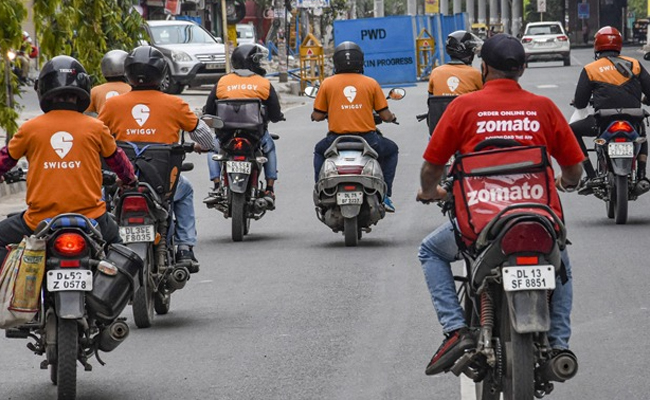
Bengaluru: In a first-of-its-kind initiative in India, the Karnataka government has launched a digital grievance redressal system for gig workers to provide structured support and protection to platform-based workers.
According to The Hindu, the system, developed by the Karnataka Platform-based Gig Workers’ Board in collaboration with the Department of e-Governance, allows workers to file complaints through the Integrated Public Grievance Redressal System (IPGRS).
Gig workers can raise issues related to pay, working conditions, and platform-specific disputes. Complaints will be routed to the Internal Dispute Resolution Committees (IDRCs) of respective platforms and are expected to be resolved within a defined timeframe. This is expected to bring transparency and legal recourse for a workforce that has so far operated without a formal dispute resolution framework.
Under The Karnataka Platform-Based Gig Workers (Social Security and Welfare) Act and Rules, every aggregator platform must constitute an Internal Dispute Resolution Committee (IDRC). Platforms such as Namma Yatri and Yulu have already integrated their IDRC contact details with the government portal.
Around 12 lakh gig workers have been identified in the state, and a unique identification system is being developed to remove duplicate entries. Officials said welfare schemes are also being designed based on type of work, working hours, and contribution.
Labour Minister Santosh Lad said that Karnataka, technology capital of the country, is leveraging this potential for worker welfare as well. “By launching this system, we are ensuring that the gig economy is no longer an informal space, but a structured one where every worker’s voice is heard,” he said.
“The schemes will vary based on the type of platforms. For example, cab rides are mostly undertaken by men whereas urban domestic activity is undertaken mostly by women. It may also be based on the contribution made, and the quantum of gig work done by a gig worker. Some gig workers work for more than eight hours while some may work on a few gigs. So, work load, nature of work, and time period of work could vary,” TH quoted G. Manjunath, Additional Labour Commissioner and CEO of the Board as saying.
“It has to be scientifically structured based on their effort and labour. We are working with experts, including academicians from Briston University, King’s College, and IISc, and other stake holders, including board members,” he said.
Officials added that aggregator platforms will be required to contribute 1 per cent towards worker welfare, with implementation beginning July 5.