Transfer of judges internal matter of judiciary, government has no say in it: Justice Bhuyan
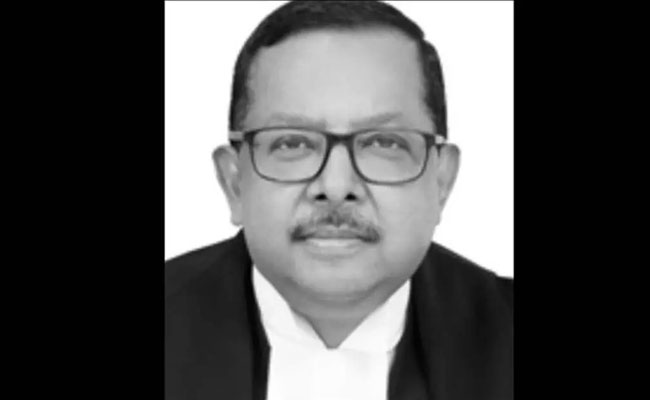
Pune (PTI): Transfer of judges is an internal matter of the judiciary and the government has no role to play in the process, Supreme Court judge Justice Ujjal Bhuyan asserted here on Saturday.
Independence of judiciary was "non-negotiable", he said, delivering G V Pandit Memorial Lecture at the ILS Law College here.
"Transfer of a judge is always for the better administration of justice. It is an internal matter of the judiciary. The government can have no say in that," Justice Bhuyan stated.
"By the very nature of things, the Centre can have no say in the transfer and posting of judges. It cannot say that such and such a judge should not or should be transferred, or if transferred, to such and such High Court," he added.
Independence of the judiciary is a basic feature of the Constitution, Justice Bhuyan further said.
"It is non-negotiable. It is for the judiciary, or rather the members of the judiciary, to see to it that its independence is maintained at all costs in order to ensure its continued relevance and legitimacy," the judge said.
He also said that credibility is very vital for the institution.
"If we lose our credibility, nothing will be left of the judiciary. It will be there, judges will be there, courts will be there, it will adjudicate, but its heart and soul will have evaporated," Justice Bhuyan said.
The country's founding fathers chose supremacy of the Constitution over the sovereignty of Parliament, the judge further said, adding, "In India, Parliament is not supreme, the Constitution is supreme."
There were two main reasons for this, Justice Bhuyan said.
"First, to make sure that our country is governed by some basic and essential principles that cannot be compromised. Second, because of our colonial past, our leaders did not want to give unlimited power to Parliament without proper checks and balances," he said.
From this viewpoint, constitutional morality becomes very important as it ensures that democratic institutions respect the core values of liberty and justice, said the Supreme Court judge.
"It requires those in power to show restraint and follow constitutional values, instead of forcing decisions using numbers, authority, or power," he added.
Constitutional morality means that the country is governed by the rule of law, not by the rule of individuals or the majority, and an independent judiciary is not only necessary to protect the rule of law but is also a central pillar of democracy, he said.
Executive Influence in Judge Transfers?”: Justice Ujjal Bhuyan Criticises Collegium Decision
— Live Law (@LiveLawIndia) January 24, 2026
Justice Ujjal Bhuyan, Supreme Court, Judge, criticises Collegium's decision to transfer a Judge at the request of the Central Government.
"When the collegium records that the transfer… pic.twitter.com/OZiLa8xa1t
Let the Truth be known. If you read VB and like VB, please be a VB Supporter and Help us deliver the Truth to one and all.
Man arrested with Rs 2.54-crore heroin in Mumbai

Mumbai (PTI): Police have arrested a man and seized over 500 grams of heroin worth Rs 2.54 crore in the illicit market from him in Mumbai, officials said on Friday.
The police's Anti-Narcotics Cell (ANC) made the drug seizure in Santacruz in the western suburbs. The operation was conducted by the Kandivali unit of the ANC on Thursday as part of a special crackdown against drug trafficking in the area, they said.
Acting on specific inputs, an ANC team conducted a raid in Santacruz (East) and intercepted a man. During a search, the team recovered 508 grams of high-grade heroin from his possession, an official said.
The seized contraband, a highly addictive, opioid drug derived from morphine, is estimated to be worth Rs 2.54 crore in the international market, he informed.
Following the seizure, a case was registered against the man under relevant sections of the Narcotic Drugs and Psychotropic Substances (NDPS) Act, 1985, and he was formally placed under arrest in the early hours of Friday.
The police are currently investigating the source of the drug and trying to identify the intended recipients of the consignment, he said.