Treated Muslims like fuel for 'lantern': PK targets Lalu, asks upper castes to stay away from Nitish
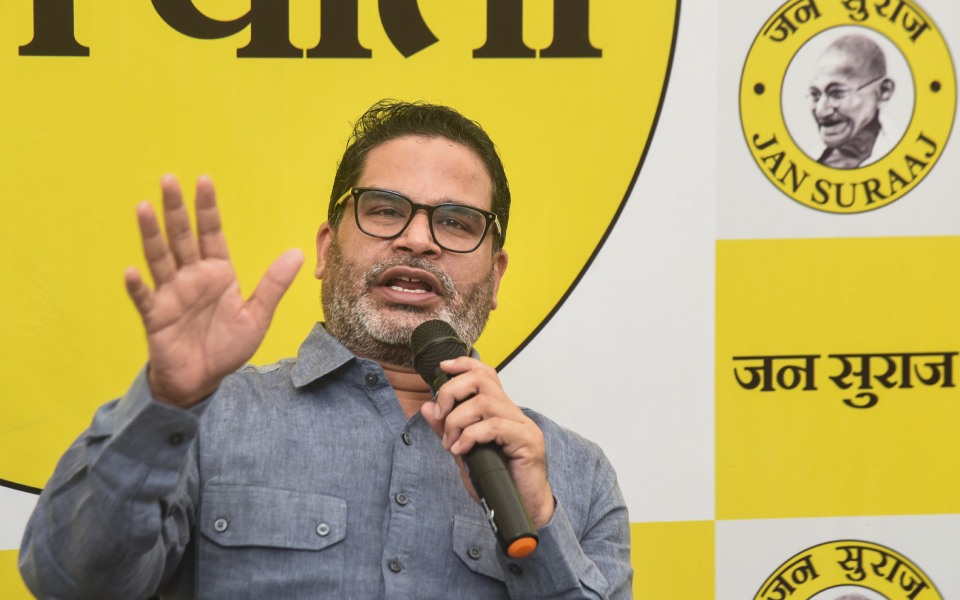
Belaganj (Bihar), Nov 5: Jan Suraaj founder Prashant Kishor on Tuesday claimed his Muslim outreach has left RJD president Lalu Prasad at his wit's end and the party's poll symbol lantern was now "bereft of fuel".
The former political strategist made the sassy remark at an election meeting in Belaganj assembly constituency where bypoll is scheduled later this month and Jan Suraaj is engaged in a three-cornered contest with RJD and Chief Minister Nitish Kumar's JD(U).
Holding forth before a crowd that was predictably upper caste, Kishor said, "You must give me the credit for hoisting by his own petard a man you have lived in fear of for 35 years. Today he is not able to think clearly."
"Having treated Muslims like fuel for his lantern, he now finds his hurricane lamp without kerosene and its wick running dry," he added.
Notably, Kishor has fielded social activist Mohd Amjad from Belaganj, a move that is in line with his strategy of wooing Muslims, as seen in his series of interactions with members of the community before Jan Suraaj campaign evolved into a political party last month.
However, Kishor alleged that the land-owning castes were committing a mistake by voting for "cunning" (chalaak) Nitish Kumar who has "come up with the biggest assault on your interests in history in the form of land survey".
"The land survey requires you to get signatures of sisters and aunts who may have been married long ago to prove that you are bona fide owners of your land. In a few years, this exercise may be used to deprive you of your land," said Kishor, attempting to raise an issue that resonates strongly with the people of a largely agricultural state.
Kishor also recalled the 2020 assembly polls in which the JD(U)'s numbers crashed as a result of the revolt of Chirag Paswan, who gave LJP tickets to many rebels from the BJP, the first party of choice for the upper castes in Bihar.
"You (upper castes) had played a role in the humiliation of Nitish Kumar. The swagger over heading a party that once had more than 110 seats in the 243-strong assembly was gone and replaced by mortification over a humble 40 something tally," the IPAC founder said.
"Nitish remembers it all. He now wants to avenge the insult through his land survey. You must beware. Do not vote for Jan Suraaj if you do not like us. But do not vote for the party of Nitish. Better to opt for NOTA or an Independent candidate," said Kishor, who had handled the JD(U) boss's campaign in 2015 assembly polls and joined the party afterwards, only to be kicked out following a squabble with the supremo a few years later.
Bypolls are scheduled in three other seats of Bihar on November 13 and the Jan Suraaj is contesting all the four.
Let the Truth be known. If you read VB and like VB, please be a VB Supporter and Help us deliver the Truth to one and all.
Rupee falls 28 paise to 94.77 against US dollar in early trade
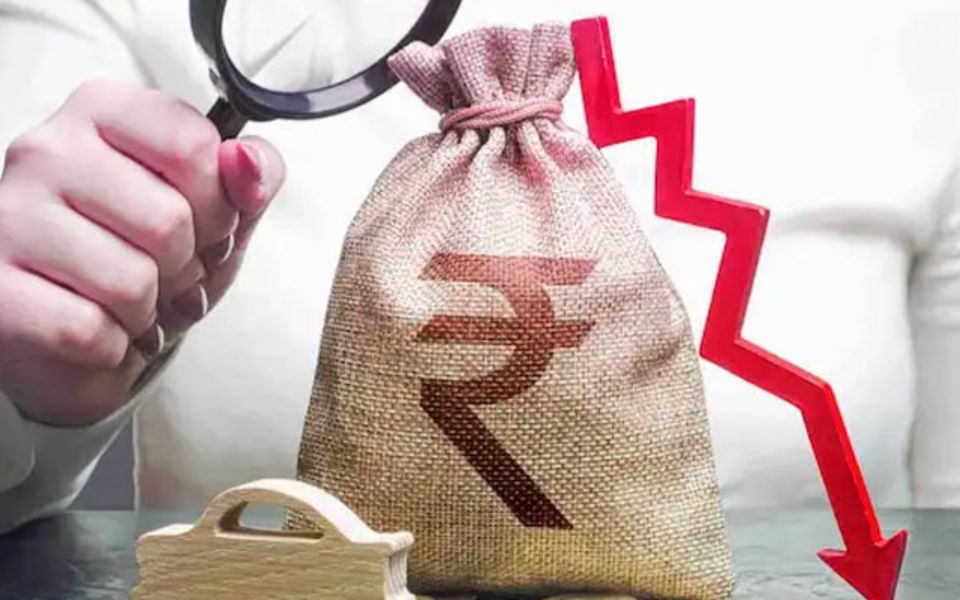
Mumbai (PTI): The rupee depreciated 28 paise to 94.77 against the US dollar in early trade on Thursday as market sentiment took a dramatic turn after reports emerged that the US and Iran are discussing a 14-point Memorandum of Understanding (MOU) aimed at reducing tensions and reopening negotiations.
Forex traders said Brent oil prices, which had fallen to USD 98 on the US-Iran peace deal, edged slightly higher to USD 101 per barrel after investors weighed the prospects for a Middle East peace deal.
Moreover, factors such as unabated foreign capital outflows amid rising geopolitical uncertainties further dented investor sentiment.
At the interbank foreign exchange market, the rupee opened at 94.77 against the US dollar, registering a fall of 28 paise over its previous close.
On Wednesday, the rupee appreciated 69 paise to close at 94.49 against the US dollar.
"Markets are currently focused on the critical 48-hour window during which the US expects Tehran’s formal response through Pakistani mediators," said CR Forex Advisors MD Amit Pabari.
US President Donald Trump on Wednesday threatened Iran with more bombing if it doesn't reopen the Strait of Hormuz, amid a report that the warring sides were nearing an agreement to end the war.
US media outlet Axios reported, quoting US officials and two other sources, that the US and Iran were getting close to a one-page memorandum of understanding to end the war and set a framework for more detailed nuclear negotiations.
The US expects Iranian responses on several key points over the next 48 hours, Axios reported, adding that nothing has been agreed yet. This was the closest the parties had been to an agreement since the war began.
Meanwhile, the dollar index, which gauges the greenback's strength against a basket of six currencies, was trading at 98.01, down 0.01 per cent.
Brent crude, the global oil benchmark, was trading higher by 0.65 per cent at USD 101.83 per barrel in futures trade.
On the domestic equity market front, the 30-share benchmark index Sensex declined 160.24 points to 77,798.28 in early trade, while the Nifty was down 30.25 points to 24,300.70.
Foreign Institutional Investors offloaded equities worth Rs 5,834.90 crore on Wednesday, according to exchange data.
On the domestic macroeconomic front, the country's goods and services exports rose 4.6 per cent to an all-time high of USD 863.11 billion during 2025-26, up from USD 825.26 billion in 2024-25, despite global economic uncertainties, according to revised commerce ministry data.
Merchandise exports grew 0.93 per cent to USD 441.78 billion in the last fiscal year from USD 437.70 billion in 2024-25, the data showed.