Tribal family ostracised for not serving liquor in last rites feast in Odisha
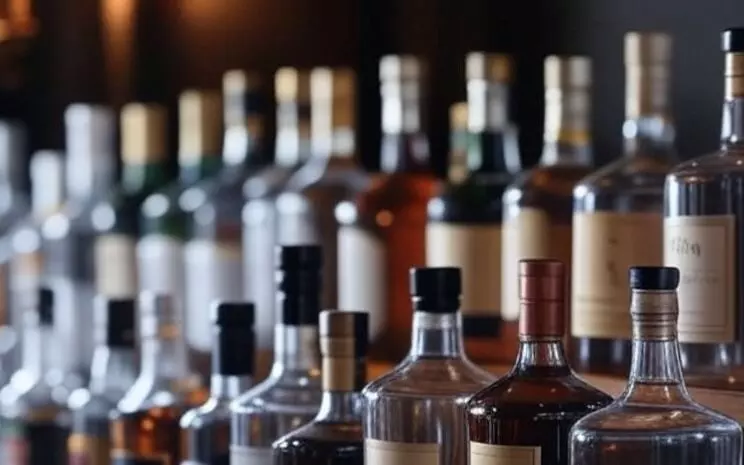
Baripada (Odisha), Jun 9 (PTI): A tribal couple and its three children have allegedly been ostracised by the villagers for not serving 'handia' (traditional rice beer) in the last rites feast held after the death of a 67-year-old man of the family in Odisha’s Mayurbhanj district, police said on Monday.
It is a practice in various tribal societies to serve 'handia' to people attending the feast organised as part of the last rites.
It is alleged that the villagers are not allowing the family members to take water from village ponds or tubewells or purchase groceries from shops.
Following a complaint lodged by the deceased man's son, a police team went to their village and asked the villagers to sort out the matter within two days or face legal action.
Ram Soren of Kesapada village under Sarat Police Station limit died on March 27 and the members of the Santhal community observed the rituals according to tradition.
Soren's son Sangram organised a community feast a month later as per tradition on April 27.
However, he did not serve ‘handia’ in the feast to the villagers following which he, his wife Lachha and their children have allegedly been socially boycotted.
In a complaint lodged at Sarat Police Station, Sangram and his wife charged the villagers with denying them access to resources like water from ponds or tubewells, and even to village grocery shops.
“This is not all, the villagers also do not speak to us including my children. We are not even given work by the villagers making our life miserable,” Sangram’s wife Lachha Soren told reporters.
The couple has three children - a 13-year-old daughter and two sons aged 8 and 5 years.
She claimed that a person spoke to them and has been told to pay a penalty of Rs 2,000 for violating the community’s social boycott order.
Asked about the reason behind not going by the tradition of serving liquor at the feast, Sangram said, “My father was a habitual alcoholic for which he died early. We have seen tribal families getting ruined due to alcoholism. Therefore, I decided not to serve Handia in the feast.”
Sangram in his police complaint named three village seniors for ostracising his family.
When contacted, a priest of the Santhal community said, “We have the tradition of offering Handia to the departed soul during funeral rituals. But there is no religious norm to serve it to people in the community feast. It all depends on the economic condition of the deceased person’s family. They may serve Handia if they desire, but they cannot be forced.”
Handia is a traditional alcoholic rice beer popular among tribal communities in Eastern and North-Eastern India, particularly in states like Odisha, Jharkhand, and West Bengal.
Meanwhile, a team headed by Sarat Police Station in-charge Ramakanta Patra visited the village and discussed the matter with the villagers.
“We held a long discussion with the villagers and apprised them that they cannot socially ostracise any family for any reason. The police have given them two days to resolve the matter amicably,” Patra told reporters.
If the matter is not resolved within the community members at the village level, the police might have to take legal action, Patra said.
Let the Truth be known. If you read VB and like VB, please be a VB Supporter and Help us deliver the Truth to one and all.
Allen, Raghuvanshi, Green power KKR to 29-run win over GT
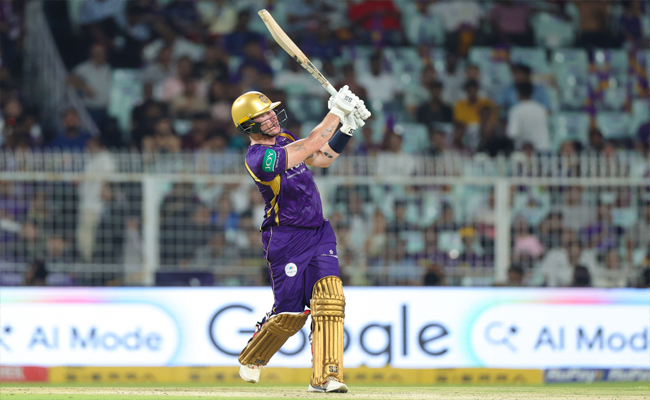
Kolkata (PTI): Finn Allen blasted a 35-ball 93, while Angkrish Raghuvanshi hit an unbeaten 44-ball 82 as Kolkata Knight Riders kept their playoff hopes alive with a 29-run win over Gujarat Titans in the IPL match here on Saturday.
Sent in to bat, Allen went on a six-hitting spree, smashing 10 maximums and four boundaries to add 95 off 41 balls with Raghuvanshi (82).
Raghuvanshi then shared another 108 off 53 balls with Cameron Green (52 not out) to power KKR to a challenging 247 for 2.
In reply, GT could manage 218-4, riding on skipper Shubman Gill's 49-ball 85 and a 35-ball 57 from Jos Buttler. Opener Sai Sudarsan was retired hurt but returned to make a 28-ball 53 not out.
Sunil Narine (2/29) claimed two wickets and Saurabh Dubey snapped one for KKR.
For GT, Mohammed Siraj (1/50), Sai Kishore (1/38) were the wicket-takers.
Brief Score:
KKR: 247 for 2 in 20 overs (Finn Allen 93, Angkrish Raghuvanshi 82 not out, Camero Green 52 not out; Mohammed Siraj 1/50).
GT: 218 for 4 in 20 overs (Shubman Gill 85, Sunil Narine 2/29).