Tripura to develop tourism around sick tea gardens, export pineapples
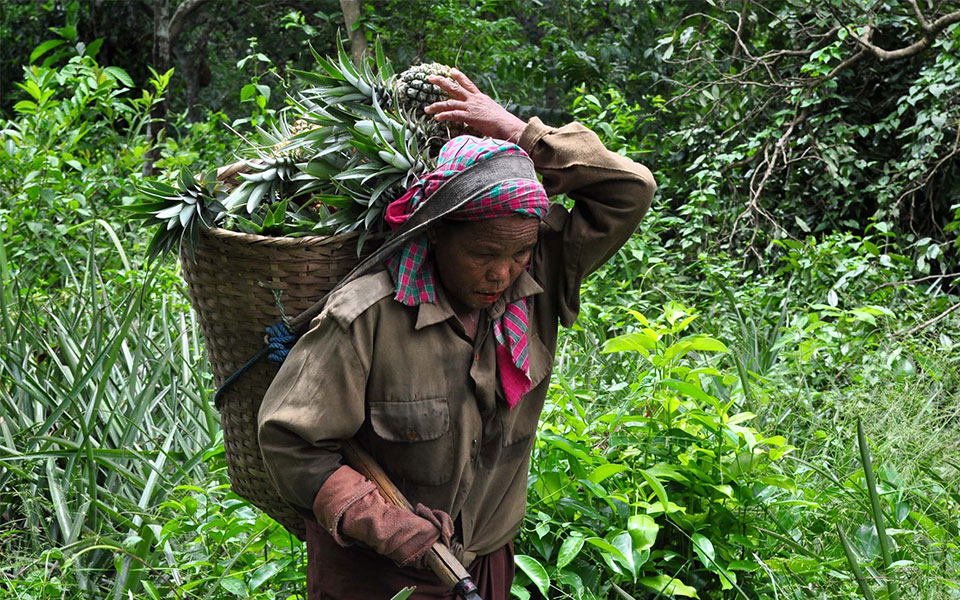
New Delhi, April 28: The new BJP-led government in Tripura is keen to boost employment in the state by encouraging tourism around sick tea gardens and boost income of farmers by exporting an exquisite variety of pineapple to Dubai and Hong Kong.
Officials said that hotels, motels, restaurant and lodges will be created near sick tea gardens to encourage tourists to visit and stay there.
"These tea gardens, which are not doing too well in terms of business, are located in serene environment and are surrounded by natural beauty. Once infrastructure is created, tourists are sure to visit these places. It will help create local employment besides helping tea gardens market their produce," an official said.
He said the state government is keen to make Tripura famous within and outside the country for "queen" pineapple.
The Tripura Queen pineapple got the GI tag in 2015.
Officials said that production of queen variety of pineapple, known for its pleasant aroma, sweet taste and golden yellow colour, has faced some constraints as producers do not get a very good price owing to their facing problems in export.
"We have now decided to tap international market for this pineapple variety and have identified Hong Kong and Dubai as prime destinations for export. We are sure that the queen variety will establish itself in the international market due to its sweetness and unique aroma," an official said.
He said that transport arrangements have already been put in place for export of the pineapples and the state government has set an ambitious target.
"The purpose is to ensure that the farmers get double the price of their product. Today they are getting about 15 per pineapple but if their product is sold in foreign countries, they would get double the price of their produce," the official said.
Tripura Chief Minister Biplab Deb told IANS over phone that his government has taken various measures to boost agriculture and tourism sectors.
"Tripura has immense potential in agriculture and the tourism sector but it was not utilised in 25 years of CPI-M rule. We will make Tripura a world class tourism destination and would ensure that the farmers of the state get proper dues for their produce," he said.
"We are taking various measures. We are focusing on branding of some of our special produce. We are talking to every stakeholder and also trying to get into foreign markets," he said.
Deb said the steps are in line with the NDA government's efforts to double the farmers income by 2022.
Officials said that productivity of pineapple in Tripura at 18.73 tonnes per hectare is higher than the national average of 15.80 tonnes.
They said that people know about Assam tea and Darjeeling tea but Tripura, despite having special variety of tea leaves, has not been able to earn a similar reputation.
Tripura has a history of tea plantations going back to 1916 but these suffered during the spells of insurgency in the state. Some tea gardens have also faced problems related to infrastructure, modernisation and management.
The officials said that decisions to boost employment through tourism and agriculture export is in line with the BJP's pre-poll promises.
The party had assured to establish Directorate of Tea Gardens for scientific development of tea and facilitate the socio-economic development of tea plantation workers.
Let the Truth be known. If you read VB and like VB, please be a VB Supporter and Help us deliver the Truth to one and all.
345 Indian fishermen stranded in Iran return home via Armenia

New Delhi (PTI): A group of 345 Indian fishermen, who were stranded in Iran amid escalating regional tensions, returned to India via Armenia on Saturday, officials said.
External Affairs Minister S Jaishankar thanked his Armenian counterpart Ararat Mirzoyan for assistance in return of the Indian nationals.
The Indian nationals arrived in Chennai this evening, the officials cited above said.
The circumstances that led to them being stranded in Iran were not immediately known.
"Thank FM @AraratMirzoyan and the Government of Armenia for facilitating the evacuation of Indian fishermen today from Iran, through Armenia to India," Jaishankar said on social media.
Over 1,500 Indian nationals have left Iran through land border crossings in Armenia and Azerbaijan since the start of the West Asia conflict over a month ago.
"A group of Indian fishermen, stranded in Iran, are returning home via Armenia today; their flight is expected to reach India this evening," a government statement said.
It said the Ministry of External Affairs continues to closely monitor the evolving situation in the West Asian region, with the safety, security and welfare of the Indian community being accorded the highest priority.
It also made a mention of five Indians being injured in Abu Dhabi on Friday.
According to Abu Dhabi authorities, the Indian nationals were among the 12 people injured by debris from an intercepted missile.
"In an attack in Abu Dhabi, five Indian nationals were injured; four have been discharged, one remains under treatment," the Indian government's statement said.
It said the Indian mission in Abu Dhabi is extending "full" assistance and coordinating with local authorities, adding that their flight is expected to reach India this evening.