'Truck drivers, should be empowered, given dignity'
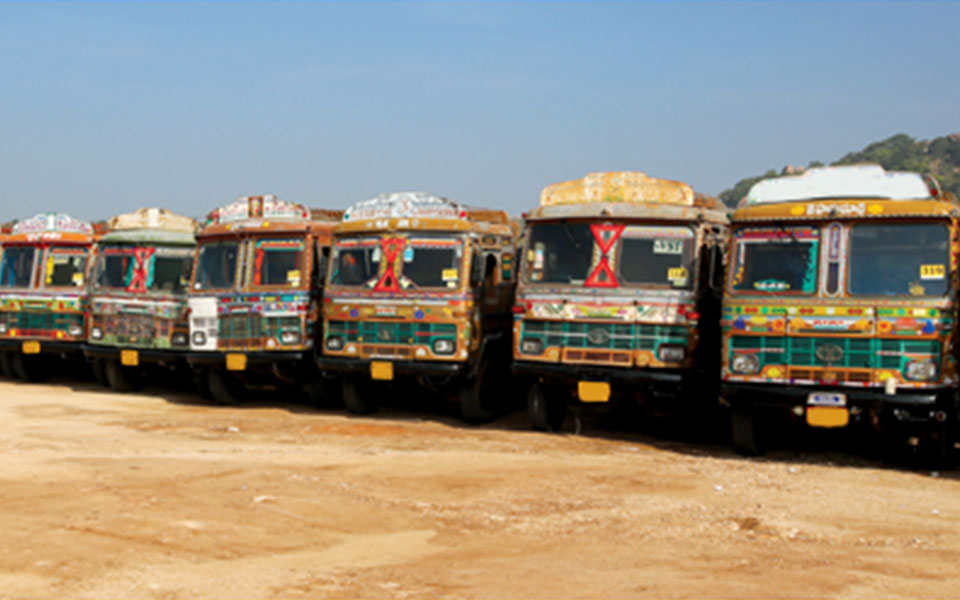
Kolkata, June 21: The truck drivers - forming the base of the logistics sector of the country - must be empowered and given dignity, panelists said at a conclave here on Thursday.
"We should make the drivers feel that they equal. When we are working with them we must try to make them feel empowered with training and feel happy and confident from within," said Manisha Mishra, Associate Programme Director of Development Alternatives, who worked on a project for truck drivers.
Federation of West Bengal Truck Operators' Association President Mohinder Singh Gill said the biggest problem in India is that the drivers are looked down upon by the public, police and even by the government machinery, and addressed using abusive language.
"In India, even after Independence if anyone is leading a life full of struggle, it is the truck driver. Neither the Central nor the state governments have paid attention to them.
"In case of an accident, the drivers are accused even if they are not at fault," Gill said at the Sambandh Conclave, the first ever national conclave dedicated to future of Indian truck drivers organised by Seva Kendra Calcutta (SKC) - the social services organization of the Archdiocese of Kolkata.
The Economic Survey 2017-18 estimates that the worth of Indian logistics market would be around $215 billion in next two years, compared to about $160 billion currently, with the implementation of GST. But the drivers who are the base of the sector are still suffering.
"The drivers are marginalised and exploited, even if the balance sheet of the logistics industry is growing. Very few logistic companies train the drivers. Also, the driving schools are not ready to train them," said Stephen Gonsalves, senior consultant of 'Sambandh Project' conducted by SKC.
The organisation conducts awareness camps, sets up health check-up kiosks and tries to sensitize the truck drivers to lead a healthy and hygienic life.
"We along with the Transport Associations must lobby for policy level changes," said Moses Nirmal, Manager of Truck Driver's Enrichment Project, World Vision of India.
Gonsalves shared the story of a driver who once told him "People salute the Jawans of the country as they defend the country, but no one salutes the drivers who bring in the essential food and supplies that are required every day."
Noting it is true that the society discriminates against them, Nirmal advised the drivers to be more confident about themselves and realise they are the ones running the country.
Let the Truth be known. If you read VB and like VB, please be a VB Supporter and Help us deliver the Truth to one and all.
Four months on, no breakthrough in missing Bengaluru girls case; CID probe ordered
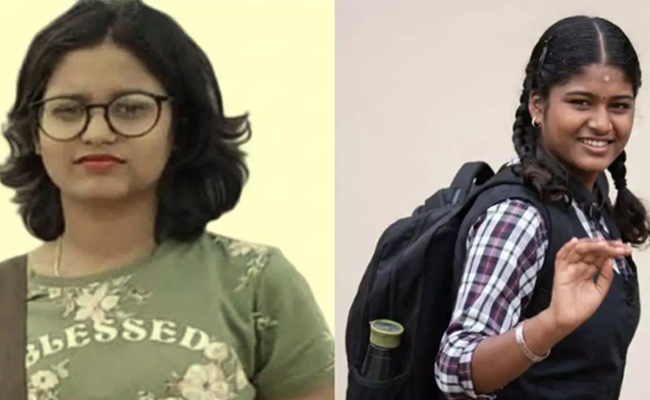
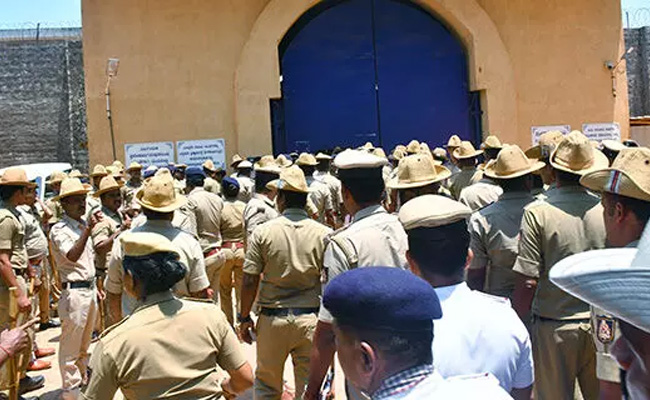
Bengaluru: The case of two students who went missing under mysterious circumstances four months ago in the jurisdiction of Vidyaranyapura Police Station has been transferred to the Criminal Investigation Department for further investigation, as no breakthrough has been made so far.
The missing students have been identified as Taniska, a second PUC student, and Tejaswini, a first PUC student. Both went missing on January 31 after leaving their homes, carrying only their Aadhaar cards. They have not returned since, prompting their parents to file a complaint with the police.
During the initial investigation, police found CCTV footage showing the two students crossing certain junctions. There were early indications that they may have travelled towards Male Mahadeshwara Hills, but searches conducted there did not yield any results, sources said.
Police teams carried out searches in more than 100 locations across the country, including Mysuru, Chennai, Coimbatore, Kerala, and Delhi. However, no trace of the students has been found. Cops said the two have not used mobile phones or ATM cards since their disappearance. They have also not contacted friends, relatives, or family members, making the case more difficult to crack.
With no progress in the investigation, the parents had urged the government to hand over the case to the CID. Following this, the government transferred the case to the CID, and a special team has now been formed to trace the missing students.