Trump’s $21 Million funding claim fact-checked: USAID grant was for Bangladesh, not India
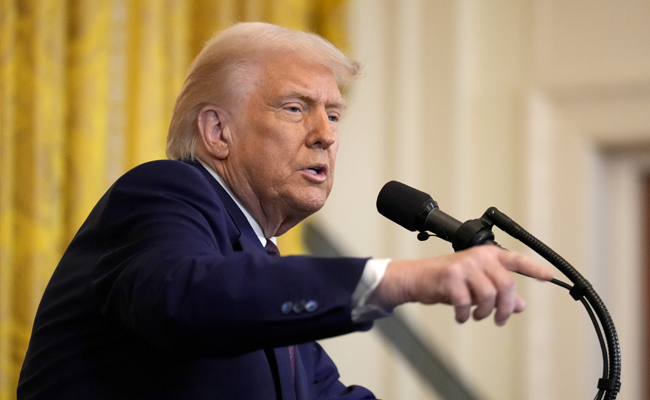
New Delhi: In a recent controversy, former US President Donald Trump alleged that USAID provided a $21 million grant to influence voter turnout in India. However, a fact-check by The Indian Express has revealed that the grant was actually intended for Bangladesh, not India.
According to records accessed by The Indian Express, the funding was sanctioned in 2022 to support political and civic engagement in Bangladesh, particularly among university students participating in protests ahead of the January 2024 elections. Of the $21 million, $13.4 million has already been disbursed.
The grants were issued through the Consortium for Elections and Political Process Strengthening (CEPPS), which specializes in democracy, rights, and governance programs. While Trump’s claims suggested the funds targeted India, records show there has been no USAID-funded CEPPS project in India since 2008.
The grant, formally designated as Federal Award Number 72038822LA00001, was approved for Bangladesh’s ‘Amar Vote Amar’ (My Vote is Mine) program, later renamed the ‘Nagorik (Citizen) Program.’ The initiative aimed to promote youth democratic leadership and civic engagement across university campuses.
A USAID advisor in Dhaka confirmed the funding’s purpose via social media, clarifying that the grant had been allocated to three organizations: the International Foundation for Electoral Systems (IFES), the International Republican Institute (IRI), and the National Democratic Institute (NDI).
Despite the controversy, officials confirmed that no such funding was allocated to India, debunking Trump’s claims of alleged interference in India’s electoral process.
Let the Truth be known. If you read VB and like VB, please be a VB Supporter and Help us deliver the Truth to one and all.
We received request; will decide soon whether to support TVK: Thirumavalavan
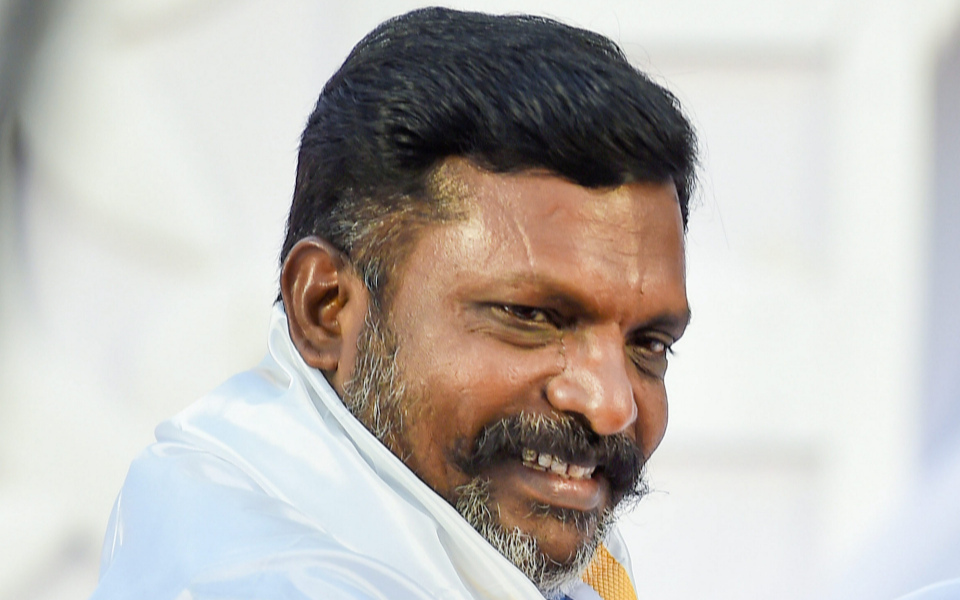
Chennai (PTI): VCK leader Thol Thirumavalavan on Thursday said that his party received a request from TVK for support and the high-level committee of his party will decide whether to support the Vijay-led party to form the government.
The TVK won 108 seats in the 234-member Assembly and emerged as the single largest party. Vijay will have to resign from one of the two constituencies he has won.
Though the Congress party, which has five MLAs, has extended support to TVK, the actor-politician-led party was still short of as many seats to touch the magic number of 118, the majority mark in the 234-member House.
"We received the request letter from TVK. We are thankful for that. We have not ignored his (Vijay's) request. We have a procedure. Therefore, our party's high-level committee will decide soon. We are going to discuss the merits and demerits of our position," the VCK leader told reporters here.
With regard to the delay in the governor's call to the TVK, which is the single largest party, to form the government, Thirumavalavan requested the governor to invite Vijay to form the government. "It is a constitutional right and people's verdict," he added.
Asserting that the governor cannot say that Vijay should hold 118 MLAs' support now itself to form the government, he said that after taking over power, Vijay has to prove an absolute majority only on the floor of the Assembly.
VIDEO | Chennai: VCK chief Thol Thirumavalavan (@thirumaofficial) says, “The Governor has no right to ask Vijay to prove his numbers or absolute majority of 118 before inviting him to form the government. He should first assume charge as Chief Minister, as it is the people’s… pic.twitter.com/sok3faXWBT
— Press Trust of India (@PTI_News) May 7, 2026