TSRTC strike: Telangana CM says RTC will not be merged with government
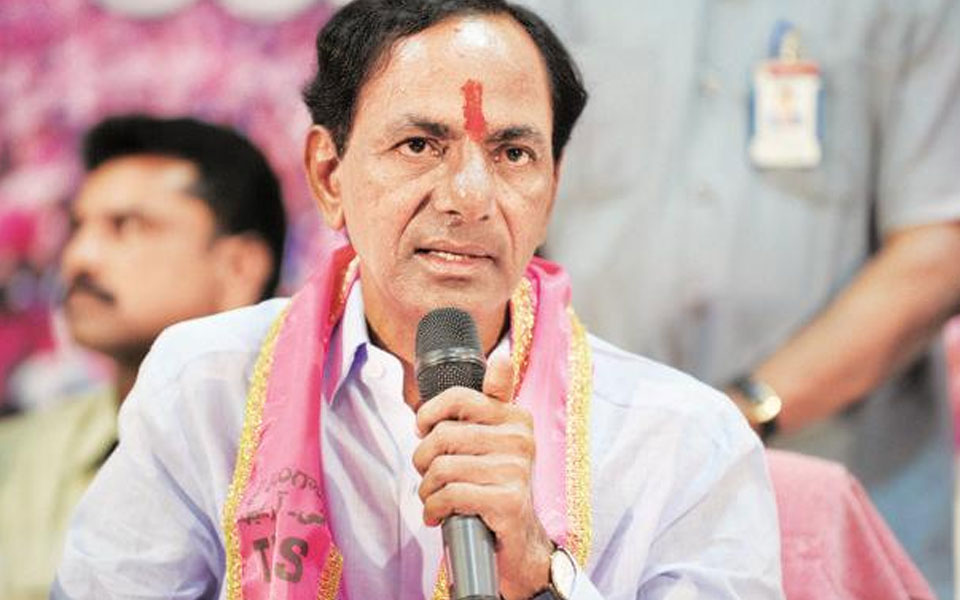
Hyderabad: Declaring the indefinite strike by Telangana State Road Transport Corporation (TSRTC) unions illegal, the state government on Sunday rejected their demand for a merger with the government.
According to an official release, the government also said there will be no further talks with the striking unions.
Chief Minister K Chandrasekhar Rao said employees who did not join their duties before the deadline (6 pm on Saturday) set by the government will not be taken back.
The stir by nearly 50,000 staff members entered the second day on Sunday with buses of the state-run TSRTC staying off the roads, affecting thousands during the festive season.
Different employees' and workers' unions of the TSRTC began an indefinite strike on Friday midnight across Telangana on a call given by the Joint Action Committee (JAC) of the TSRTC, demanding merger of the RTC with the government and recruitment to various posts, among other things.
Rao, who chaired a high-level review meeting, rejected the demand of TSRTC unions for a merger of the RTC with the government, the release said.
Transport Minister P Ajay Kumar and senior officials participated in the meeting.
Rao said the RTC is incurring losses to the tune of Rs 1,200 crore and has Rs 5,000 crore debts coupled with the ever-rising diesel prices.
When the RTC is in such a bad situation, there is no question of any compromise with those who are resorting to an unlawful strike that too during the festival season, he said.
"They have committed a grave mistake. Under no circumstances, the RTC will be merged with the government and the government will not have any talks with those who went on strike," the release quoted the chief minister as saying.
According to the release, the chief minister said the government is of the firm opinion that there should a permanent end to "blackmail tactics, indiscipline and actions that often create headaches".
Rao also categorically said there is no question of taking back the employees who did not join their duties before the deadline (6 pm on Saturday) stipulated by the government.
The chief minister directed the concerned officials to hire 2,500 private buses to make up for the shortfall of public transport. He also ordered that normal RTC operations be restored in 15 days. Rao said new employees should be hired soon and they should give an undertaking that they would not join any trade unions.
It was also decided that 50 per cent of the buses run by the RTC will be privately owned, the release said.
A committee formed under the chairmanship of senior IAS officers Sunil Sharma and Sandeep Sultania will look at all these issues and submit its proposals on Monday, it said.
He directed the officials to restore normalcy in the next 15 days.
"RTC should earn profits. It should be made into a profit-making organisation. People should not suffer under any circumstances. Profits should also be made from the RTC cargo service," the release quoted Rao as saying.
In a related development, a 'house motion petition' was filed by a student of Osmania University before the Vacation Bench of the Telangana High Court seeking directions to declare the strike illegal and to direct the unions to resume services as citizens were facing inconvenience on account of the strike.
The court was informed by the government counsel that alternate arrangements have been made and more buses were also being engaged to ensure that passengers do not face problems due to the strike.
The bench directed the state government to file a report on October 10 about the arrangements made. It also ordered to serve notices on two RTC unions.
The bench adjourned the matter to October 10.
TSRTC JAC chairman Ashwathama Reddy said their agitation will continue till their demands are met by the government.
Raising slogans against the state government, members of employees' and workers' unions took out protest rallies in different districts on Sunday.
The union leaders said they would hold a day-long fast on Monday in Hyderabad and warned that the agitation would be further intensified.
Let the Truth be known. If you read VB and like VB, please be a VB Supporter and Help us deliver the Truth to one and all.
Man arrested with Rs 2.54-crore heroin in Mumbai
Mumbai (PTI): Police have arrested a man and seized over 500 grams of heroin worth Rs 2.54 crore in the illicit market from him in Mumbai, officials said on Friday.
The police's Anti-Narcotics Cell (ANC) made the drug seizure in Santacruz in the western suburbs. The operation was conducted by the Kandivali unit of the ANC on Thursday as part of a special crackdown against drug trafficking in the area, they said.
Acting on specific inputs, an ANC team conducted a raid in Santacruz (East) and intercepted a man. During a search, the team recovered 508 grams of high-grade heroin from his possession, an official said.
The seized contraband, a highly addictive, opioid drug derived from morphine, is estimated to be worth Rs 2.54 crore in the international market, he informed.
Following the seizure, a case was registered against the man under relevant sections of the Narcotic Drugs and Psychotropic Substances (NDPS) Act, 1985, and he was formally placed under arrest in the early hours of Friday.
The police are currently investigating the source of the drug and trying to identify the intended recipients of the consignment, he said.