Two faiths, one celebration: rain unites Hindu, Muslim weddings in Pune
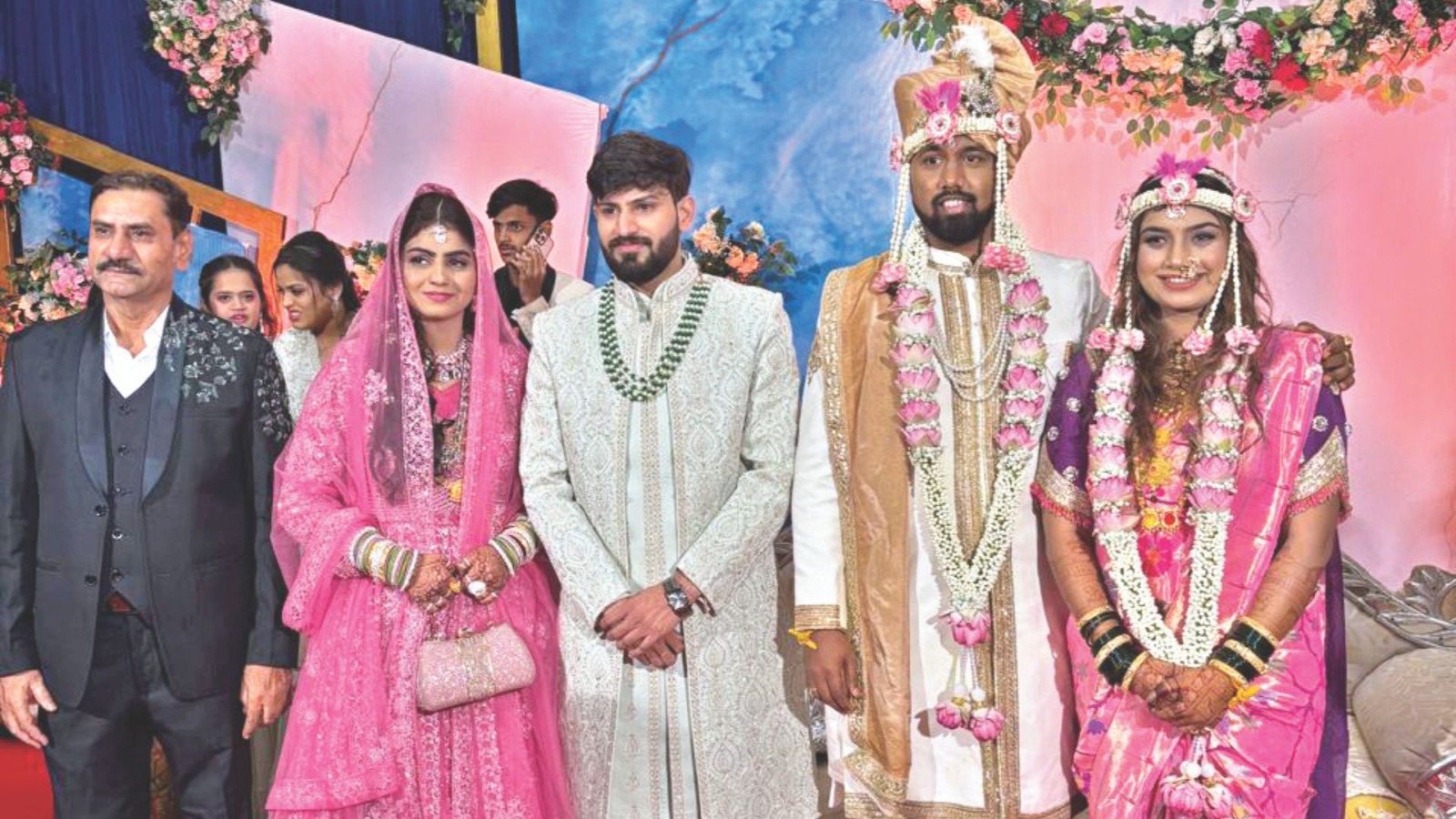
Pune: “Only in India can something like this happen,” said members of two families whose children, one Hindu couple and one Muslim couple, got married on the same stage in Pune on Tuesday evening, turning a rain-disrupted wedding into a heartwarming celebration of unity and humanity.
The wedding of Sankruti Kawade and Narendra Galande was scheduled at Alankaran Lawns near the SRPF Grounds in Wanawadi. But as preparations were underway, heavy rains lashed the venue, halting the Hindu rituals and forcing guests to seek shelter.
Meanwhile, in a nearby covered hall, the Walima ceremony of Mohsin Kazi and Maheen—son and daughter-in-law of retired police officer Faruk Kazi—was taking place.
In a remarkable act of generosity and compassion, the Kazi family welcomed the disrupted wedding party into their venue. Not only did they vacate the stage, but their guests also helped set up for the Hindu rituals. Both weddings were conducted respectfully, back-to-back.
The families didn’t just share space—they shared emotions, food, and joy. The Kazis invited the Kawades to join in their wedding feast and even arranged space for their food. The joint celebration lasted well into the night.
“I saw their wedding was in trouble and I felt their pain. As a father, I knew what it must have meant to them. It was only natural to help,” said Faruk Kazi.
The sight of two newlywed couples, one Hindu and one Muslim, sharing the same stage symbolized more than just a coincidence—it became a moving reminder that in moments of chaos, compassion and togetherness still shine.
“This is the real India,” said both families with pride.
Let the Truth be known. If you read VB and like VB, please be a VB Supporter and Help us deliver the Truth to one and all.
Karnataka by-polls: Cong ahead in Bagalkot, BJP leads in Davanagere South
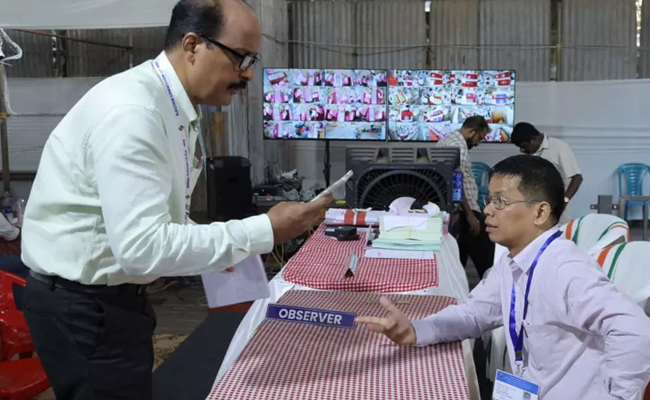
Bengaluru (PTI): Trends show Congress and BJP have maintained leads respectively in Karnataka's Bagalkot and Davanagere South Assembly seats, where counting of votes is underway on Monday, for the bypolls held for two seats on April 9.
The polls were necessitated by the deaths of senior Congress MLAs H Y Meti (Bagalkot) and Shamanur Shivashankarappa (Davanagere South).
According to the Election Commission, Congress party's Umesh Meti was ahead of BJP's Veerabhadrayya Charantimath by a margin of 9,969 votes in Bagalkot.
In Davanagere South, BJP's Srinivas T Dasakariyappa was leading over Congress party's Samarth Mallikarjun by a margin of 8,539 votes.
Nine and 25 candidates were in the fray, respectively in the Bagalkot and Davanagere South Assembly segments.