Two-thirds of migrants have returned to cities or wish to do so: Survey
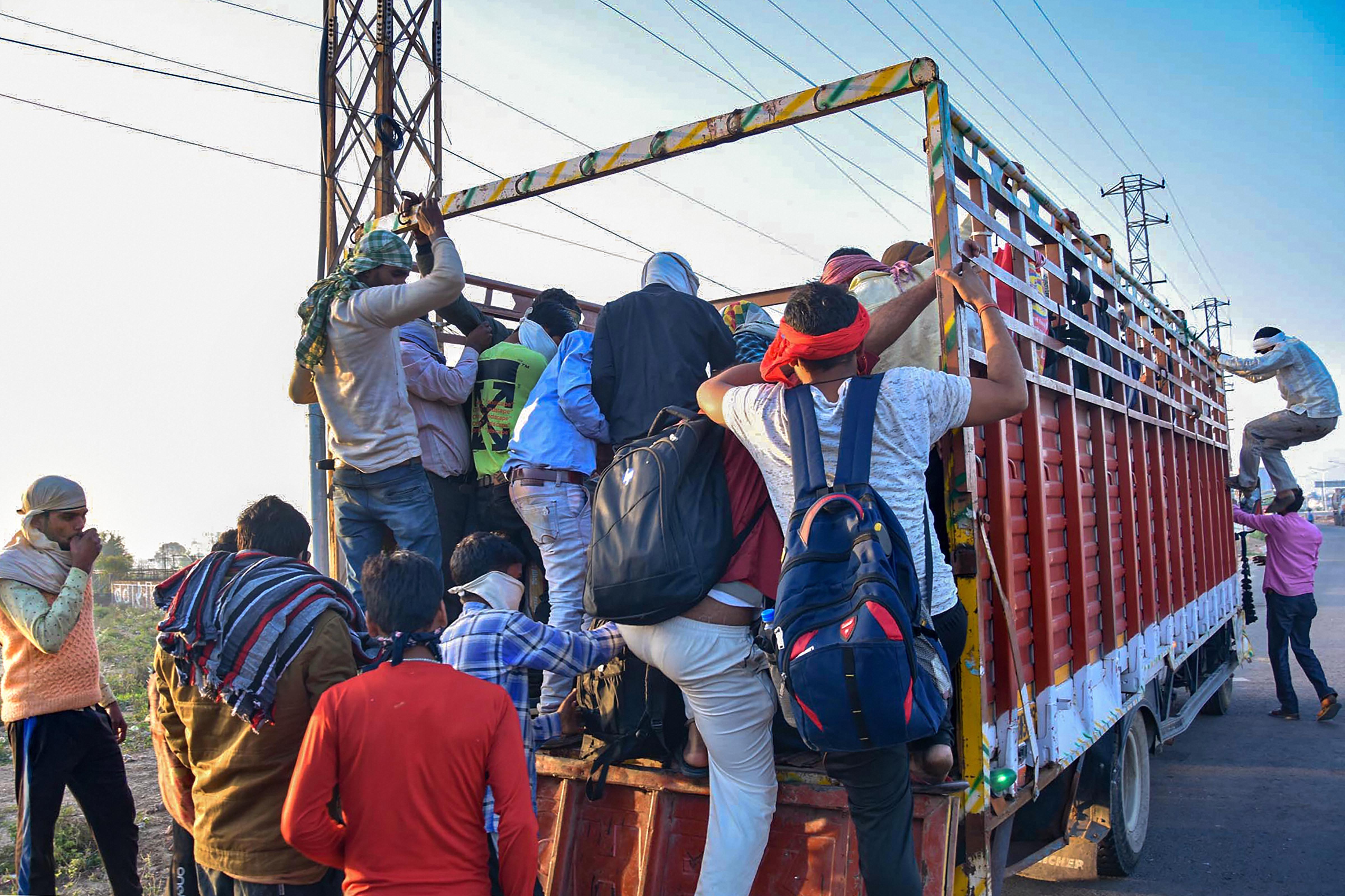
New Delhi: Nearly two-thirds of migrant workers who had left for their homes due to the coronavirus-induced lockdown have either returned to cities or wish to do so in the absence of skilled employment in villages, according to a new study that surveyed over 4,500 households.
The collaborative study on "How is the Hinterland Unlocking" was carried out by the Aga Khan Rural Support Programme (India), Action for Social Advancement, Grameen Sahara, i-Saksham, PRADAN, SAATHI-UP, SeSTA, Seva Mandir and Transform Rural India Foundation, VikasAnvesh Foundation and Sambodhi.
The study is based on a rapid assessment survey of 4,835 households across 48 districts in 11 states carried out between June 24 and July 8.
It found that 29 per cent of migrants who had left for their villages are now back in cities, while 45 per cent want to return.
"Absence of skilled employment in villages is reflected in the fact that nearly two-thirds of the returned migrants have either migrated again or wish to do so," it said.
The study also found that migrants who returned were engaged mainly in labour work in villages, more than 80 per cent of them.
"More than one-fourth of the migrant workers are still searching for work in villages," it said.
According to the survey, one in every four households is thinking of taking their child out of school (24 per cent).
"Though distress is still considerable, structural changes are not yet visible and the health risk of COVID-19 in rural India is rising," the survey warned.
The study found that 43 per cent of households still reported a reduction in meals, while 55 per cent said they have reduced the meal items.
However, it said, there was a "marked improvement" in food intake in comparison to the lockdown period.
"... it is likely that grain availability through PDS (public distribution system) has helped households improve the consumption as well as reduce the need to buy from the market," it noted.
The study found that about 6 per cent of participants have mortgaged household items, while 15 per cent sold their livestock to cope with financial distress.
With regard to sale of productive assets, the study found that 2 per cent of households have sold dry cattle and milk cattle each.
About 2 per cent have mortgaged their land, while one per cent surveyed households have sold their land.
About 10 per cent of households have borrowed money from their extended families, while 7 per cent borrowed from money lenders, the study found.
The survey found that women in households where migrant members have returned shouldered more workload compared to other members.
On government schemes, the study found that 71 per cent of households have LPG and 85 per cent of them got it through the 'Ujjwala Yojana'.
"Eighty per cent of Ujjwala beneficiaries have received free refills in the last month (June 2020), while 90 per cent households are eligible for PM-KISAN and 38 per cent of those have received the transfer of Rs 2,000," it said.
The study found that 35 per cent of households have postponed a ceremony and 13 per cent reduced the number of guests instead.
Released at a webinar on Monday, the study was aimed at making an assessment of the effect of the lockdown on rural households.
It focussed mainly on areas of reverse migration, food security, kharif season practices, drudgery faced by the women in households, and borrowing and asset sales.
Let the Truth be known. If you read VB and like VB, please be a VB Supporter and Help us deliver the Truth to one and all.
Karnataka School Edu Dept prohibits children from being made to dance to obscene songs
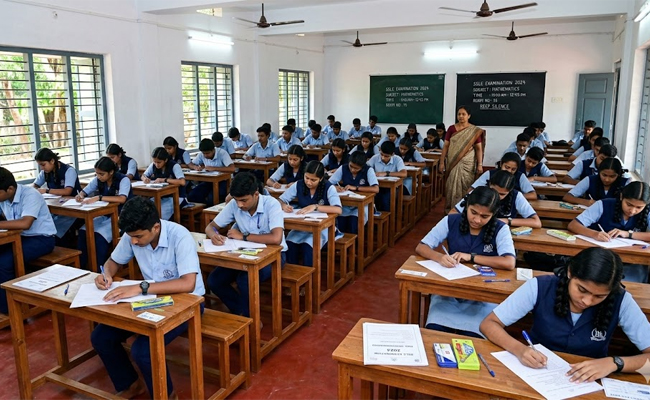
Bengaluru (PTI): The Karnataka School Education Department has issued a circular strictly prohibiting children from being made to dance to obscene songs in educational and cultural programmes.
It stated that such dances would negatively impact students' mental health and moral values. It will create indiscipline and harm the sanctity of education.
"All the Deputy Directors (Administration) of the state's School Education Department have been asked to take strict measures to prevent children or students from dancing to obscene songs in all government, aided and unaided schools in the state," the office of the commissioner of the School Education Department said in a recent circular.
"If it is found that children are being made to dance to obscene songs, appropriate action will be taken against the headmaster or management of such school," it added.
The department also listed certain measures in this regard, which include: strictly prohibiting children from being made to dance to obscene songs during educational and cultural programmes; selecting songs that are inspiring, positive, instilling national pride in children and reflecting the greatness, dignity, values, culture, and morality of the state.
Stating that the school headmaster and management are responsible for selecting songs and dances for cultural programmes, it said, they should also ensure that students wear decent clothes in dance or cultural programmes.