UAPA, sedition law misused to stifle dissent, needed to be repealed; say former SC judges
New Delhi, Jul 24: Four former Supreme Court judges Saturday batted for repeal of penal provision on sedition and stringent Unlawful Activities (Prevention) Act (UAPA) saying these are usually misused to stifle dissent and quell the voices which ask questions from the government.
Referring to the death of 84-year-old Father Stan Swamy, booked under UAPA, in jail, one of the judges Aftab Alam said, "I submit, UAPA has failed us on both counts: National security and Constitutional Freedoms."
Justice Alam, and fellow former judges Deepak Gupta, Madan B Lokur, and Gopal Gowda spoke at a public discussion on a topic "Democracy, dissent and draconian law - should UAPA and sedition law should have a place in the statute books?"
While Justice Alam said the process of trial becomes a punishment for many in such cases, Justice Lokur was of the view that there should be a system of compensation for those who are wrongfully implicated and later acquitted.
Echoing the same view, Justice Gupta expressed that these draconian laws have no place in a democracy. Notably, Justice Gowda was of the opinion that the legislations have now become a weapon against dissent and that they need to be abrogated.
"One of the criticisms of the UAPA is that it has a very low rate of conviction but a high rate of pendency. It is the process that becomes the punishment," said Justice Alam.
Quoting the National Crime Records Bureau (NCRB) data, he said that 2,361 UAPA cases were pending in trial in 2019 out of which 113 were disposed of with conviction in 33 cases, acquittal in 64, and discharge in 16 which brings the rate of conviction to 29.2 percent.
"If compared against the number of cases registered or people arrested, the rate of conviction comes down to 2 percent, and the pendency rate increases to 98 percent," the former apex court judge rued.
He said that the UAPA has failed the country on two counts - national security and constitutional freedom and must be repealed.
Concurring with Justice Alam, Justice Gupta elaborated on the misuse of the sedition law and UAPA and said that it has been made harsher and harsher over time and should be shown the door as soon as possible.
"In a democracy, dissent is essential and draconian laws have no place. In the last few years, laws have been misused to stifle dissent and quell the voices which ask questions from the government," he said.
Alluding to the death of UAPA accused Stan Swamy and arrest of a man in Manipur under the National Security Act (NSA) for saying that cow dung is not a cure for COVID-19, he asked if "India has become a police state".
Meanwhile, even though Justice Lokur agreed that there is a need to repeal the draconian laws, he said that not only will they "never go anywhere, but National Security Act (NSA) will also be made to be very active to quell dissent".
He suggested that the only remedy is accountability and compensation for those who are acquitted after long periods of incarceration.
Further, Justice Gowda noted that massive reforms are necessary in special security legislations as they "reek of an authoritarian impulse which is dangerous in a constitutional democracy".
"Legal reforms are imperative. Provisions in these special laws that accord impunity to State excesses need to be repealed. Stringent guidelines need to be laid down for the exercise of these powers," he said.
Senior advocate Prashant Bhushan, who also spoke at the webinar, said that UAPA and sedition are being used to stifle dissent and crush the freedom of speech and that the time has come to see whether they are in tune with the Constitution.
The discussion was organised by the Campaign for Judicial Accountability and Reforms (CJAR) and Human Rights Defenders Alert (HRDA).
Let the Truth be known. If you read VB and like VB, please be a VB Supporter and Help us deliver the Truth to one and all.
Allahabad HC orders probe into 'reinstatement' of teacher in UP's Barabanki
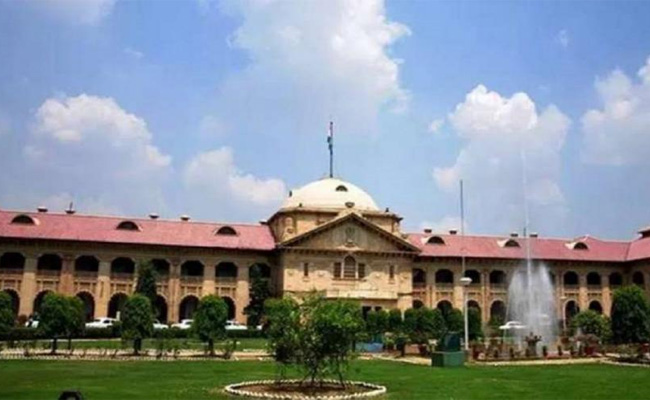
Lucknow (PTI): The Lucknow Bench of the Allahabad High Court on Friday ordered a probe by the special task force (STF) into alleged irregularities in the rejoining of a teacher at City Intermediate College in Barabanki, observing that the reinstatement appeared to be prima facie illegal.
The court also directed the recovery of the salary paid to the teacher during the disputed period.
A bench of Justice Rajeev Singh passed the order on a petition filed by the college management committee. The court expressed doubts over the roles of the District Inspector of Schools (DIOS), Barabanki, the college principal and the teacher concerned and hence, directed a detailed inquiry into the matter.
Taking note of alleged manipulation of records and misleading submissions, the court ordered the immediate transfer of the Barabanki DIOS to ensure a fair probe. It also directed the initiation of disciplinary proceedings against the then joint director of education of the Ayodhya division.
In its order, the court found that the teacher, Abhay Kumar, was initially appointed as an assistant teacher in 2018 but joined an Eklavya Model Residential School in Chhattisgarh as a lecturer in June 2024 without obtaining permission from the management. His subsequent request to retain the lien was rejected.
Despite this, he was allowed to rejoin the Barabanki College in September 2025 on the directions of the joint director of education and the DIOS, and was even paid the salary for October 2025. The court termed the rejoining "wholly illegal" and lacking any legal basis.
The bench also expressed concern over lapses in communication within the education department and directed the Uttar Pradesh chief secretary to ensure that official orders are communicated through email and WhatsApp as well, to prevent disputes.
The matter is next listed for hearing on May 28 when a compliance report is sought.