Uddhav now has remote control of power in Maharashtra, says Shiv Sena
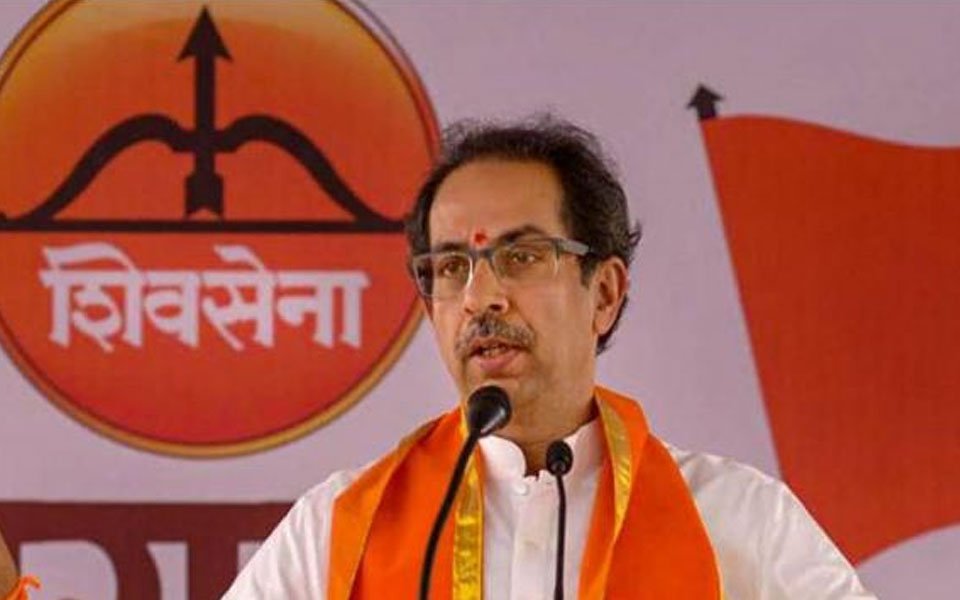
Mumbai: The Shiv Sena on Sunday said it now had the "remote control of power" in Maharashtra despite getting fewer seats in the 2019 assembly polls when compared to 2014.
During the first Sena-BJP government in the state, between 1995 to 1999, the term remote control was regularly used for and by the late party patriarch Bal Thackeray to explain the chain of command in the dispensation.
The two allies are in the midst of tough negotiations after the BJP returned a less-than-impressive performance in the assembly polls, results of which were declared on October 24, with 105 seats against 122 in 2014.
Among Sena's demands is a written assurance from the BJP on "equal sharing of power", which could possibly include equal division of the chief ministerial tenure.
In his column 'Rokhthok' in Sena mouthpiece 'Saamana', Sanjay Raut said, "The Sena won less seats this time, 56 compared to 63 in 2014, but it has the remote control of power".
"The dream that the Shiv Sena will drag itself behind the BJP is busted (after poll results). A cartoon showing a tiger (Sena's identity) holding a lotus (BJP's symbol) in its hand tells a lot about the current scenario. Not taking anyone for granted is the message," he said in his column.
Raut is the executive editor of Saamana and also the chief whip of the party in Parliament. The column hinted that the Sena would stay firm on its demands before government formation with the BJP.
Hitting out at its ally further, he wrote, "The BJP's strategy of contesting 164 seats and winning 144 of them was rejected by voters. The election result is the defeat of unethical thoughts of increasing the tally by getting key Congress-NCP leaders to join the BJP, by luring them or threatening them."
He said the defeat of NCP-turned-BJP leader Udayanraje Bhosale in the Satara bypoll was a message to those who were assuming they could "do whatever they wanted" to win polls.
Bhosale had won the 2019 Lok Sabha polls from Satara on an NCP ticket before quitting and joining the BJP, necessitating a bypoll in which he was trounced by NCP's Srinivas Patil.
Those whose heads are in the clouds will end up like Udayanraje was the message of the 2019 assembly polls, he said in the column.
Raut also claimed that people did not like comments like "ending the Pawar pattern", and the dislike was expressed through the ballot, especially in rural areas where the opposition did well.
"The Shiv Sena stopped the BJP's plans of forming a government on its own in the state in 2014. In 2019, it was Sharad Pawar who did the same," Raut said.
Let the Truth be known. If you read VB and like VB, please be a VB Supporter and Help us deliver the Truth to one and all.
SC to hear on May 4 PIL seeking stringent guidelines for issuing Aadhaar to adolescents, adults
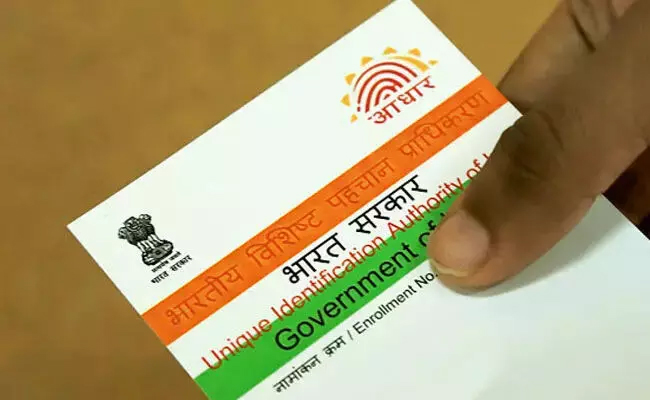
New Delhi (PTI): The Supreme Court is scheduled to hear on Monday a plea seeking a direction to the Unique Identification Authority of India to issue new Aadhaar cards only to citizens up to the age of six years, and frame stringent guidelines for its issuance to adolescents and adults to stop infiltrators from masquerading as Indian citizens.
As per the apex court's causelist of May 4, the plea would come up for hearing before a bench of Chief Justice Surya Kant and Justice Joymalya Bagchi.
The Public Interest Litigation (PIL) filed by lawyer Ashwini Upadhyay has also sought a direction to the authorities to install display boards at common service centres stating that the 12-digit unique identification number is only a "proof of identity" and not a proof of citizenship, address or date of birth.
Besides all the states and Union Territories, the plea has made the UIDAI -- which is the authority that issues Aadhaar -- and the Union ministries of home, law and justice, and electronics and information technology as parties.
The plea, filed through advocate Ashwani Dubey, said Aadhaar, originally intended as a proof of identity, has increasingly become a "foundational document" enabling individuals to obtain other identification documents, such as ration cards, domicile certificates and voter identity cards.
"The UIDAI has issued 144 crore Aadhaar and 99 percent Indians have been enrolled. Therefore, the petitioner is filing this writ petition as a PIL under Article 32, seeking a direction to UIDAI to issue new Aadhaar to children only and frame new stringent guidelines for adolescents and adults, so as to stop infiltrators from getting it and masquerading as Indian citizens," the plea said.
It said the need to file the plea arose when the petitioner came to know the manner in which infiltrators are able to procure Aadhaar through a verification process that is weak and can be easily manipulated.
"Foreigners apply for Aadhaar under the 'foreign' category. But infiltrators apply for Aadhaar under the 'Indian citizen' category and get it easily made. Thereafter, they obtain a ration card, birth and domicile certificate, driving licence, et cetera, essentially becoming indistinguishable from Indian citizens…," it said.
Besides seeking other directions, the plea has raised legal questions, including whether the Aadhaar Act 2016 has become "temporally unreasonable" for failing to keep up with the legislative intent of distinguishing foreigners from Indian citizens.
It said the alleged misuse of Aadhaar undermines targeted welfare delivery and leads to diversion of public resources.