
UDF leaders see local body poll trends as pointer to 2026 Assembly elections in Kerala
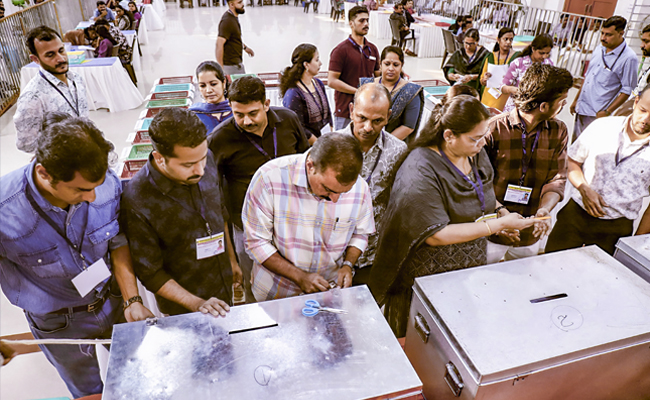
Thiruvananthapuram (PTI): Buoyed by the strong performance of the Congress-led UDF in the local body polls, KPCC president Sunny Joseph said on Saturday that the front's results indicated the people had rejected the LDF government.
According to early trends, the UDF was leading in more grama panchayats, block panchayats, municipalities and corporations than the LDF.
The local body polls were held in two phases in the state earlier this week.
ALSO READ: Cong candidate who moved Kerala HC for name reinstatement in voter list, wins
Speaking to reporters here, Joseph said the people of Kerala had extended their support to the UDF.
"We could expose the LDF government’s anti-people stance and the people understood it. The LDF’s fake propaganda was rejected by the people. The UDF is moving towards a historic victory," he said.
He said a united effort, proper preparations, good candidate selection and hard work had resulted in the Congress and the UDF’s victory in the elections.
Asked about the prospects in the Thiruvananthapuram Corporation, Joseph said the party was studying the matter and would comment later.
LDF convenor T P Ramakrishnan said the results would be closely examined.
According to him, the government had done everything possible for the people.
"Why such a verdict happened will be examined at the micro level. People’s opinion will be considered and further steps will be taken," he said.
He added that decisions would be taken after analysing the results. "If any corrective measures are required, we will initiate them and move forward," he said.
AICC leader K C Venugopal said the results showed that people had begun ousting those who, he alleged, were responsible for the loss of gold at Lord Ayyappa’s temple.
"This trend will continue in the Assembly elections as well. It is an indication that the people are ready to bring down the LDF government," he said.
Venugopal said the UDF had registered victories even in CPI(M) and LDF strongholds.
"I congratulate all UDF workers for their hard work. Congress workers and leaders worked unitedly," he said.
Referring to remarks made by Chief Minister Pinarayi Vijayan against the Congress on polling day, Venugopal said the voters had responded through the verdict.
"I do not know whether the chief minister understands that the people are against him. Otherwise, he does not know the sentiment of the people. The state government cannot move an inch further," he said.
He said the results indicated a strong comeback for the UDF in Kerala.
Asked whether the Sabarimala gold loss issue had affected the LDF in the local polls, Venugopal said the CM and the CPI(M) state secretary did not take the issue seriously.
"We took a strong stand on the matter. The BJP played a foul game in it," he alleged.
On the BJP's role in the local body elections, Venugopal alleged that the party operated with the CPI(M) 's tacit support.
"The CPI(M) supported the central government on issues such as PM-SHRI, labour codes and corruption in national highway construction. The CPI(M) is facing ideological decline, and the state government’s policies are against the party’s own decisions," he said.
Meanwhile, LDF ally Kerala Congress (M) leader Jose K Mani said the party could not win all the wards it had expected in the elections.
He congratulated winners from all parties and said the party would closely examine the losses and identify shortcomings. "Later, we will take corrective measures," he added.
Senior Congress leader and MP Rajmohan Unnithan said the trends in the local body elections indicated that the UDF would return to power in the 2026 Assembly elections.
"We will win 111 seats as in 1977 and return to power in 2026. The anti-government sentiment of the people is reflected in the elections," he said.
Unnithan said the people were disturbed and unhappy with the present government.
"The trend indicates the end of the LDF government," he added.
CPI(M) MLA M M Mani said the people had shown ingratitude towards the LDF despite benefiting from welfare schemes.
"After receiving all welfare schemes and living comfortably, people voted against us due to some temporary sentiments. Is that not ingratitude," he asked.
Mani said no such welfare initiatives had taken place in Kerala earlier.
"People are receiving pensions and have enough to eat. Even after getting all this, they voted against us. This is what can be called ingratitude," he said.
Muslim League state president Panakkad Sayyid Sadiq Ali Shihab Thangal said the results were beyond expectations.
"The outcome points towards the Secretariat in Thiruvananthapuram, indicating that a change of government is imminent. We are going to win the Assembly election," he said.
Let the Truth be known. If you read VB and like VB, please be a VB Supporter and Help us deliver the Truth to one and all.
Rajasthan: ACB court sends former IAS Subodh Agarwal to 2-day police remand in JJM scam
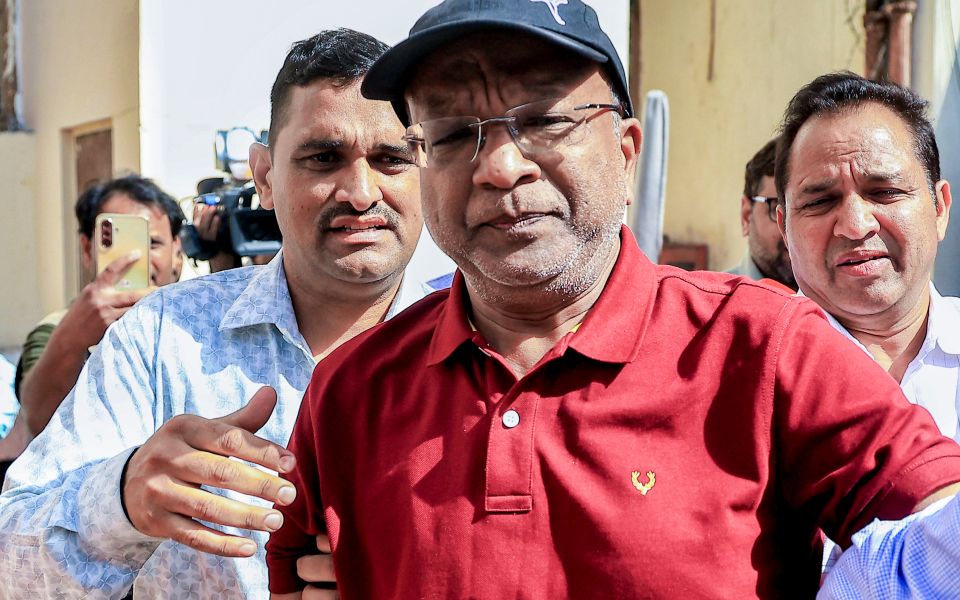
Jaipur (PTI): Retired IAS officer Subodh Agarwal, arrested in connection with the alleged Rs 960-crore Jal Jeevan Mission scam, was produced before an ACB court on Monday, which sent him to two days' police remand.
The Anti-Corruption Bureau had sought a three-day remand for further questioning in the matter, but the court granted two days' custody.
The order was passed by the ACB Court-1.
A team from the ACB arrested Agarwal on Thursday in connection with the multi-crore Jal Jeevan Mission corruption case.
He was sent to a three-day police remand on Friday. On completion of the remand period, the ACB produced him in court.
Agarwal was serving as the additional chief secretary of the public health engineering department when the alleged scam took place.
Some firms had allegedly secured tenders by submitting forged completion certificates in connivance with officers. Last month, the ACB arrested nine persons, including senior engineers and retired officials, in connection with the scam. Earlier, the ACB had arrested contractors.
_vb_90.jpeg)
_vb_90.jpeg)
_vb_23.jpeg)