UIDAI mulling to issue Aadhaar with photo, QR code to discourage offline verification
_vb_67.jpeg)
New Delhi (PTI): The Unique Identification Authority of India is mulling issuing an Aadhaar card with the holder's photo and a QR code to prevent misuse of individuals' data and discourage offline verification practices, which are in contravention of the present law, a top official said on Tuesday.
In an open online conference on a new app for Aadhaar, UIDAI CEO Bhuvnesh Kumar said that the authority is considering introducing a new rule in December to discourage offline verification by entities such as hotels, event organisers, etc, and enhance the age verification process using Aadhaar while maintaining the privacy of individuals.
"There is a thought process as to why there should be any detail on the card. It should be only a photo and a QR code. If we keep printing, then people will keep accepting what is printed. People who know how to misuse it will keep misusing it," Kumar said.
The Aadhaar Act prohibits the collection, use, or storage of an Aadhaar number or biometric information of any individual for any purpose in case of offline verification.
However, several entities continue to collect and store photocopies of the Aadhaar card.
Kumar said that legislation is in work to discourage offline verification by using an Aadhaar card copy, which will be taken up for consideration by the Aadhaar authority on December 1.
"Aadhaar should never be used as a document. It should only be authenticated with the Aadhaar number or verified using QR code. Otherwise, it can be a fake document," Kumar said.
The UIDAI held a joint meeting with several stakeholders including banks, hotels, fintech firms etc to update them on the new app in the works which is expected to be rolled out soon.
The new app is expected to fine tune Aadhaar authentication service in line with Digital Personal Data Protection Act which will be completely operational in 18 months.
The app will enable users to update their address proof documents on the new app and add other family members on the same app who don't own any mobile phone.
An UIDAI official said that the new app will also enable updating of mobile number of Aadhaar holders within the family using face authentication feature in the app.
Kumar said that the new app will replace the mAadhaar app, and it will ease the authentication process for the various entities that need to verify an individual for various purposes.
The new app will work like Aadhaar verification done by the Digiyatra app.
He said that the authentication service can generate various use cases and entities can give feedback to UIDAI on new use cases of Aadhaar authentication services.
Another UIDAI official explained that the new app will help in the verification of individuals in several cases, including entry into events, cinema halls, buying certain products where the minimum age requirement is 18 years, as well as student verifications, check-in at hotels, entry into residential societies, etc.
The official authority has published details online to update systems of offline verification seeking entities (OVSE).
He said that OVSE can use the new system to verify Aadhaar number holders both online and as proof of physical presence.
"Aadhaar holder will show the QR code in the scanner of OVSE. The system will then prompt for face verification. This will also work as proof of the presence of an Aadhaar number holder. We will open an application for OVSE very soon. We will verify details of OVSE, and once approval is done, then OVSE will have to initiate technical integration to access a QR code for updating data from the Aadhaar database," the official said.
Let the Truth be known. If you read VB and like VB, please be a VB Supporter and Help us deliver the Truth to one and all.
Women's quota bill would have ensured defeat of democracy, Constitution: Aaditya Thackeray
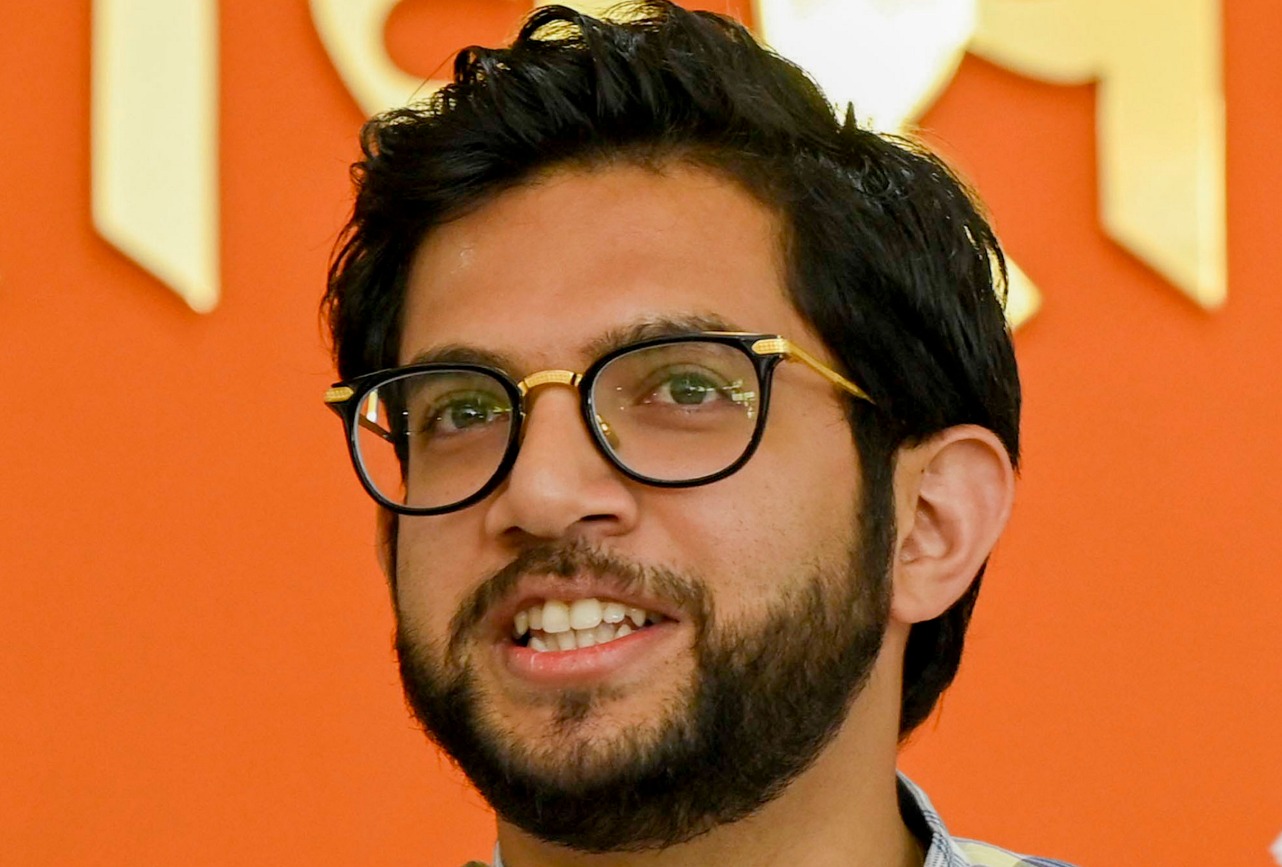
Mumbai (PTI): Shiv Sena (UBT) leader Aaditya Thackeray on Saturday said that the passage of the women's quota bill would have ensured a "total defeat of democracy", alleging that the legislation, linked with a delimitation exercise, was a political tool designed to reduce the voice of states.
Thackeray, in a post on X, claimed that the Bill would have amended the Constitution for the political means of the ruling regime to increase seats, reduce the voice of many states and enable the gerrymandering of constituencies to ensure unfair victories.
"The very amendment that would have ensured the total defeat of democracy and the Constitution in India stands rejected by the unity of the Opposition MPs," he wrote.
The legislation should have been called "Delimitation to ensure unfair victory Bill", the former minister said, adding that there was a genuine need to enable 33 per cent reservation for women in the current number of seats.
"Now, it is up to the government to ensure that it is implemented in the 543 seats of the Lok Sabha for the 2029 elections and all elections across India, if that is the real intent of the government," he wrote.
A Constitution Amendment Bill to implement reservation for women in legislatures in 2029 and increase the number of Lok Sabha seats was defeated on Friday in the Lower House.
While 298 members voted in support of the Bill, 230 MPs voted against it. Out of 528 members who voted, the Bill required 352 votes for a two-thirds majority.
According to the Constitution Amendment Bill, Lok Sabha seats were to be increased to a maximum of 850 from the current 543 to "operationalise" the women's reservation law before the 2029 parliamentary polls, following a delimitation exercise based on the 2011 Census.