UN dismisses 'irrelevant' submissions by fugitive Nithyananda's Kailasa at Geneva meetings
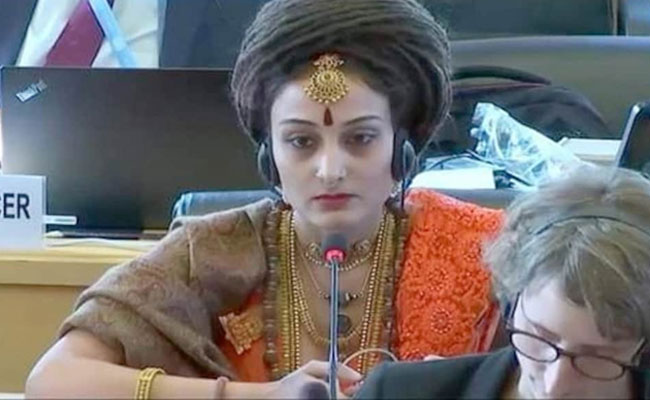
London/Geneva (PTI): The UN human rights office Thursday said any submissions made by representatives of the so-called "United States of Kailasa (USK)", founded by Indian fugitive Nithyananda, at its public meetings in Geneva last week were "irrelevant" and will not be considered in the final outcome drafts.
Confirming the participation of the so-called "USK representatives" at two of its public meetings - registration to which was open to everyone, the Office of the High Commissioner for Human Rights (OHCHR), however, said they were prevented from distributing promotional material and their "tangential" speech was not taken into consideration.
The comments by the OHCHR spokesperson came even as videos and images showing a USK representative speaking on behalf of the fictional state on "indigenous rights and sustainable development" at one of the events went viral on social media. The two events were held on February 22 and 24.
"Registration for such public events is open to NGOs and the general public. Anyone can submit information to the treaty bodies, who will use their judgment to determine the credibility of the submissions received," the OHCHR spokesperson said when asked about their participation.
"On 24 February, at CESCR's general discussion, when the floor was opened to the public, a USK representative spoke briefly. As the focus of the statement was tangential to the topic at hand, it will not be taken into consideration by the Committee in the formulation of the General Comment," the spokesperson added.
There was no immediate comment from India's permanent mission in Geneva.
However, India's former Permanent Representative at UN, T S Tirumurti, described it as a "complete abuse" of UN procedures.
"It's a complete abuse of UN procedures to have representatives of an organisation run by a fugitive from law address the UN as NGOs or otherwise. India has been consistent in calling for a robust process to ensure that only credible NGOs get accredited. However, this call has not been heeded to," he said.
"While NGOs continue to have an important say in a range of global issues, we need to preserve the integrity of the UN, which is a member State driven organisation," the former diplomat added.
Vijayapriya Nithyananda, who claimed to be "the permanent ambassador of (so-called) the United States of Kailasa", can be seen making her intervention in videos from the event and has triggered questions over the group's involvement at sessions addressed by the likes of former Australian prime minister Julia Gillard and other human rights experts.
Nithyananda, a self-proclaimed godman, is wanted in India on several charges of rape and sexual assault allegations he denies. He claims to have founded the "United States of Kailasa (USK)" in 2019 and according to its website, counts "two billion practising Hindus" among its population.
Let the Truth be known. If you read VB and like VB, please be a VB Supporter and Help us deliver the Truth to one and all.
Allahabad HC orders probe into 'reinstatement' of teacher in UP's Barabanki
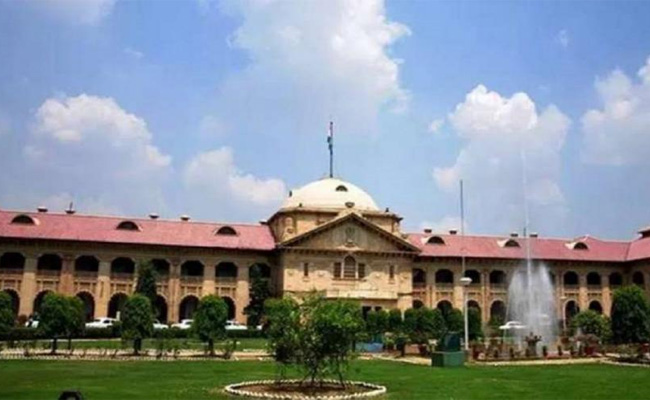
Lucknow (PTI): The Lucknow Bench of the Allahabad High Court on Friday ordered a probe by the special task force (STF) into alleged irregularities in the rejoining of a teacher at City Intermediate College in Barabanki, observing that the reinstatement appeared to be prima facie illegal.
The court also directed the recovery of the salary paid to the teacher during the disputed period.
A bench of Justice Rajeev Singh passed the order on a petition filed by the college management committee. The court expressed doubts over the roles of the District Inspector of Schools (DIOS), Barabanki, the college principal and the teacher concerned and hence, directed a detailed inquiry into the matter.
Taking note of alleged manipulation of records and misleading submissions, the court ordered the immediate transfer of the Barabanki DIOS to ensure a fair probe. It also directed the initiation of disciplinary proceedings against the then joint director of education of the Ayodhya division.
In its order, the court found that the teacher, Abhay Kumar, was initially appointed as an assistant teacher in 2018 but joined an Eklavya Model Residential School in Chhattisgarh as a lecturer in June 2024 without obtaining permission from the management. His subsequent request to retain the lien was rejected.
Despite this, he was allowed to rejoin the Barabanki College in September 2025 on the directions of the joint director of education and the DIOS, and was even paid the salary for October 2025. The court termed the rejoining "wholly illegal" and lacking any legal basis.
The bench also expressed concern over lapses in communication within the education department and directed the Uttar Pradesh chief secretary to ensure that official orders are communicated through email and WhatsApp as well, to prevent disputes.
The matter is next listed for hearing on May 28 when a compliance report is sought.