UN Human Rights Director resigns, accuses UN of failing to prevent ‘Genocide’ in Gaza
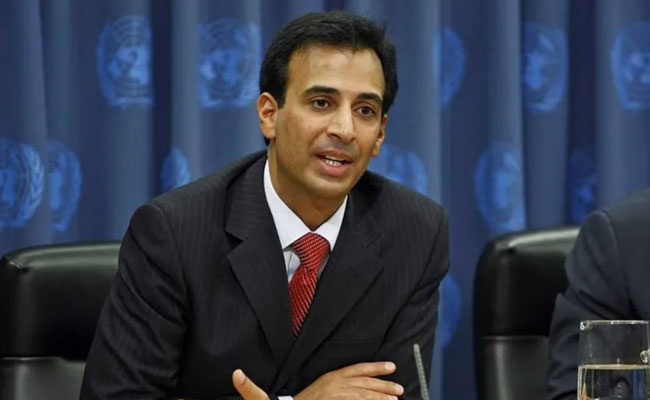
Craig Mokhiber, the director of the New York office of the UN High Commissioner for Human Rights, has resigned from his post, accusing the United Nations of "failing" to prevent what he categorizes as genocide of Palestinian civilians in Gaza under Israeli bombardment.
In his resignation letter sent to the UN High Commissioner in Geneva, Volker Turk, Mokhiber cited the US, UK, and much of Europe as "wholly complicit in the horrific assault" and claimed that the UN had become "powerless to stop it."
Mokhiber, who was stepping down due to reaching retirement age, criticized the UN for its failure to prevent previous genocides, including those against the Tutsis in Rwanda, Muslims in Bosnia, the Yazidi in Iraqi Kurdistan, and the Rohingya in Myanmar. He stated that the current situation in Gaza, where Palestinian people are being systematically persecuted, amounts to a "textbook case of genocide" and condemned the international community for refusing to meet their obligations under the Geneva Conventions. He accused the US, UK, and many European countries of arming Israel's assault and providing political and diplomatic cover for it.
In his resignation letter, Mokhiber called for the effective end to the state of Israel, proposing the establishment of a single, democratic secular state in all of historic Palestine with equal rights for Christians, Muslims, and Jews. He also advocated for the dismantling of the "deeply racist, settler-colonial project" and an end to apartheid in the region.
“The current wholesale slaughter of the Palestinian people, rooted in an ethno-nationalist colonial settler ideology, in continuation of decades of their systematic persecution and purging, based entirely upon their status as Arabs … leaves no room for doubt.” He added in his letter.
“We must support the establishment of a single, democratic secular state in all of historic Palestine, with equal rights for Christians, Muslims, and Jews,” he wrote, adding: “and, therefore, the dismantling of the deeply racist, settler-colonial project and an end to apartheid across the land.”
Mokhiber, who has worked for the UN since 1992, has been a prominent figure in the organization, leading initiatives related to human rights-based approaches to development and serving as a senior human rights adviser in conflict zones such as Palestine, Afghanistan, and Sudan. His departure from the UN's New York office has sparked mixed reactions.
Louis Charbonneau, the UN director at Human Rights Watch, praised Mokhiber's stance, highlighting his powerful argument against double standards in the UN's approach to Israel and Palestine. Charbonneau emphasized the urgent need for the UN to rectify its human rights stance in the region.
“You don’t have to agree with everything in the letter to see that he’s made a powerful and depressing case that the UN lost its way on human rights when it comes to Israel and Palestine, partly due to pressure from the US, Israel and other governments. It’s not too late to turn the UN ship around, but they need to do it quickly.” Louis added.
However, Anne Bayefsky, director of Touro College’s Institute on Human Rights and the Holocaust in New York, accused Mokhiber of "overt antisemitism," claiming that he used a UN letterhead to call for "wiping Israel off the map."
Mokhiber's outspoken resignation has stirred debates about the UN's role in the Israel-Palestine conflict and its commitment to upholding human rights standards in the face of political pressure from influential member states.
The Director of the UN's New York office just resigned after thirty years at the organisation over the UN's handling of the ongoing genocide of Palestinians.
— ✍️🏿ayan (@artan_ayan) October 31, 2023
The entirety of his resignation letter is a necessary read but this first page blew me away. pic.twitter.com/3y9NwgIofP
The #genocide we are witnessing in #Palestine is the product of decades of Israeli #impunity provided by the US & other western governments & decades of #dehumanization of the Palestinian people by western corporate media. Both must end now. Speak up for #HumanRights
— Craig Mokhiber (@CraigMokhiber) October 30, 2023
Let the Truth be known. If you read VB and like VB, please be a VB Supporter and Help us deliver the Truth to one and all.
How Indian AI Is Booming with GEOX AI Leading the Next Wave of Geolocation Intelligence
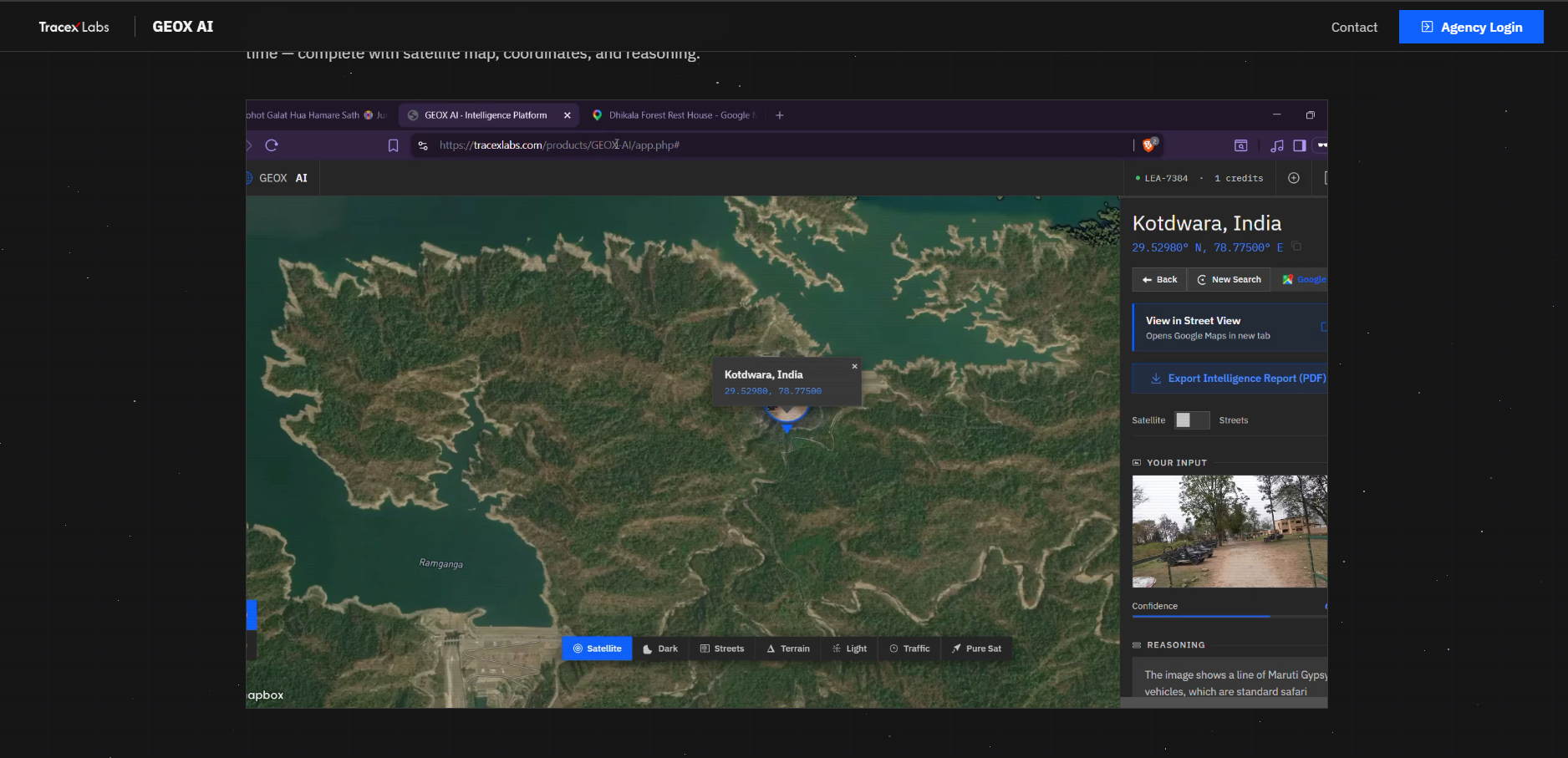
TraceX Labs has announced the launch of GEOX AI, an advanced artificial intelligence platform capable of identifying the real-world location where a photograph or video was taken using only the visual content within the media.
Positioned as an enterprise-grade intelligence solution, GEOX AI leverages advanced computer vision and multi-agent AI to analyze pixel-level details such as architecture, road patterns, vegetation, signage, lighting, and environmental context. By interpreting these visual clues, the system can estimate—and in many cases precisely determine—the origin of an image or video.
AI-Powered Geolocation Intelligence
Marketed under the concept of “Locate Anywhere From Any Image,” GEOX AI is designed for intelligence operations where speed, accuracy, and reliability are critical. The platform currently supports:
- 400+ analyses available
- <10 seconds average response time
- Up to 99% accuracy on landmark-based identification
- Global coverage across diverse terrains and environments
Core Capabilities
GEOX AI integrates multiple intelligence features into a single platform:
- Precise Geolocation:
Identifies exact geographic coordinates using visual landmarks, architecture, vegetation, and cultural indicators. - Satellite Map View:
Results are plotted on live satellite imagery with 2D/3D viewing options and multiple map styles for deeper analysis. - AI Reasoning Analysis:
Provides a detailed explanation of how the system arrived at a conclusion, including confidence scoring. - Multi-Result Analysis:
Returns multiple possible locations ranked by confidence, enabling cross-verification. - Intelligence PDF Export:
Allows one-click generation of professional reports containing maps, coordinates, analysis, and structured findings. - Credit-Based Access:
Agencies are allocated credits, with each analysis consuming one credit. Additional credits can be requested directly.
Speed Meets Intelligence
GEOX AI is designed to balance rapid processing with analytical depth:
- Fast Mode: Delivers results within seconds for clear and high-context images
- Advanced Mode: Performs deeper multi-step analysis for complex or ambiguous visuals
- Built for real-time decision-making in high-pressure environments
How GEOX AI Works
The platform follows a simple and efficient workflow:
- Upload any image or video frame
- AI analyzes visual clues such as structures, terrain, and environment
- The system identifies location with coordinates, confidence score, and reasoning
- Results are displayed on an interactive satellite map
- Export a professional intelligence report in one click
A Breakthrough for Investigations
GEOX AI is expected to have wide-ranging applications across multiple domains:
- Tracking the origin of images from social media and open sources
- Supporting digital forensics and cyber investigations
- Assisting law enforcement and intelligence operations
- Helping journalists and OSINT analysts verify visual content
- Providing support in missing person cases and threat intelligence scenarios
Enterprise Access and Deployment
GEOX AI is available to verified law enforcement agencies, intelligence organizations, and authorized enterprises. Access is provided through a structured system where organizations can request credentials and define their operational use cases.
Interested users can request access via tracexlabs.com or contact contact@tracexlabs.com, with response times typically within 24–48 hours.
Privacy Debate Intensifies
The launch of GEOX AI has also sparked renewed discussion around digital privacy. By demonstrating how location data can be extracted purely from visible elements within images, the platform highlights the potential risks associated with sharing photos online without considering what those visuals may reveal.
Conclusion
With GEOX AI, TraceX Labs is entering the rapidly evolving geolocation intelligence space with a platform that combines speed, precision, and real-world usability. As artificial intelligence continues to advance, tools like GEOX AI are expected to play a critical role in shaping the future of investigations, security, and digital intelligence.