Unemployment high in India due to govt's "ill considered demonetisation decision": Manmohan Singh
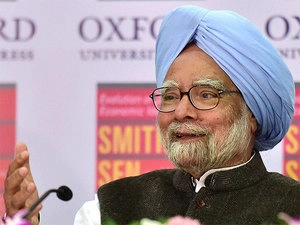
Thiruvananthapuram, Mar 2: Attacking the Centre, former Prime Minister Dr Manmohan Singh on Tuesday said unemployment is high in the country and its informal sector is in shambles following the "ill considered demonetisation decision" taken by the BJP-led government in 2016.
He also criticised the central government for not holding regular consultations with the states.
Inaugurating a development summit virtually organised by the Rajiv Gandhi Institute of Development Studies, an economic think tank aligned to the Congress ideology in poll-bound Kerala, Singh said temporary measures by the Government of India and the Reserve Bank to paper over the credit problem cannot blind us to the looming credit crisis ahead that could affect the small and medium sector.
"Unemployment is high and the informal sector is in shambles, a crisis precipitated by the ill considered demonetisation decision taken in 2016", he said at "Pratheeksha 2030."
The summit was organised to launch a Vision Document, a framework of ideas for development of Kerala well in advance of the state elections.
He said in Kerala and in many other states, public finances are in disarray with states having to resort to excessive borrowing, which creates an intolerable burden on future budgets.
"Federalism and regular consultation with states, which was the cornerstone of Indias economic and political philosophy as enshrined in the Constitution, no longer finds favour with the present Central government," he said.
Singh said while Kerala's social standards are high, there are other sectors that need strong attention in the future.
"There are many roadblocks ahead that the state has to overcome. The global downturn of the last two or three years, aggravated by the pandemic, has made the global interface of Kerala more fragile.
"While the increased use of digital modes of work may keep the IT sector afloat, tourism has been hit badly and the rate at which the pandemic is galloping in Kerala poses challenges for this industry", Singh said.
Noting that the focus on health and education has enabled Kerala to take advantage of job opportunities elsewhere in the country and in all parts of the world, Singh said this has led to a growing stream of remittances from abroad which created a booming real estate sector and sharp growth of the services sector, led by tourism and information technology.
"In the midst of all the gloom, I see the UDF's steadfast adherence to planned growth with a clear sense of direction and concern for the common man a beacon of hope, not only for Kerala, but for the whole country", he said.
"When I presented the national budget in 1991 as Finance Minister, I quoted Victor Hugo, who had said, "Nothing is more powerful than an idea whose time has come."
I get the feeling that the unanimity and clarity displayed by the UDF on the road ahead will lead to Kerala's idea moment arriving this year", he said.
Let the Truth be known. If you read VB and like VB, please be a VB Supporter and Help us deliver the Truth to one and all.
Bengaluru airport introduces AI-based system to enhance safety at vehicle-aircraft intersections
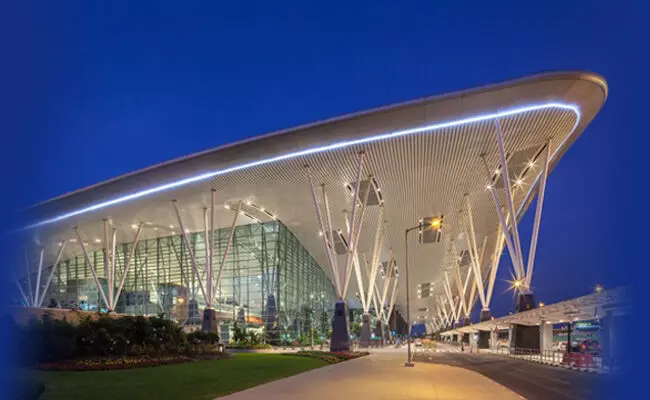
Bengaluru: Bangalore International Airport Limited (BIAL) has introduced an integrated smart airside safety system at Kempegowda International Airport to improve operational safety at key intersection zones.
According to The Hindu, the system has been designed to enhance safety at Cross Service Roads (CSRs), where aircraft and ground vehicle movements intersect.
According to BIAL, the system integrates AI-based computer vision, automation, and centralised monitoring to manage right-of-way movements and reduce the risk of human error.
“CRSs are among the most sensitive areas within airport operations, requiring precise and seamless coordination between aircraft and ground vehicles. Traditionally, right of way protection at these intersections relied on manual or semi-manual inset light activation, creating dependencies on human intervention, increasing the risk of delays and limiting operational visibility,” TH quoted BIAL as saying.
The new system uses real-time detection of vehicle movement, risk assessment, and automated signalling. AI-enabled cameras identify potential conflicts and trigger automated inset light signals to ensure aircraft priority. Normal operations resume once the area is confirmed clear.
“Based on these detections, the system triggers automated inset light activation to protect aircraft right‑of‑way and restores normal signalling once the intersection is confirmed clear. A centralised monitoring and analytics platform digitally logs all events, strengthening governance, compliance, and operational control,” BIAL said.
By embedding technology into operations, the system creates a data-driven separation layer between aircraft and ground vehicles, significantly reducing human error, especially during night and low-visibility conditions.
“Precision-led signal activation improves traffic flow, minimises unnecessary stoppage and enhances turnaround efficiency. It also establishes a scalable foundation for predictive safety analytics, enabling trend analysis, peak-hour optimisation, compliance mapping and risk forecasting to support continuous improvement and stronger airside governance,” BIAL said.