Unemployment rate among Indian women more than double of men: study

New Delhi: The unemployment rate among women in India is more than double of that of men with similar qualifications, a new study has revealed.
Titled "Gender Inclusion in Hiring in India", the study by two Harvard students, Rachel Levenson and Layla O'Kane, noted that 8.7 per cent of working-age urban, educated women in the country are unemployed but only 4 percent of comparable men find themselves without a job.
"While there are many factors that influence a woman's decision and ability to find work, the gender gap in the unemployment rate along with ILO (International Labour Organisation) research suggest that women, particularly highly-educated ones, face additional barriers as compared to men in accessing jobs," it said.
Levenson and O'Kane's analysis is based on close to 200 India-based jobs for which Shortlist, a hiring firm in India, had provided the recruiting platform between 2016 and 2017. It included 286,991 applications from 211,004 applicants (some people applied to multiple jobs).
According to the study, while discrimination based on gender is illegal under the Indian constitution, conversations with hiring managers and other labour market experts have revealed that there is gender discrimination in the hiring process across the country, as is the case around the world.
The study looks at three stages at which women may face barriers during hiring -- qualifications and experience, recruitment and choice to apply, and application process, while suggesting tools to increase gender diversity in the Indian workforce.
It highlighted the need for gender inclusive work places by correlating it with "higher levels of performance and innovation".
"Inclusive hiring improves firm-level growth by allowing companies to attract and retain top talent and better serving consumers in markets or sectors where women are a key customer segment," it said.
The study also noted that increasing female participation in the labour force could increase the Indian GDP by 27 per cent.
Not dismissing the progress, albeit little, that several multinational corporations in the country have made towards minimising gender discrimination at work place over the past couple of decades, it highlighted the role technology could play in improving hiring outcomes including increasing the number of women who apply and get shortlisted for jobs.
"We know that diverse teams perform better, and we're encouraged by these results because they show that even small and medium sized businesses, and not just large enterprises, can leverage technology to increase the diversity of their candidate pools," said Simon Desjardins, Co-founder of Shortlist.
The study suggested competency-based assessments, behavioral nudges in recruitment, and well-designed job descriptions, for creating a more effective bias-reducing, gender-sensitive hiring process in India.
Let the Truth be known. If you read VB and like VB, please be a VB Supporter and Help us deliver the Truth to one and all.
CPI(M) rebel Kunhikrishnan hopes for 5,000-vote win in Payyanur
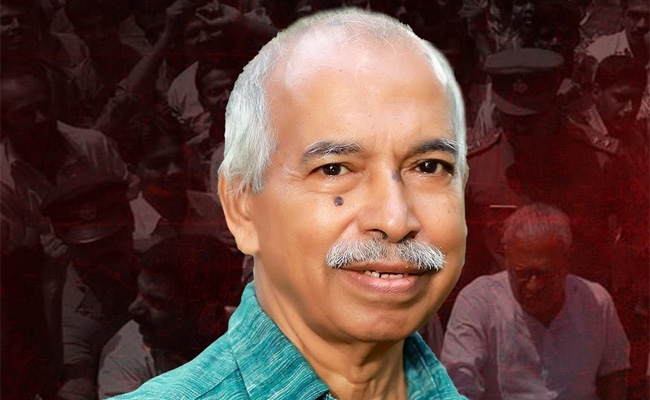
Kannur (Kerala) (PTI): CPI(M) rebel candidate V Kunhikrishnan, who contested as a UDF-backed Independent from Payyanur here, on Saturday said he was hoping to win the Assembly election by a margin of 5,000 votes.
Kunhikrishnan was expelled from the CPI(M) earlier this year after raising allegations of corruption in the party’s martyrs’ fund against sitting MLA T I Madhusoodanan.
Speaking to a TV channel, Kunhikrishnan said he had announced his candidature as a mark of protest and not with expectations of victory.
However, he said the situation had changed drastically, with a strong undercurrent within CPI(M) votes favouring him.
"The undercurrent in CPI(M) votes cannot be measured. Now people are giving a response indicating victory with a margin of at least 5,000 votes," he said.
Payyanur is considered a CPI(M) stronghold, and a defeat for Madhusoodanan there would be a major setback for the party.
On political violence in Payyanur, Kunhikrishnan said he had been facing it since filing his nomination.
"The people leading this violence should think about how long they can continue it. It is the police which has to take the initiative to stop this violence as part of maintaining law and order. But the police are not intervening at the required level," he said.
Regarding his political future, Kunhikrishnan said efforts were underway to strengthen Left groups, and discussions were being held across Kerala in that regard.
"After discussing with others, a decision will be taken," he said.
Kunhikrishnan is among six former CPI(M) leaders who either exited the party or were suspended before contesting for the UDF in the April 9 Assembly elections.
Elections to the 140-seat Kerala Assembly were held on April 9, and the counting of votes will be held on May 4.