'Unfair, unjustified': India reacts sharply to Trump's additional tariff
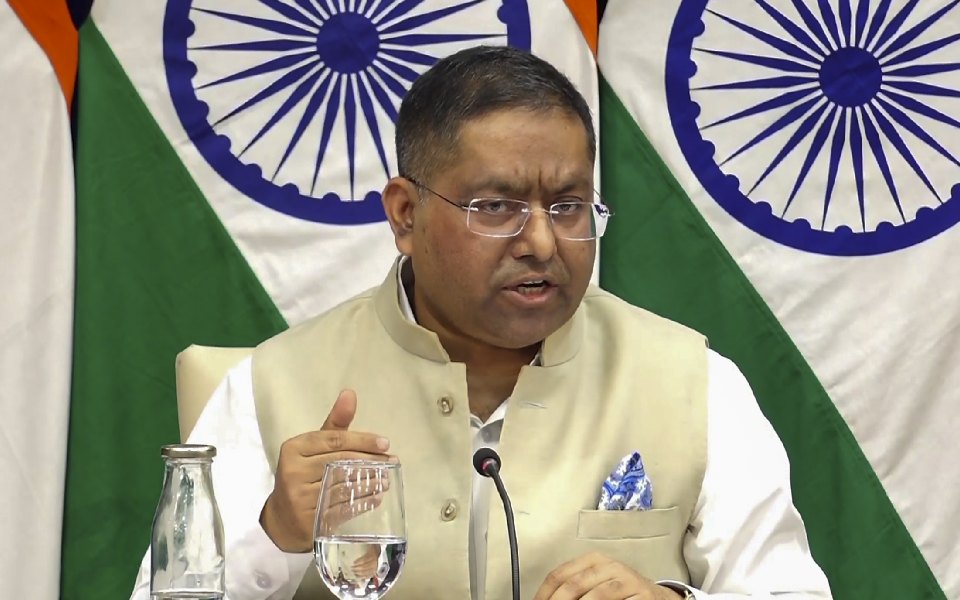
New Delhi, Aug 6 (PTI): The US action of levying 25 per cent additional tariff on Indian goods is "unfair, unjustified and unreasonable", India said on Wednesday in a firm reaction, signalling increasing tensions in relations between the two strategic partners over New Delhi's procurement of Russian crude oil.
Shortly after US President Donald Trump issued an executive order slapping the additional tariff, New Delhi said Washington has "targeted" its oil imports from Russia and that it will "take all actions" necessary to protect national interests.
Defending India's energy ties with Russia, the Ministry of External Affairs (MEA) said the imports are based on market factors and done with the overall objective of ensuring the energy security of 1.4 billion people of the country.
In a statement, the MEA pointed out that several other countries are also making such procurements to protect their own national interest and hinted its disappointment for singling it out on the issue.
The US president issued the executive order hitting India with an additional 25 per cent tariff on Indian goods citing its continuing procurement of Russian crude oil.
The additional tariff, to come into effect after 21 days, will increase the duties on some Indian goods to 50 per cent. The tariffs are likely to hit sectors such as textiles, marine and leather hard.
"We reiterate that these actions are unfair, unjustified and unreasonable," the MEA said.
It said the US has in recent days "targeted" India's oil imports from Russia.
"We have already made clear our position on these issues, including the fact that our imports are based on market factors and done with the overall objective of ensuring the energy security of 1.4 billion people of India," it said.
"It is therefore extremely unfortunate that the US should choose to impose additional tariffs on India for actions that several other countries are also taking in their own national interest," it added.
It is India's second such sharp reaction on the issue in last three days.
On Monday, New Delhi mounted an unusually sharp counter-attack on the US and the European Union for what it called their "unjustified and unreasonable" targeting of India for its energy ties with Russia.
India's comments were in response to US President Trump's remarks that he will substantially raise tariffs on goods from India.
"Where the US is concerned, it continues to import from Russia uranium hexafluoride for its nuclear industry, palladium for its EV industry, fertilizers as well as chemicals.
"In this background, the targeting of India is unjustified and unreasonable. Like any major economy, India will take all necessary measures to safeguard its national interests and economic security," the MEA had said.
Over the last few months, India and the US held several rounds of negotiations for a bilateral trade deal but it could not be sealed in view of sharp divergences in certain critical areas including agriculture and dairy.
The bilateral trade between India and the US was around USD 130 billion last year and there was a projection of upward mobility in the volume.
The sectors, which will have to bear the brunt of the new tariffs, include textiles/ clothing, gems and jewellery, shrimp, leather and footwear, animal products, chemicals, and electrical and mechanical machinery.
The exempted goods, which will not be subject to the high tariffs, include pharmaceutical; energy products such as crude oil, refined fuels, natural gas, coal, and electricity; critical minerals; and a wide range of electronics and semiconductors, like computers, tablets, smartphones, solid-state drives, flat panel displays, and integrated circuits.
Statement by Official Spokesperson⬇️
— Randhir Jaiswal (@MEAIndia) August 6, 2025
🔗 https://t.co/BNwLm9YmJc pic.twitter.com/DsvRvhd61D
Let the Truth be known. If you read VB and like VB, please be a VB Supporter and Help us deliver the Truth to one and all.
Rain wreaks havoc in Bengaluru, kills 10
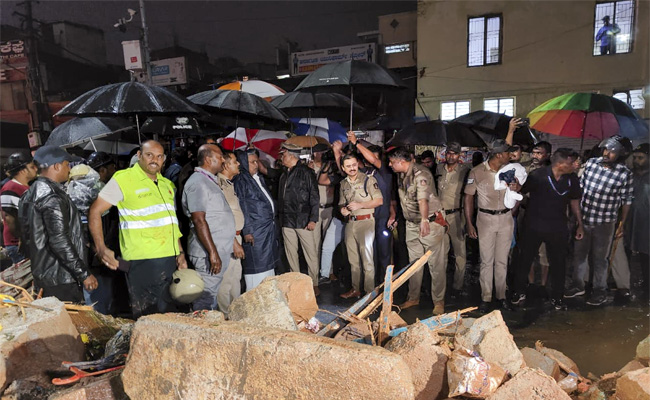
Bengaluru (PTI):The rains in Bengaluru on Wednesday evening wreaked havoc, killing 10 people, authorities said.
Heavy rains coupled with a hailstorm and gusty winds uprooted trees, flooded many key stretches and threw traffic out of gear, they said on Thursday.
Large parts of the city witnessed sudden, intense rainfall for nearly an hour, bringing down trees and electric poles, crushing parked vehicles and inundating low-lying areas, while several roads were rendered impassable, severely disrupting vehicular movement during peak hours.
Seven people, including a six-year-old girl, were killed when a compound wall of the Bowring and Lady Curzon Hospital collapsed amid the downpour.
Among the deceased, two were from Kerala who were on a study tour. They had taken shelter near the wall when it gave way, they said.
ALSO READ: ICSE, ISC results: Girls outperform boys, pass rate over 99%
In another incident, a 35-year-old man, identified as Raghu, died of electrocution on Bannerghatta Road near Vega City Mall.
In a separate case in Yarab Nagar, a student, Syed Sufiyan died after coming into contact with a live electric wire while attempting to park his motorcycle during the rain, police said.
One more fatality was reported from Chamarajapet, where Manjunath died on the spot after a cement block fell and pierced through the roof of a house during the storm.
The sudden spell of rain left a trail of destruction across the city.
“So far, 10 people have died due to rain-related incidents in Bengaluru,” police said, attributing the deaths to wall collapse, electrocution and structural damage triggered by the storm.
Civic authorities said at least 87 trees were uprooted and 131 branches snapped across the city, disrupting daily life.
Of these, 60 trees and 98 branches had been cleared, while restoration work was ongoing.
Several cars and two-wheelers parked along roadsides were crushed under fallen trees.
Key junctions and underpasses were waterlogged, with the KR Circle underpass completely submerged, forcing police to barricade the stretch due to lack of drainage.
Fallen branches and stalled vehicles further worsened traffic congestion, leaving commuters stranded for hours.
Officials said buildings suffered partial damage in several areas, while the sudden and unanticipated nature of the storm caught many residents off guard. Authorities have issued a rain alert for the next three days.