Union Cabinet approves metro rail projects in Pune, Thane, Bengaluru
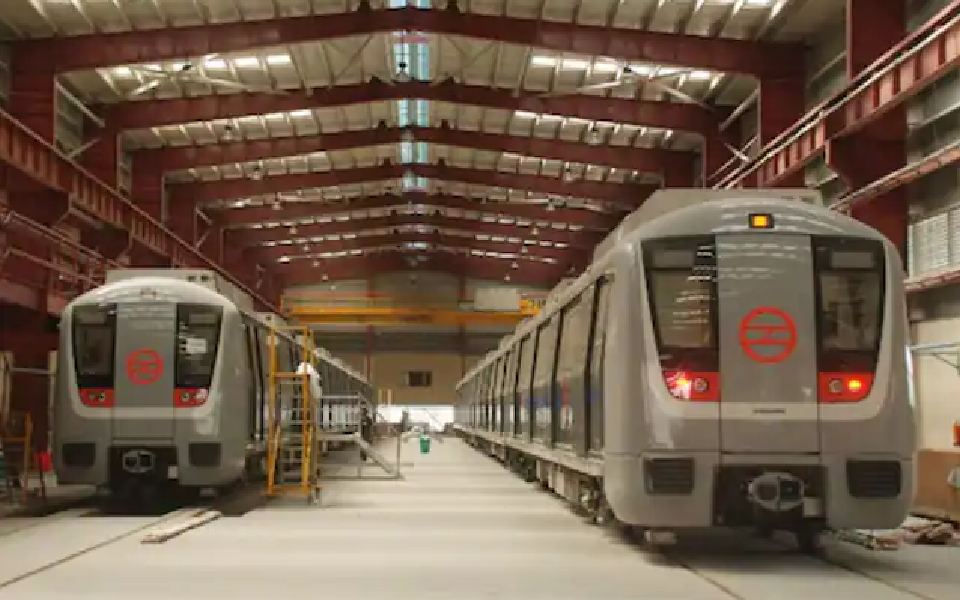
New Delhi, Aug 16: The Union Cabinet on Friday approved metro rail projects in Pune and Thane in assembly poll-bound Maharashtra, and in Karnartaka capital Bengaluru.
The Cabinet, in a meeting chaired by Prime Minister Narendra Modi, has approved two corridors of the Bangalore Metro Rail Project Phase-3, according to Union minister Ashwini Vaishnaw.
In a statement, the government said the Cabinet has also approved the Swargate-to-Katraj Underground Line Extension of the existing PCMC-Swargate Metro Line of the Pune Metro Phase-I project.
This new extension is known as the Line-1 B extension and will span 5.46 km. It will have three underground stations and connect key areas such as Market Yard, Bibwewadi, Balaji Nagar and the Katraj suburbs of Pune, the statement said.
"The project, aimed at providing seamless connectivity in Pune, is set to be completed by February 2029. The estimated cost of the project is Rs 2,954.53 crore, with funding to be equally shared by the Government of India and the Government of Maharashtra, along with contributions from bilateral agencies, etc," it said.
The statement said the Union Cabinet also approved the Thane Integral Ring Metro Rail Project Corridor. The 29-km corridor will run along the periphery of the west side of Thane city with 22 stations.
The network is encompassed by the Ulhas river on one side and the Sanjay Gandhi National Park on the other, it said.
This will provide sustainable and efficient mode of transport, facilitating the city to realise its economic potential and ease traffic congestion. The project is also expected to contribute to reduction of greenhouse gas emissions, the statement said.
"The estimated cost of the project is Rs 12,200.10 crore, with equal equity from Government of India and Government of Maharashtra as well as part-funding from bilateral agencies," it said.
"Funds would also be raised through innovative financing methods such as by selling station naming and access rights for corporate, monetisation of assets, and value capture financing route," the statement said.
The approval for the metro projects in Thane and Pune comes a few months ahead of the Maharashtra assembly elections, the poll dates for which are yet to be announced.
On the approval of two corridors of the Bangalore Metro Rail Project Phase-3, the government said the total completion cost of the project is Rs 15,611 crore.
"The Union Cabinet, chaired by the Prime Minister Narendra Modi, today approved the Phase-3 of Bangalore Metro Rail Project with two elevated corridors for a length of 44.65 Km with 31 stations," the statement said.
"Corridor-1 from JP Nagar 4thPhase to Kempapura (along Outer Ring Road West) for a length of 32.15 km with 22 stations and Corridor-2 from Hosahalli to Kadabagere (along Magadi Road) for a length of 12.50 km with 9 stations. On operationalisation of Phase-3, Bengaluru city will have 220.20 km of active metro rail Network," statement said.
The Phase-3 of Bangalore Metro Rail Project represents a significant advancement in the city's infrastructure development. The Phase-3 acts as a major expansion of the metro rail network in the city, it said.
Phase-3 will add approximately 44.65 km of new metro lines, connecting the western part of Bengaluru that were previously underserved, it stated.
"Phase-3 will integrate key areas of the city which includes Peenya Industrial Area, IT industries on Bannerghatta road and Outer Ring Road, Textile and Engineering items Manufacturing units on Tumkuru Road and ORR, Bharat Electronics Limited (BEL), Major educational institutions like PES University, Ambedkar College, Polytechnic College, KLE College, Dayanandsagar University, ITI etc," the statement said.
Improved last-mile connectivity to commercial centres, industrial hubs, educational institutions, and healthcare facilities will facilitate better access for residents, it also added.
Happy to announce that the Union Cabinet has approved Phase-3 of the Bangalore Metro Rail Project.
— Siddaramaiah (@siddaramaiah) August 16, 2024
Bengaluru is set to elevate its connectivity with two new corridors spanning 44.65 km and 31 stations. This ₹15,611 crore investment will connect our city's industrial and IT… pic.twitter.com/xQwRPtZ3aE
Let the Truth be known. If you read VB and like VB, please be a VB Supporter and Help us deliver the Truth to one and all.
Sengottaiyan secures historic 10th victory in Gobichettipalayam assembly constituency
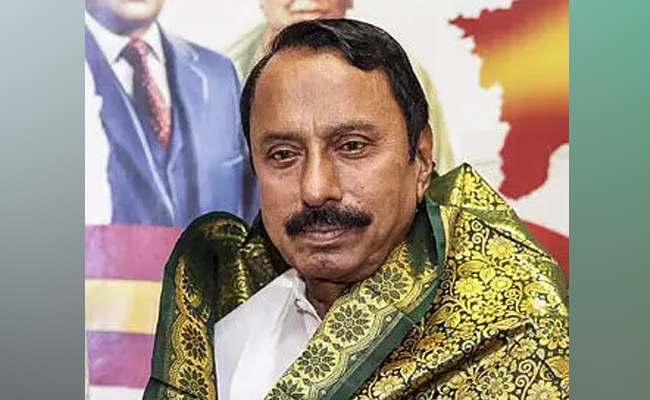
Gobichettipalayam (Tamil Nadu) (PTI): In a historic 10th win, veteran leader K A Sengottaiyan clinched the Gobichettipalayam seat in the 2026 Assembly elections.
Contesting for the first time under actor Vijay’s TVK, the 78-year-old secured approximately 71,380 votes, defeating DMK’s N Nallasivam by a margin of nearly 13,000 votes.
This win marks Sengottaiyan’s 10th consecutive victory in the constituency, cementing his status as an immovable force in the region despite his high-profile exit from the AIADMK in late 2025.
His success was a cornerstone for the TVK, which emerged as a formidable force across the state. Supporters celebrated the win as a testament to Sengottaiyan’s personal influence, which successfully transitioned from his former Dravidian home to the newly formed TVK.