Universities will be allowed to offer admissions twice a year on lines of foreign varsities: UGC
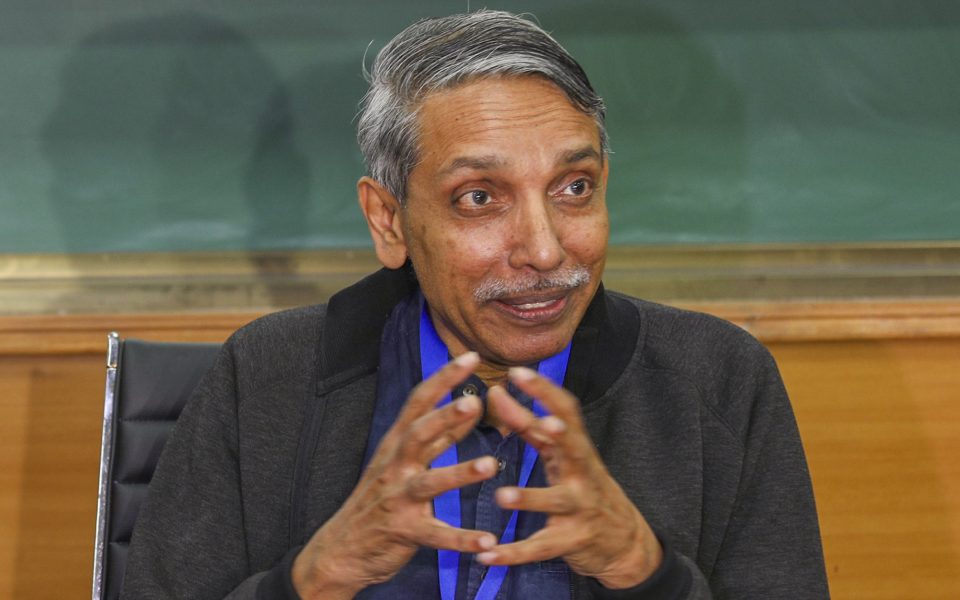
New Delhi, Jun 11: Indian universities and higher education institutions will now be allowed to offer admissions twice a year on lines of foreign universities with the University Grants Commission giving a go ahead to the plan, UGC chief Jagadesh Kumar said.
The two admission cycles will be July-August and January-February from the 2024-25 academic session.
"If Indian universities can offer admission twice a year, it will benefit many students such as those who missed admission to a university in the July-August session due to a delay in the announcement of board results, health issues, or personal reasons," Kumar told PTI.
"Biannual university admissions will help students maintain motivation since they do not have to wait one full year to be admitted if they miss admission in the current cycle. With biannual admissions in place, industries can also do their campus recruitment twice a year, improving employment opportunities for the graduates," he added.
The UGC chief explained that biannual admissions will also enable the higher education institutes (HEIs) to plan their resource distribution, such as faculty, labs, classrooms and support services, more efficiently, resulting in a better functional flow within the university.
"Universities worldwide already follow a biannual admission system. If Indian HEIs adopt the biannual admission cycle, our HEIs can enhance their international collaborations and student exchanges. As a result, our global competitiveness will improve, and we will align with the global educational standards," Kumar said.
"If HEIs adopt biannual admissions, they need to work on administrative intricacies, good planning for increased use of available resources, and providing seamless support systems for the smooth transition of students admitted at dissimilar times of the year. HEIs can maximize the usefulness of biannual admissions only when they sufficiently prepare faculty members, staff and students for the transition," he added.
Kumar, however, clarified that it will not be mandatory to offer biannual admissions for universities and those HEIs that have the required infrastructure and teaching faculty can utilise the opportunity.
"Offering biannual admissions will not be mandatory for the HEIs, it is the flexibility that UGC provides to the HEIs which want to increase their student intake and offer new programmes in emerging areas. To be able to admit students twice a year, HEIs must make suitable amendments to their institutional regulations," he said.
Let the Truth be known. If you read VB and like VB, please be a VB Supporter and Help us deliver the Truth to one and all.
AIITA welcomes Karnataka’s ban on obscene songs in school events
Bhatkal: The Karnataka unit of the All India Ideal Teachers Association (AIITA) has welcomed the Karnataka government’s decision to strictly ban school children from dancing to obscene songs during educational and cultural programmes in government, aided, and private schools across the state.
AIITA Karnataka State President M. R. Manvi congratulated the government for taking what he termed an important step to preserve the sanctity of education.
“Such decisions to safeguard the dignity of school children and uphold the values of education are the need of the hour. This rule should not be limited to government schools alone but must be strictly implemented in all private educational institutions as well,” he said.
He further urged the government to address other concerns within school programmes.
“The government should not only prohibit obscene dances in the name of school anniversaries, but also ensure that plays and dialogues that incite religious hatred are avoided. Schools should be centres of harmony, not platforms for spreading hatred,” he added.
According to a recent circular issued by the Department of School Education and Literacy, obscene dances are adversely affecting the mental health and moral values of students.
In this regard, schools have been advised to use songs that promote nationalism, positive thinking, the greatness of Kannada culture, and value-based traditions instead of inappropriate content during programmes.
The circular also emphasises that students should be dressed in decent attire.
AIITA also backed the department’s warning that disciplinary action would be taken against head teachers if such guidelines are violated. The association has further demanded that district Deputy Directors of Public Instruction strictly monitor the implementation of these rules.