UP Government withdraws order targeting Yadav, Muslim communities after public outcry
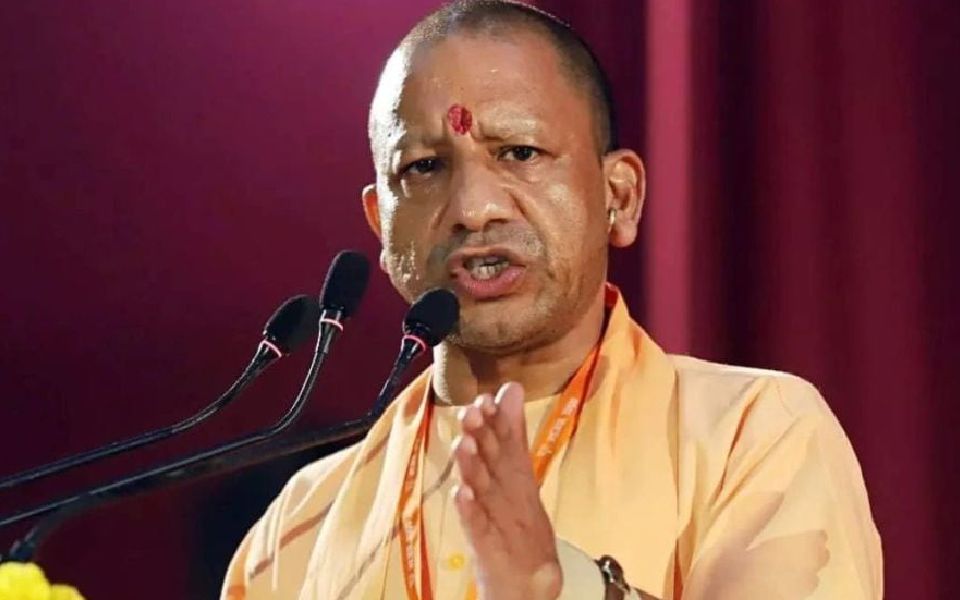
Lucknow: The Uttar Pradesh government has withdrawn a controversial directive that had instructed officials to act against members of the Yadav caste and Muslim community for allegedly encroaching on village lands. The directive sparked widespread criticism and was called discriminatory and unconstitutional by many political leaders and rights groups, reported Maktoob Media.
The directive was issued by the Directorate of Panchayati Raj on July 29, 2025, based on a petition by BJP farmer leader Vivek Kumar Srivastava. In the letter sent to all District Magistrates, officials were asked to identify and remove "illegal occupations" on village lands by people belonging to the Yadav community and Muslim religion. The areas included Gram Sabha land, ponds, playgrounds, compost pits, cremation grounds, and other public spaces in over 57,691 villages across the state.
A copy of Srivastava’s letter to the Chief Minister, dated July 6, was also attached with the directive. Following this, in Ballia district, the Panchayati Raj Officer issued a follow-up letter to Block Development Officers, instructing them to take action against the mentioned communities.
The move faced strong backlash from political parties and civil society. Critics argued that naming specific caste and religious groups in an official government order violates Articles 14 and 15 of the Indian Constitution, which guarantee equality before the law and prohibit discrimination based on religion or caste.
Bhim Army chief Chandra Shekhar Azad called the order unconstitutional and said it went against civil service conduct rules. He demanded that the officers involved be removed from service and that an FIR be filed against them.
Samajwadi Party leaders also condemned the directive. Yasar Shah questioned why only two communities were targeted, while I.P. Singh alleged that the order reflected the BJP’s intent to sideline the Constitution. Singh also demanded a Central Bureau of Investigation (CBI) inquiry to determine how such an order was approved and who was involved at higher levels of government. He criticized the suspension of just one officer, calling it an attempt to shield senior officials.
After the public and political backlash, the directive was withdrawn. S.N. Singh, the Joint Director who signed the original order, was suspended. However, opposition leaders said this was not enough and called for further accountability, warning that any officer involved could face legal consequences in the future.
Let the Truth be known. If you read VB and like VB, please be a VB Supporter and Help us deliver the Truth to one and all.
Right to vote under threat, must be made fundamental right: Cong's Jairam Ramesh
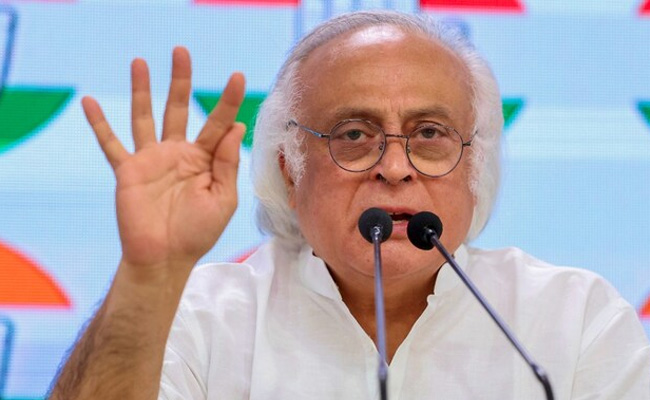
New Delhi (PTI): Congress leader Jairam Ramesh alleged on Thursday that the right to vote is under threat and the time has come when it should be made a fundamental right for citizens.
Speaking with reporters, Ramesh lashed out at Chief Election Commissioner (CEC) Gyanesh Kumar, saying the Election Commission (EC) has never been as compromised as it has been under him.
"The rot started under his predecessor. This man is a player and not a neutral observer," the Congress leader said, slamming Kumar.
Kumar is completely compromised and has become a player in elections, he alleged.
"Home Minister Amit Shah had talked about three Ds -- detect, delete and deport. So we want to know how many non-Indian citizens have been detected, how many have been deleted and how many have been deported," Ramesh said, adding that the right to vote is now under threat.
On opposition parties submitting a fresh notice in the Rajya Sabha, seeking to move a motion for the CEC's removal, the Congress leader said they will continue to make efforts for Kumar's removal as he is "compromised".
Ramesh also batted for the right to vote to be recognised as a fundamental right.
"I believe that the time has come that the right to vote should be made a fundamental right. It is a statutory right, it is not a fundamental right. Fundamental rights are justiciable," he said.
The former Union minister said this was discussed in the Constituent Assembly, but it was eventually decided that it should be made part of the Constitution.
B R Ambedkar and Jagjivan Ram had warned that in the future, governments might try to disenfranchise voters, he added.
"Once and for all, include the right to vote as a fundamental right for Indian citizens," Ramesh asserted.