UP govt withdrew 77 cases related to 2013 Muzaffarnagar riots without giving any reason, SC told
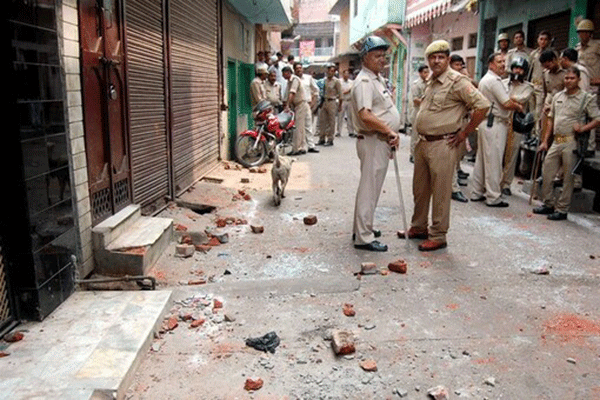
New Delhi, Aug 25: The Uttar Pradesh government has withdrawn 77 cases related to the Muzaffarnagar riots of 2013 related to offences entailing punishment of life sentence without giving any reasons, the Supreme Court was told on Tuesday.
A bench of Chief Justice N V Ramana and Justices DY Chandrachud and Surya Kant is scheduled to hear a plea filed by advocate Ashwini Upadhyay seeking speedy disposal of cases against lawmakers.
Senior advocate Vijay Hansaria, who has been appointed amicus curiae in the matter, in his report filed through advocate Sneha Kalita said that the state government has informed that total of 510 cases, relating to Muzaffarnagar riots of 2013 were registered in five districts of Meerut Zone against 6,869 accused.
Out of these 510 cases, in 175 cases the charge sheet was filed, in 165 cases final reports were submitted, 170 cases were expunged. Thereafter 77 cases were withdrawn by the state government under section 321 of CrPC. The Government Orders do not give any reasons for withdrawal of the case under section 321 of CrPC. It merely states that the administration after full consideration has taken a decision to withdraw the particular case, Hansaria submitted.
He said that many of such cases relating to offences of dacoity under section 397 IPC are punishable with imprisonment for life.
Hansaria said that these 77 cases relating to Muzaffarnagar riots of 2013 withdrawn under section 321 of CrPC may be examined by the High Court by exercising revisional jurisdiction under section 401 of CrPC in the light of the law laid down by this Court.
Similarly, the amicus curiae pointed out that the Karnataka government has withdrawn 62 cases without assigning any reason, Tamil Nadu has withdrawn four cases, Telangana has withdrawn 14 cases and Kerala has withdrawn 36 cases.
Hansaria submitted that this Court in the order dated August 10, 2021 had directed that no prosecution against a sitting or former MP/MLA shall be withdrawn without leave of the High Court.
It is submitted that withdrawal from prosecution under section 321 CrPC is permissible in public interest and cannot be done for political consideration. Such applications can be made in good faith, in the interest of public policy and justice and not to thwart or stifle the process of law , he said.
The amicus in his report told the top court that in view of the repeated misuse of power by the State in withdrawing prosecution for political and extraneous considerations, the court may issue some directions in addition to the already laid down guidelines.
He said that court may issue directions like the appropriate Government may issue instructions to the public prosecutor that only if the Government, in a given case, is of the opinion that the prosecution was launched maliciously and there is no foundation for prosecuting the accused the case can be withdrawn.
Such an order can be passed for reasons to be recorded for each individual case by the Home Secretary of the concerned State, he said, adding that no general order can be passed for withdrawal of prosecution of any category of persons or offences committed during a particular period.
He said that all the cases which have been withdrawn under section 321 CrPC after the order of this Court dated September 16, 2020 may be examined by the respective High Courts by exercising revisional jurisdiction.
On August 10, the top court had in a significant order affecting politicians facing criminal cases, curtailed the power of state prosecutors and ordered that they cannot withdraw prosecution against the lawmakers under the Code of Criminal Procedure (CrPC) without prior sanction from high courts.
It had expressed strong displeasure over the non-filing of requisite status reports by the Centre and its agencies like CBI and indicated that it would set up a special bench in the top court to monitor criminal cases against politicians.
The amicus curiae has earlier pointed out that States like Uttar Pradesh, Uttarakhand, Maharashtra and Karnataka have sought to withdraw criminal cases against politicians by using section 321 of CrPC which empowers prosecutors to withdraw cases.
The top court had directed that no prosecution against a sitting or former MP/MLA shall be withdrawn without the leave of the High Court in the respective suo-motu writ petitions registered in pursuance of its order.
The High Courts are requested to examine the withdrawals, whether pending or disposed of since September 16, 2020, in light of guidelines laid down by this court, it had said.
In another important direction, it had ordered that judges of special courts hearing cases against the MPs and MLAs will not be transferred until further orders.
The apex court had said that to ensure expeditious disposal of pending cases, it is necessary to direct the officers presiding over Special Courts or CBI Courts involving prosecution of MPs or MLAs to continue in their present posts until further orders.
Let the Truth be known. If you read VB and like VB, please be a VB Supporter and Help us deliver the Truth to one and all.
Karnataka: GBA city corporation polls likely between June 14 and 24
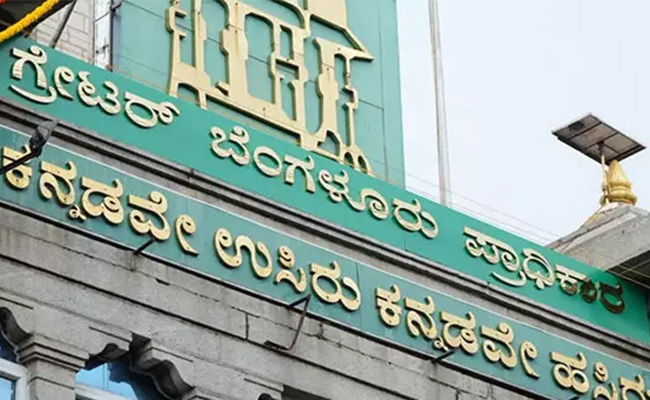
Bengaluru (PTI): Karnataka State Election Commissioner G S Sangreshi on Friday said elections to the five city corporations under the GBA will be held anytime between June 14 and June 24.
He said the exact date for the polls will be announced after a week, asserting that the power to postpone the elections, as requested by GBA authorities, lies with the Supreme Court.
The Supreme Court had directed the Karnataka government and the State Election Commission to conduct Bengaluru local body elections by June 30.
On Friday, the SEC held a consultation meeting with the GBA Chief Commissioner and commissioners of the five city corporations regarding the election schedule, as per the provisions of the GBA Act.
“During the meeting, I informed GBA officials that only the election date has to be fixed, as all other measures and formalities for conducting the polls have already been completed,” Sangreshi said.
“They requested the Commission to consider factors such as rains, exams, census work, SIR, and manpower shortages while fixing the date and sought additional time,” he added.
Speaking to reporters after the meeting, he said, “I told them this meeting was not for seeking time. Elections to the five corporations under the GBA must be held before June 30, as directed by the Supreme Court, and a compliance report must be submitted to the court. I do not have the power to postpone the elections as requested.”
The Supreme Court has already given a “final opportunity,” and both the SEC and the government must comply with its directions, the State Election Commissioner said.
He asked GBA officials to suggest suitable dates between June 14 and June 24.
“While stating that they are ready for elections, the officials highlighted operational challenges, including manpower shortages. However, I have informed them that the elections will have to be held between June 14 and June 24. After a week, I will announce the final date,” he said.
Reiterating that he does not have the power to postpone the elections, Sangreshi said the authority rests with the Supreme Court, and elections must be conducted as scheduled.
“We have consulted the GBA as per the rules. It is up to them to suggest a date within the given window. If they need more time, they must approach the court. Our responsibility is to fix the date and complete the polls before June 30,” he said.
The matter regarding manpower and other concerns raised by GBA officials is already before the Supreme Court, and the State Election Commission has also filed a petition in this regard. The case is yet to be heard.
“Since the matter has not come up for hearing, the earlier order remains binding. Therefore, preparations are underway,” he added.
The tenure of the previous elected body under the erstwhile Bruhat Bengaluru Mahanagara Palike (BBMP) ended on September 10, 2020, and since then, a government-appointed administrator has been managing its day-to-day affairs.
Bengaluru was divided into five municipal corporations—Central, East, West, North, and South—under the Greater Bengaluru Authority in September 2025, replacing the BBMP.
Sangreshi had earlier said that elections to the five corporations would be conducted using ballot papers instead of Electronic Voting Machines.
This follows the Congress government’s decision last September to recommend the use of ballot papers in all future panchayat and urban local body elections, citing concerns over declining public confidence in EVMs.
The state government subsequently enacted the Karnataka Gram Swaraj and Panchayat Raj (Amendment) Act, 2026, paving the way for the use of ballot papers in local body elections.