UP minister questions 'nature' of some rape cases
Controversial video goes viral
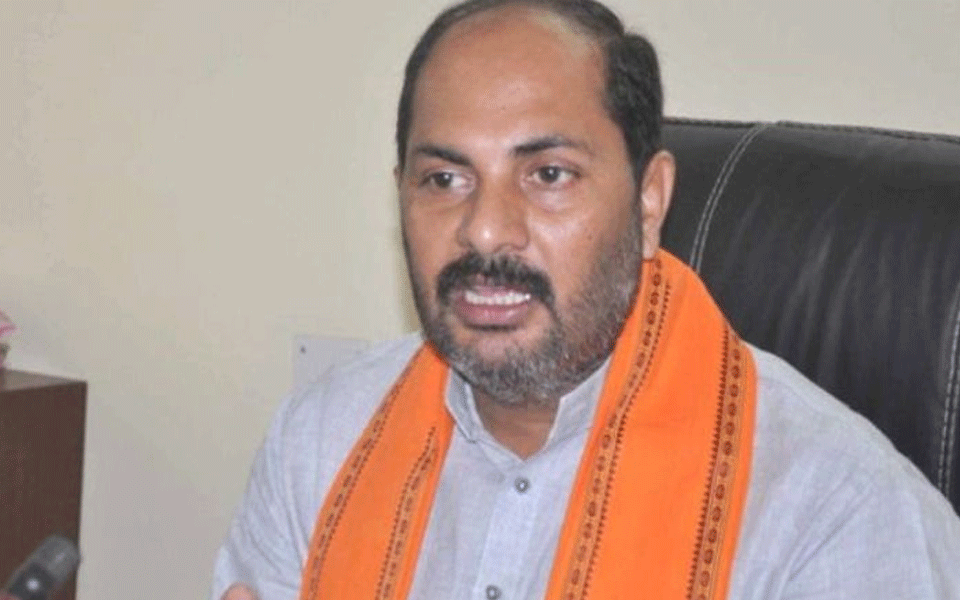
Lucknow, Jun 9: At a time incidents of rape were reported from different parts of Uttar Pradesh, a state minister sought to question the authenticity of some such cases saying there is a "nature of rape".
Speaking to reporters in Gonda, Water Supply, Land Development and Water Resources Minister Upendra Tiwari said, "There is a nature of rape. Now if a minor is raped, it will be considered as rape. But at times we hear that a married woman in the age-group of 30-35 years too has been a victim of a similar incident...for 7-8 years there would be an affair, then complaint of rape comes...Such matters should have been raised then."
A video clip of the minister's controversial comment has gone viral on social media.
Tiwari also said that whenever an incident of rape takes place, "the chief minister himself takes cognizance and strict action is initiated against the guilty."
A 12-year-old Dalit girl was allegedly raped by six men in Kushinagar district in Uttar Pradesh on Friday evening.
#WATCH UP Minister Upendra Tiwari: Dekhiye rape ka nature hota hai, ab jaise agar koi nabalig ladki hai uske sath rape hua hai toh usko to hum rape manenge, lekin kahin-kahin pe ye bhi sunne ko aata hai ko ki vivahit mahila hai, umar 30-35 saal hai....uska alag-alag nature hai pic.twitter.com/Ou1AMPsvGB
— ANI UP (@ANINewsUP) June 9, 2019
Let the Truth be known. If you read VB and like VB, please be a VB Supporter and Help us deliver the Truth to one and all.
CJI's advice to aspirant: Join the bar, become a lawyer, don't hanker for judicial services post
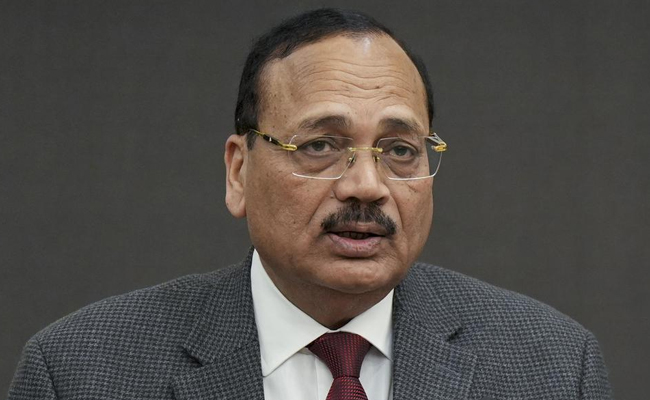
New Delhi (PTI): She came to the Supreme Court seeking a re-evaluation of her paper in the examination for joining judicial services as a magistrate. What she got instead was a rejection — and a candid confession by the Chief Justice that he too had wanted to join the judicial services in his youth but was advised by a senior judge to become a lawyer instead.
A bench comprising Chief Justice Surya Kant and Justice Joymalya Bagchi on Friday dismissed a plea filed by Prerna Gupta, the judicial services aspirant.
As Gupta pressed her case, the CJI intervened and said, "Let me share my personal story and I hope you will go happily as we cannot allow your petition."
He recounted his time as a final-year law student in 1984 when he wanted to become a judicial officer. As per requirement, he cleared the written test and was set to appear for an interview.
Judicial services is one of the two routes to become a judge after initially joining as a magistrate in lower court and thereafter rising through the ranks to become judge in a high court and possibly the Supreme Court.
The other route is to join the Bar, which means becoming a lawyer, and after building a reputation be picked from the Bar to become a judge at a senior level.
By the time the CJI's exam results came out, he had started practising at the Punjab and Haryana High Court when he was called for the interview.
The senior-most judge on the interview panel happened to be a judge before whom he had recently argued two significant matters.
"One of the matters was Sunita Rani vs Baldev Raj, where he had allowed my appeal in a matrimonial case and set aside the decree of divorce granted by the District Judge on the ground of schizophrenia," he noted.
Before the interview could take place, the judge called the young Surya Kant to his chamber and asked, 'Do you want to become a judicial officer?'
"I said 'yes.' He immediately said, 'Get out from (my) the chamber.'"
The courtroom fell silent as the CJI Justice described his initial heartbreak.
“I came out trembling. All my dreams were shattered. I thought he had snubbed me and that my career was over,” the CJI said.
However, the story took another turn the following day and the judge summoned him again, this time offering a piece of advice that would change the trajectory of his life.
“He said, ‘If you want to become (a judge), you are welcome. But my advice is, don’t become a judicial officer. The Bar is waiting for you,’” Justice Surya Kant recalled.
The CJI said he decided to skip his interview and didn't even tell his parents at first, fearing their disappointment, and instead chose to dedicate himself to his practice as an advocate.
“Now tell me did I make a bad right or bad decision,” the CJI asked and the litigant lawyer left the court with a smile on her face despite her case being dismissed.
Encouraging the petitioner to look toward the future rather than dwelling on the re-evaluation of a single paper, Justice Surya Kant said, "The Bar has much to offer."