UP: Minor girl sent to juvenile home, parents arrested after derogatory video on social media
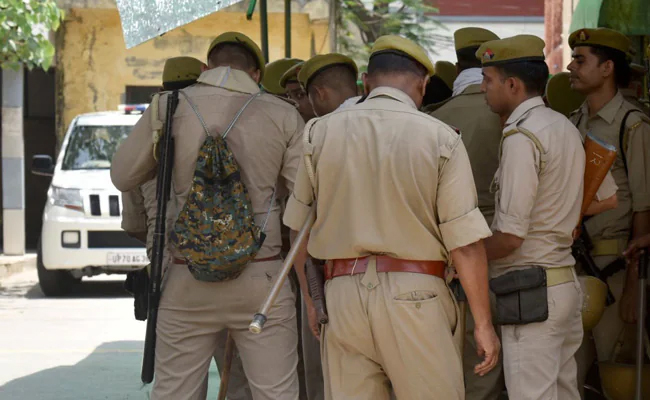
Etawah (UP) (PTI): A 12-year-old girl has been sent to a juvenile home, while her parents have been arrested after the minor allegedly posted a video on social media that contained derogatory remarks against Hindu deities, officials said on Tuesday.
The girl uploaded the one-minute video on a social media platform on October 27.
It soon went viral, sparking protests from Hindu organisations, which demanded strict action.
Taking note of the video, police launched an investigation and found that the girl had created the video with the knowledge of her parents -- Mohammad Shabbir alias Sabir and his wife Shameena -- and a Instagram friend named Asif, a resident of Azad Nagar Tila.
City Circle Officer (CO) Abhay Nath Rai said that during the probe, it was found that the video was intentionally created to gain followers and online income, leading to public anger and tension.
“Despite being aware of the act, the parents did not stop their daughter. An FIR has been registered against the girl, her parents and Asif under section 196 (promoting enmity between different groups on grounds of religions, race, place of birth, caste or community) of the Bharatiya Nyaya Sanhita (BNS) Friends Colony police station on November 2,” Rai said.
Sub-Inspector Saurabh Singh, who is investigating the case, said the girl's parents have been arrested and sent to jail, while the girl has been placed under the care of a Child Welfare Officer and sent to a juvenile home.
During questioning, the girl told police that she made the video on the suggestion of her parents and Asif, who told her that such videos would increase her followers and bring her financial benefits.
Police said efforts are underway to trace and arrest Asif.
Let the Truth be known. If you read VB and like VB, please be a VB Supporter and Help us deliver the Truth to one and all.
Madhu Kishwar booked over misleading content on social media
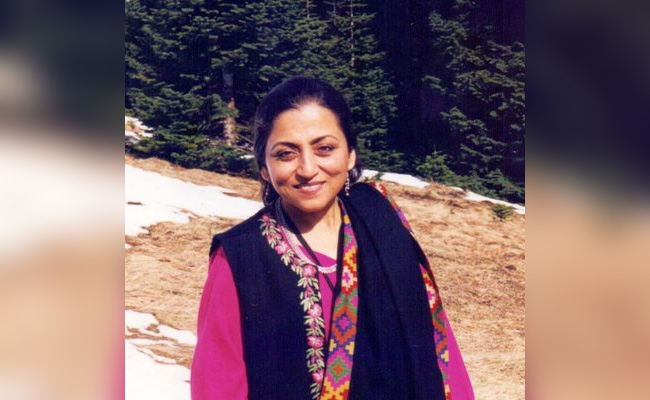
Chandigarh (PTI): Madhu Kishwar has been booked following a complaint by a Chandigarh resident over the alleged circulation of forged and misleading content on social media.
An FIR has been lodged against Kishwar and some other social media users under relevant sections, including 196 (criminalises acts that promote enmity, hatred, or ill-will between groups based on religion, race, language), 336 (1) (forgery) and 356 (criminal defamation) of Bharatiya Nyaya Sanhita and the IT Act at Police Station Sector-26 here.
According to an official statement issued by the Chandigarh police on Monday, a city-based complainant on April 19 alleged that some forged and misleading social media posts and video clips with obscene text and content were being circulated by various social media users, misidentifying the person in the video.
Further investigation into the matter is underway.
As per the complainant, it is a deliberate act of creating a false electronic record using obscene words and phrases, having knowledge and sufficient reason to believe that the posts are misleading and false, with the intent to cause damage or injury.
The video, which circulated with the intent to cause harm to the reputation of a constitutional authority and to disturb public peace and tranquility, should be investigated, and appropriate action should be taken, according to the complainant.
As per the complainant, the person seen in the video is a travel vlogger whose wife regularly posts updates about their activities on social media. The original video was shared from her social media account.
"As per the statement of the woman, she disclosed that the person in the video shared from her account is her husband. Statements of her husband and another lady in the video have also been recorded during preliminary investigation," said police in the statement.
Meanwhile, Kishwar, in a social media post, said a team of Chandigarh police had visited her late Monday night to serve her notice regarding the FIR registered against her.
"Since the law forbids the police to visit or arrest women after dark and before sunrise, I spoke on phone to the leader of the delegation. She told me that their team has come to serve notice regarding an FIR registered against me in Chandigarh. I insisted that they go by the law and come in the morning," she wrote on X.