UP mosques to postpone Juma namaz timings on Holi day
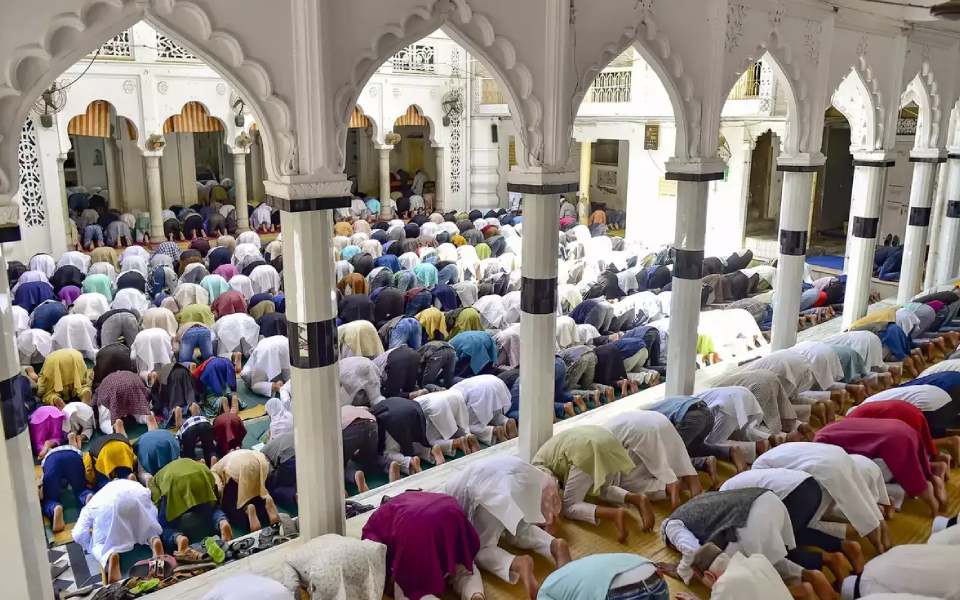
Lucknow/Sambhal/Bareilly (UP), Mar 7 (PTI): Ahead of Holi next Friday, imam of Lucknow Eidgah has asked the mosques to hold the Juma namaz at 2 pm that day. He also advised Muslims to offer prayers at a nearby mosque, instead of going to a distant one.
In Sambhal, it was decided that Hindus would play Holi till 2.30 pm on March 14, and Muslims would offer namaz after 2.30 pm, said a senior police official. Seven companies of Provincial Armed Constabulary (PAC) have also been deployed in the city ahead of the festival.
The new directive comes a day after a circle officer in Sambhal kicked up a row by commenting that those who feel uncomfortable with Holi colours should stay indoors, as the festival comes only once a year, whereas Juma namaz takes place 52 times in a year.
In an advisory issued on Thursday, Imam of Lucknow Eidgah Maulana Khalid Rashid Farangi Mahali said the mosques may postpone the Juma prayers, which is usually offered between 12.30 pm and 1 pm.
The advisory said, "This year, the second Juma of Ramzan is on March 14, which is also the day Holi will be celebrated. Hence, Muslims are advised not go to a distant mosque, but offer namaz at one in their locality."
Namaz at Jama Masjid Eidgah in Lucknow will be offered at 2 pm next Friday, instead of 12.45 pm, the imam added.
Sambhal superintendent of police Krishan Kumar on Friday told reporters that security has been tightened in view of Holi and the second Friday of Ramzan falling on the same day. Seven companies of PAC have been deployed in the city ahead of the festival.
He said complete peace prevails in the district and peace committee meetings are being organised at the mohalla level.
On the peace committee discussions, the SP said, "Talks were held with key people from both sides at the district level. It was decided that Hindus will play Holi till 2.30 pm and go back to their homes, and the Juma namaz will be held after 2.30 pm."
He said the Sambhal police is keeping a strict vigil on social media and people should keep themselves away from rumours.
Police outposts are being inspected, and an antenna has been installed at the Satyavrat police outpost. A district control room is being built on it, he said.
Sambhal District Magistrate Rajender Pensiya told reporters that the city has been divided into six zones and 29 sectors. Magistrates have been deployed in all sectors.
Asked if mosques will be covered with tarpaulin, he said, "There is no such plan from our side. If the parties decide on their own, they can cover them. Both the parties have said they will celebrate the festivals with great harmony, coordination and peace."
In Bareilly, the president of All India Muslim Jamaat, Maulana Mufti Shahabuddin Razvi Bareilvi, appealed to imams to fix the Friday prayers at 2.30 pm on Holi.
The Juma namaz should be fixed at 2.30 pm in areas with a mixed population, while it need not be changed in localities with a predominantly Muslim population, he said, appealing to the imams and mutawallis of mosques to pay special attention to such things.
In a statement, Maulana Razvi advised Muslims not to come out on the streets for more than 3-4 hours. They should remain cautious if they have to go out for some important work.
He said the holy month of Ramzan should be spent with patience. "If a child or an ignorant person puts colour on you, there is no need to get into a fight. Go home and wash it off. Holi colours do not make your clothes impure," he said.
Sambhal Circle Officer Anuj Chaudhary had courted controversy when, during a peace committee meeting held at the Sambhal Kotwali police station on Thursday, he said those uncomfortable with Holi colours should remain indoors, as the festival comes once a year.
The comment attracted criticism from opposition parties, which demanded action against him. They said the remarks showed "bias" and did not befit a police officer.
Let the Truth be known. If you read VB and like VB, please be a VB Supporter and Help us deliver the Truth to one and all.
Sujit Nair raises concerns over speculation of DMK-AIADMK understanding to block TVK
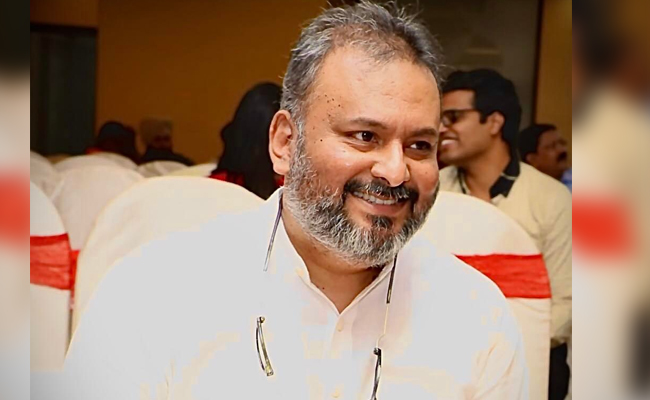
Chennai: Journalist and political commentator Sujit Nair has expressed concern over speculation that the Dravida Munnetra Kazhagam and the All India Anna Dravida Munnetra Kazhagam could explore a post-poll understanding to prevent Vijay-led Tamilaga Vettri Kazhagam from forming the government in Tamil Nadu.
In a social media post, Sujit Nair said the election verdict in Tamil Nadu reflected a clear public demand for political change and argued that the mandate should be respected irrespective of political preferences.
Referring to reports and political discussions surrounding a possible understanding between the DMK and AIADMK, he said he hoped such developments remained only speculative conversations and did not turn into reality.
Nair stated that if such an alliance were to take shape, it would raise serious questions about ideological politics in the country. He said TVK had emerged through a democratic electoral process and that the legitimacy to govern in a parliamentary democracy comes from the people’s verdict.
According to him, attempts to prevent an electoral winner from forming the government through unexpected political arrangements may be constitutionally valid, but many people could view them as politically opportunistic.
He further said that such a move could particularly affect the political image of the DMK, which has historically projected itself around ideology, social justice and opposition politics. Nair said that in ideological terms, the DMK appeared closer to TVK than to the AIADMK, and joining hands with its long-time political rival only to remain in power could weaken its broader political narrative.
He added that the same questions would apply to the AIADMK as well, as the party had spent decades positioning itself against the DMK and such an arrangement could create discomfort among its cadre and supporters.
Drawing a comparison with Maharashtra politics in 2019, Nair said he had expressed similar views when the Shiv Sena formed an alliance with the Indian National Congress and the Nationalist Congress Party after the Assembly elections.
He said post-poll alliances between long-standing political rivals often create a public perception that ideology and electoral mandates become secondary when political power equations come into play.
Nair also said such developments increase public cynicism towards politics and reinforce the belief among voters that ideology is often sidelined after elections.
He maintained that the Tamil Nadu verdict was emphatic and said respecting both the spirit and substance of the mandate was important for the credibility of democratic politics.