UP Police officials barge into Urdu journalist's home in Lucknow, call him terrorist
Issue apology later
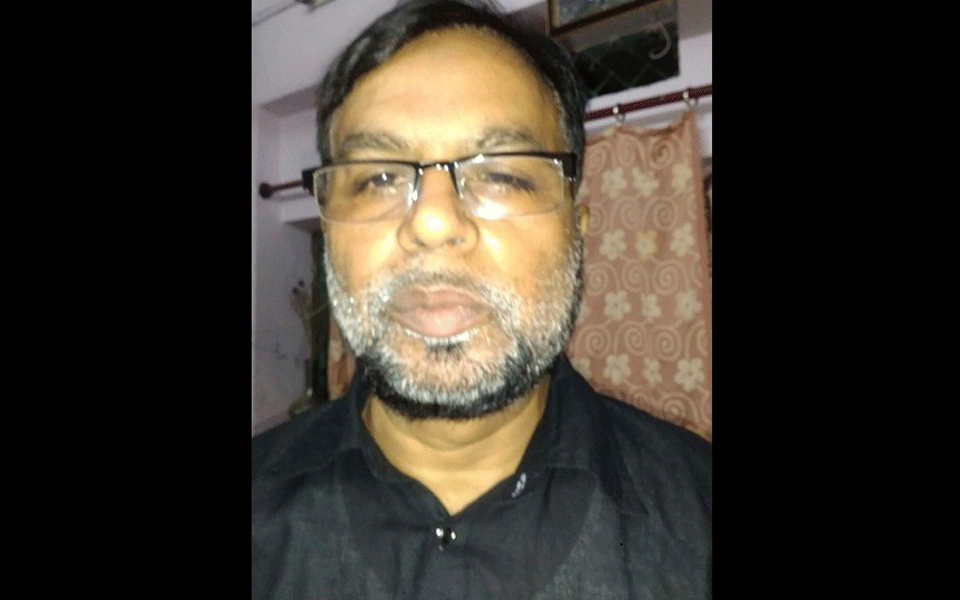
Lucknow, August 18: In what appears to be the case of mistaken identity, the Lucknow police on the eve of India's 72nd Independence Day barged into the home of a senior Urdu journalist, Mohammad Sahid Khan, and called him and his entire family terrorists.
The police later apologised to the journalist and his family verbally after having probed his documents and other details. This was after the intervention of other accredited scribes of Lucknow who took this matter to the senior administrative officials of the state. However, the police have not given a written apology.
The police told Khan and his family that they had received a tip off about two suspects passing through their lane and hence, they acted on it.
“I don't even have any FIRs or a police complaint against me in my career span of 26 years. And all of a sudden, the Lucknow police has dubbed me as a terrorist. My whole family is traumatised because of this,” said Khan.
Khan added that if he would not have been a journalist, the police would have held a press briefing the very next day declaring they arrested a terrorist in Lucknow.
Khan, who works as an editor for Urdu language with the Doordarshan in Lucknow and Akashwani, said the police barged into his home at around 1 pm on 14 August.
“They came during the afternoon. There were many policemen in civil dress along with Cantonment station house officer, Ranjana Sachan, and a sub-inspector. They dubbed me as a terrorist in front of the entire locality,” said Sahid.
The senior Urdu scribe claimed that the following allegations were leveled against him by Sachan: “Tum atankwadi ho aur yaha atankwadi aate jaate hai. Tum to shakal se atankwadi lagte ho. Aaj subah yaha do atankwadi aaye the (You people are terrorists and this is where terrorists roam about. You even look like a terrorist. This morning, there were two terrorists who had come here).”
“After listening to this, I tried to tell the police that I am an accredited journalist and there has been some misunderstanding but the police was not ready to listen to us and the SHO Ranjana Sachan said that I do not believe in government accredited press cards,” said Khan, adding that the police later called his nephew from his workplace.
The police took a group photograph of his family members as they stood in front of the house just before leaving their home. The police also took photocopies of documents like Aadhaar card from the family.
After this incident, Mohammad Sahid reached out to fellow journalists and explained the incident to them. Later, accredited journalists from Lucknow state headquarters raised this matter with senior authorities like Principal Secretary, Information, Awanish Awasthi, Home Secretary Bhagwaan Swaroop, and Additional Director General (Police) Praveen Kumar.
Senior Urdu journalist Syed Husain Afsar demanded a high-level inquiry into this matter.
"This is very wrong policing. How can police dub anyone a 'terrorist' and that too, a journalist? Though the police have apologised for this, this is not done. An inquiry should be ordered against the policemen who entered his house on such a weak and misleading input," demanded Afsar.
The Lucknow Senior Superintendent of Police (SSP) Kalanidhi Naithani later told mediapersons that the action taken by the police was the result of a misunderstanding.
Siddharth Kalhans, a former colleague of Khan, called the series of events that unfolded "very unfortunate".
“He is such an honest and punctual scribe that we used to give his example to our colleagues. This act of police is not acceptable by the journalist fraternity in Lucknow and across the state. We condemn this and demand strict action by the senior government officials,” Kalhans said.
The author is a Lucknow-based freelance writer and a member of 101reporters.com
Courtesy: www.firstpost.com
Let the Truth be known. If you read VB and like VB, please be a VB Supporter and Help us deliver the Truth to one and all.
Cong performed better in Kerala, anti-incumbency trends influenced WB, TN: CM Siddaramaiah
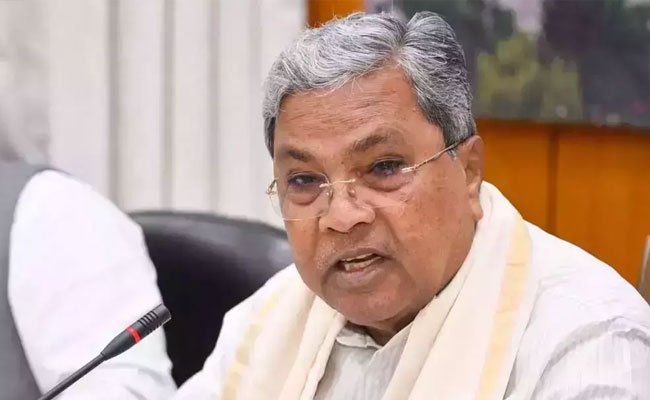
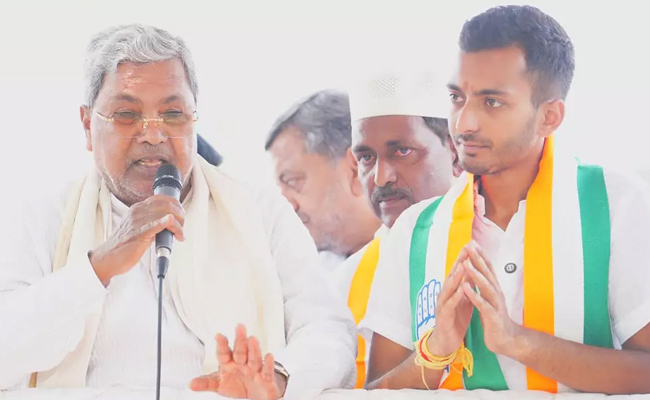
Bengaluru (PTI): Karnataka Chief Minister Siddaramaiah on Monday said the Congress had largely met or exceeded expectations in several States, even as results in some regions reflected shifting voter sentiments.
Speaking to reporters in Bengaluru, he said the party accepted the mandate in Assam while performing better than anticipated in Kerala.
He also pointed to possible anti-incumbency trends influencing outcomes in West Bengal and Tamil Nadu.
“In Assam, we got the expected result, and we accept the people’s mandate. In Kerala, we have won more seats than expected. We anticipated around 76 to 80, but we have gone up to around 95,” Siddaramaiah said.
In West Bengal and Tamil Nadu, there may have been an anti-incumbency trend, and that could have influenced the results, he added.
Siddaramaiah also extended his congratulations to a new political entrant in Tamil Nadu, noting the emergence of a different electoral dynamic in the State.
“I congratulate the new entrant who has achieved success there,” he added.
Deputy Chief Minister D K Shivakumar said electoral outcomes in some States had diverged from the party’s internal assessments, reflecting evolving voter expectations.
“We expected a certain trend, but the results have been different. Political reading was wrong in some places,” he said.
“People were looking for change in some States, and that has been reflected in the results,” Shivakumar, who is also the Congress Karnataka unit president, said.
Referring to Kerala, he said the Congress-led alliance had benefited from public sentiment.
“There was already an expectation based on local body elections, and people had shown confidence in us. That has translated into a strong result,” the Deputy Chief Minister said.
On Tamil Nadu, he acknowledged that the scale of political shift had come as a surprise.
“We expected to secure around 30 to 40 per cent of the vote share, but such a major shift was not anticipated. It shows that voter expectations were different,” he said.
Shivakumar added that electoral outcomes underscored the need for better political assessment in future.
“We have to understand these changes carefully. Political reading cannot go wrong like this,” he said.