UP polls: Union minister Ajay Mishra casts vote amid heavy security in Lakhimpur Kheri

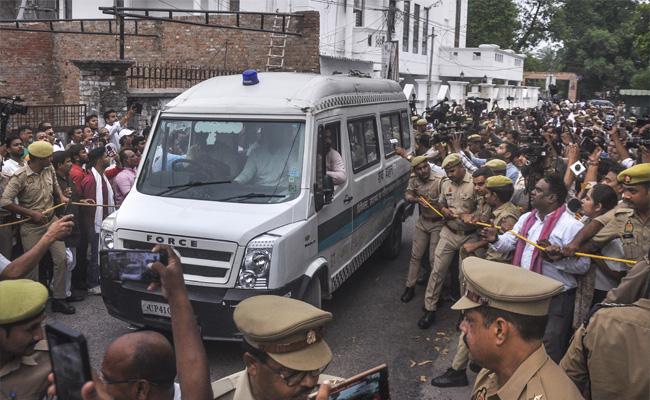
Lakhimpur Kheri, Feb 23: Surrounded by a large number of security personnel, Union Minister and BJP leader Ajay Mishra, embroiled in a major controversy involving his son, cast his vote here for the Uttar Pradesh assembly polls on Wednesday.
The Union Minister of State for Home Affairs did not speak to the media, neither while going into the polling booth at a school in Banwaripur nor when he came out after casting his vote.
Purported videos on social media showed Mishra, whose vote falls in the Nighasan assembly constituency, walking to and from the voting centre around 11.30 AM flanked by an unusually large number of security personnel.
A central minister, Mishra hogged limelight in October 2021 when eight people, including four farmers, were killed during violence in the Tikunia area in his native district here.
His son Ashish Mishra was an accused in the case and was arrested. Ashish was earlier this month granted bail by the Allahabad High Court, prompting families of the deceased farmers to move the Supreme Court over the matter.
The voter turnout in Lakhimpur Kheri stood at 26.28 per cent till 11 AM, according to the Election Commission. The voting closes at 6 PM.
#WATCH | MoS Home Ajay Mishra Teni leaves from a polling booth in Banbirpur of Lakhimpur Kheri, after casting his vote for the fourth phase of #UttarPradeshElections2022 pic.twitter.com/kgRpdoC9GP
— ANI UP/Uttarakhand (@ANINewsUP) February 23, 2022
Let the Truth be known. If you read VB and like VB, please be a VB Supporter and Help us deliver the Truth to one and all.
Congress using hijab issue to pacify minority anger, alleges Karnataka LoP R Ashoka
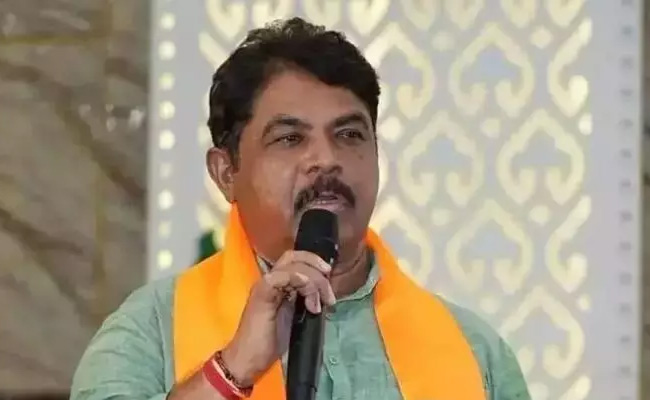
Bengaluru: Leader of Opposition in the Assembly R. Ashoka has accused the Congress government of using the hijab issue to placate what he described as discontent among minority voters after the Davanagere by-election.
In a post on X on Wednesday, Ashoka alleged that the state government, instead of addressing issues such as price rise, corruption, farmers’ distress and law and order, was attempting to retain its minority vote base by reviving the hijab issue.
Referring to the 2022 dress code introduced by the BJP government, which prohibited hijab in schools and colleges, Ashoka said the Karnataka High Court had upheld the policy and emphasised the importance of discipline in educational institutions.
He questioned the Congress government’s move to revisit the issue and asked whether setting aside the court-backed policy to benefit one community could be described as secularism.
Ashoka further alleged that while the government was willing to permit hijab, it continued to prohibit saffron shawls.
He accused the government of dividing students on religious lines rather than treating schools and colleges as spaces of equality.
Drawing a comparison with Mamata Banerjee’s government in West Bengal, Ashoka claimed that excessive appeasement politics had harmed the state and warned that the Congress in Karnataka could face a similar political response.
He said voters in Karnataka would teach the Congress a lesson for what he termed “vote-bank politics” and for compromising constitutional and judicial principles.