UP to present 'vision document' on Taj Mahal before SC on Thursday
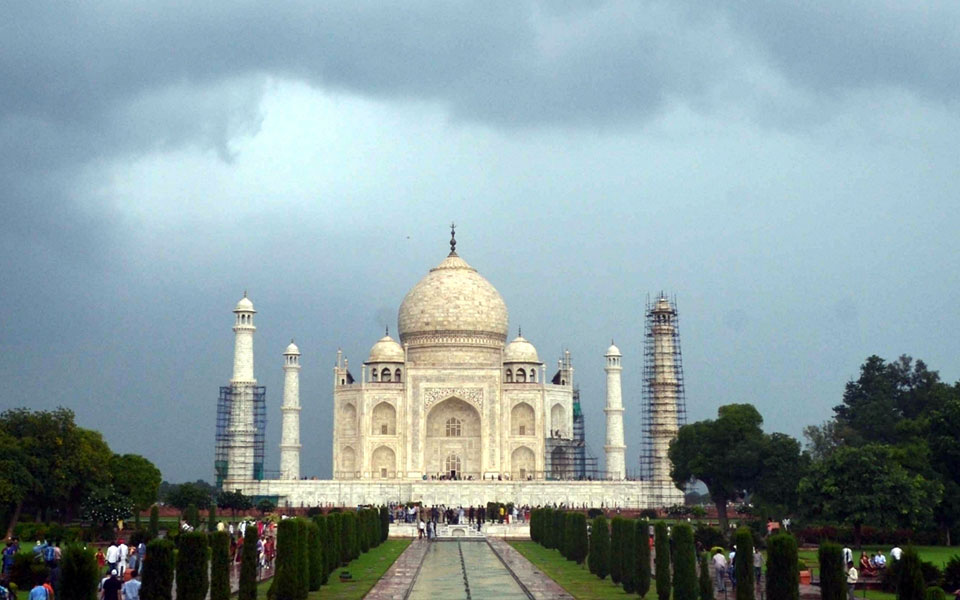
Lucknow, July 23 : The Uttar Pradesh government will be presenting a 'vision document' on the Taj Mahal in Agra before the Supreme Court on Thursday, an official said on Monday.
This document, prepared by the Delhi School of Planning and Architecture, was put together after the apex court came down heavily on the government while hearing a petition filed by environmentalist M.C. Mehta.
Ten days back, the top court made sharp observations on the central and the state governments for not being able to protect the iconic structure.
It asked the Yogi Adityanath government on why industrial activities have picked up pace in the 10,400 sq km Taj Trapezium Zone (TEZ) area comprising Mathura, Agra, Hathras, Etah and Firozabad, created for protection and conservation of the Mughal structure.
The bench also reprimanded the governments saying that the issue called for long-term solutions, not short term and knee-jerk methods.
The state government, through the vision document to be submitted on July 26, plans to apprise the apex court of the efforts being made by it to protect the 17th century monument, which also draws the largest footfall of foreign tourists in the state.
These efforts include making of a rubber check dam to be built at a cost of Rs 300 crore on Yamuna river, the foundation stone of which was laid down by Adityanath in October 2017.
Other than restoration works around Taj Mahal, an orientation centre at the eastern gate and beautification of the Mehtab Bagh are also underway.
Let the Truth be known. If you read VB and like VB, please be a VB Supporter and Help us deliver the Truth to one and all.
4 workers die after being buried under coal slurry in Jharkhand's Dhanbad
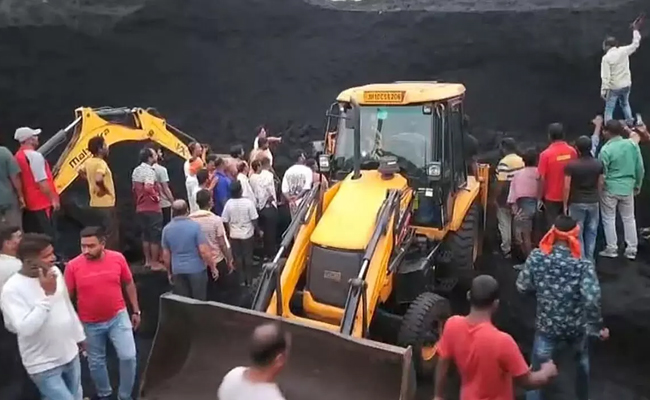
Dhanbad (Jharkhand) (PTI): At least four workers died after being buried under coal slurry in Jharkhand's Dhanbad district on Saturday, a police official said.
The incident took place at Moonidih coal washery in the command area of Bharat Coking Coal Limited (BCCL).
"Bodies of all four workers were dug out of debris during a rescue operation," Putki police station in-charge Waqar Hussain told PTI.
The incident took place when coal slurry was being loaded into trucks by workers, during which a large chunk of slurry fell and trapped several workers underneath, officials said.
The deceased have been identified as Manik Bauri, Dinesh Bauri, Deepak Bauri, and Hemlal Gope.
Meanwhile, the family members of the deceased and local villagers placed the bodies in front of the washery gate and began a protest.
They demanded compensation, jobs for dependents and action against those responsible for the incident.
Police and administration officials are trying to pacify the protesters, an official said.