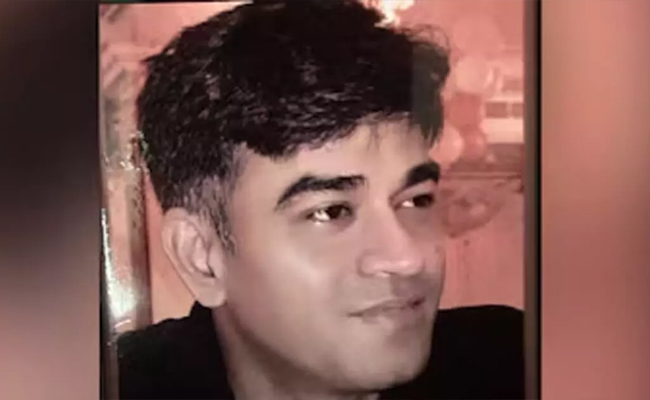
Urdu teacher asked to chant 'Jai Shri Ram' in Ghaziabad society; 1 held

Ghaziabad, Oct 24: An Urdu teacher visiting a housing society here for private tuition was allegedly forced out of the complex by a group of men who heckled him and reportedly asked him to chant "Jai Shri Ram", police said on Thursday.
The key accused in the case, identified as Manoj Kumar who lives in the society located in the Crossings Republik township, has been arrested, Assistant Commissioner of Police (Wave City), Lipi Nagaich, said.
According to the police, Mohammad Alamgir, who regularly visits the society to teach a student at a flat on the 16th floor, was intercepted by Kumar and other residents on Tuesday.
They allegedly raised "Jai Shri Ram" slogans and asked Alamgir to do the same. When he refused, Kumar became aggressive and blocked his entry into the elevator, the ACP said.
The situation escalated as more residents joined the confrontation, repeatedly pressuring Alamgir to chant "Jai Shri Ram".
A security guard and some other residents intervened to pacify the situation but the group allegedly continued to intimidate Alamgir and eventually forced him to leave the society, the officer said.
Alamgir later lodged a police complaint detailing his ordeal without explicitly mentioning that he was forced to chant "Jai Shri Ram", which he told the police verbally, Nagaich said, adding that Kumar has been booked under sections 126(2) (wrongful restraint), 352 (intentional insult with intent to provoke breach of peace), and 351(2) (criminal intimidation) of the Bharatiya Nyaya Sanhita (BNS).
Let the Truth be known. If you read VB and like VB, please be a VB Supporter and Help us deliver the Truth to one and all.
Sujit Nair raises concerns over speculation of DMK-AIADMK understanding to block TVK
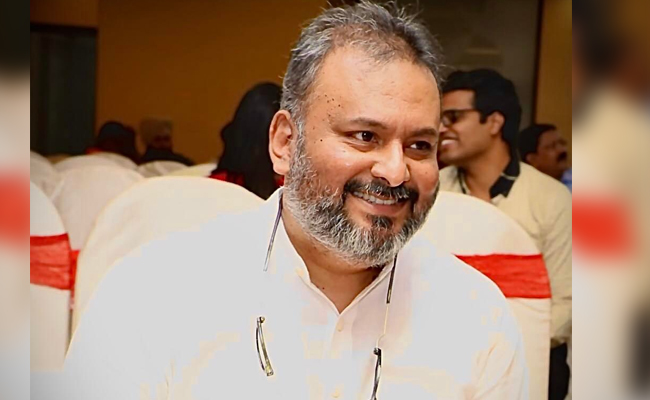
Chennai: Journalist and political commentator Sujit Nair has expressed concern over speculation that the Dravida Munnetra Kazhagam and the All India Anna Dravida Munnetra Kazhagam could explore a post-poll understanding to prevent Vijay-led Tamilaga Vettri Kazhagam from forming the government in Tamil Nadu.
In a social media post, Sujit Nair said the election verdict in Tamil Nadu reflected a clear public demand for political change and argued that the mandate should be respected irrespective of political preferences.
Referring to reports and political discussions surrounding a possible understanding between the DMK and AIADMK, he said he hoped such developments remained only speculative conversations and did not turn into reality.
Nair stated that if such an alliance were to take shape, it would raise serious questions about ideological politics in the country. He said TVK had emerged through a democratic electoral process and that the legitimacy to govern in a parliamentary democracy comes from the people’s verdict.
According to him, attempts to prevent an electoral winner from forming the government through unexpected political arrangements may be constitutionally valid, but many people could view them as politically opportunistic.
He further said that such a move could particularly affect the political image of the DMK, which has historically projected itself around ideology, social justice and opposition politics. Nair said that in ideological terms, the DMK appeared closer to TVK than to the AIADMK, and joining hands with its long-time political rival only to remain in power could weaken its broader political narrative.
He added that the same questions would apply to the AIADMK as well, as the party had spent decades positioning itself against the DMK and such an arrangement could create discomfort among its cadre and supporters.
Drawing a comparison with Maharashtra politics in 2019, Nair said he had expressed similar views when the Shiv Sena formed an alliance with the Indian National Congress and the Nationalist Congress Party after the Assembly elections.
He said post-poll alliances between long-standing political rivals often create a public perception that ideology and electoral mandates become secondary when political power equations come into play.
Nair also said such developments increase public cynicism towards politics and reinforce the belief among voters that ideology is often sidelined after elections.
He maintained that the Tamil Nadu verdict was emphatic and said respecting both the spirit and substance of the mandate was important for the credibility of democratic politics.