US wants constructive dialogue not 'war of words' between India, Pakistan: State Dept spokesperson
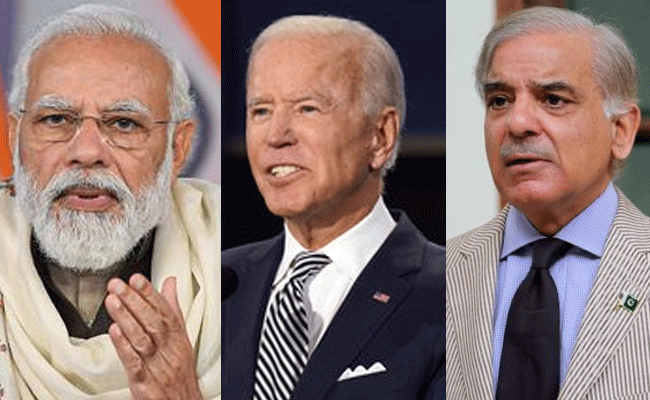
Washington (PTI): America shares multifaceted relationships with India and Pakistan and does not want to see a "war of words" but a constructive dialogue between the two nations for the betterment of their people, a top US official has said.
Relations between India and Pakistan have often been strained over the Kashmir issue and cross-border terrorism emanating from Pakistan.
"We have a global strategic partnership with India. I have also spoken about the deep partnership we have with Pakistan. These relationships in our mind are not zero-sum. We do not view them in relation to one another," US State Department spokesperson Ned Price told reporters at his daily news conference on Monday when asked about the recent outburst against Prime Minister Narendra Modi by Pakistani Foreign Minister Bilawal Bhutto-Zardari in New York.
Price said each of these relationships is indispensable to the US and to the promotion and pursuit of the shared goals that the US has with India and Pakistan.
"The fact that we have partnerships with both countries leaves us not wanting to see a war of words between India and Pakistan. We would like to see a constructive dialogue between India and Pakistan. We think that is for the betterment of the Pakistani and Indian people. There is much work that we can do together bilaterally," Price said in response to the question.
"There are differences that, of course, need to be addressed between India and Pakistan. The United States stands ready to assist as a partner to both," he asserted.
The ties between India and Pakistan nosedived after India abrogated Article 370 of the Constitution, revoking the special status of Jammu and Kashmir and bifurcating the State into two Union Territories on August 5, 2019.
Pakistan foreign minister Bhutto-Zardari last week resorted to a personal attack on Prime Minister Modi and slammed the RSS after External Affairs Minister S Jaishankar told the UN Security Council that the "contemporary epicentre of terrorism" remains very much active and called for collective action to tackle them.
Though Jaishankar did not name any countries, it was apparent that he was making a veiled reference to Pakistan.
Later, he told reporters in New York that the world sees Pakistan as the epicentre of terrorism and recalled US leader Hillary Clinton's blunt message to Islamabad in 2011 that snakes in one's backyard will eventually bite those who keep them.
"The US has a global strategic partnership with India. These relationships stand on their own; it is not zero-sum.
"We see the importance the indispensability really of maintaining valuable partnerships with both our Indian and Pakistani friends. Each of these relationships also happens to be multifaceted," Price said.
"So even as we deepen our global strategic partnership with India, we also have a relationship in which we can be candid and frank with one another. Where we have disagreements or concerns, we voice those just as we would with our Pakistani friends as well," he said.
Responding to another question, Price said countries the world over welcomed when Prime Minister Modi told Russian President Vladimir Putin this summer that this is not the era of war.
"I think it is notable that the communique emanating from the G20 also had very similar language I think a testament to the fact that this was language and this was a call that resonated in this country, in South Asia, in Europe, and around the world. The United States certainly welcomes it," he said. The top US official said it was also important because India has a relationship with Russia that the US does not have.
For decades, Russia was prepared to be a partner to India in a way that the US at the time was not. Of course, that has changed in recent decades, Price said.
It is a bipartisan legacy of the last several administrations, perhaps starting most notably with the administration of former US President George W Bush that the US is now a partner of "first resort" for India, he said.
"There is a lot of good that we can do together, not only for our two countries, but around the world, and I think we will see a good example of that in the coming year when India hosts the G20," he said.
"I know we will have an opportunity to travel to India, to be in close touch with India in the context of the G20, and we will be able to see what cooperation between our two countries and a broader set of countries can provide," Price added.
Let the Truth be known. If you read VB and like VB, please be a VB Supporter and Help us deliver the Truth to one and all.
Power struggle in ruling Cong has 'created massive confusion' in Karnataka: BJP leader Ashoka
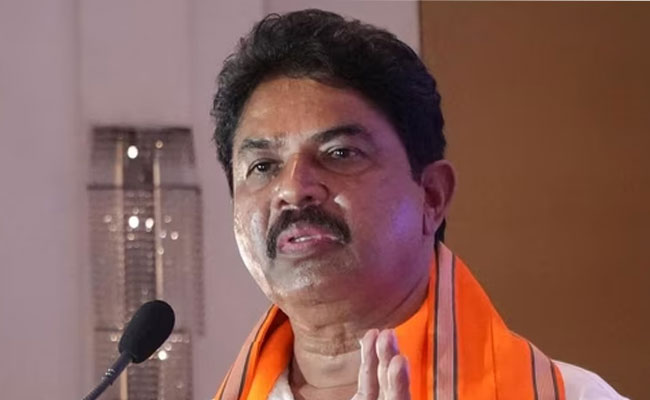
Bengaluru (PTI): BJP leader R Ashoka on Friday claimed that the ongoing power struggle between Chief Minister Siddaramaiah and his deputy D K Shivakumar has created massive confusion in Karnataka.
He remarked that the proverb “when two people fight, the third one benefits” has come true, as AICC President Mallikarjun Kharge is also now making efforts to become Chief Minister.
Speaking to reporters here, Ashoka said the entire government has turned into a house of confusion due to the alleged power tussle.
Kharge’s new statement has only added to the chaos, he said.
Congress chief Mallikarjun Kharge had on Friday said that no date has been fixed yet to discuss possible leadership change in Karnataka.
This came a day after Kharge said there was no change of CM in Karnataka "for now" and that the leadership issue in the state would be resolved soon.
The BJP leader said that Kharge too has aspirations and that he was cheated earlier.
"Perhaps he has received a green signal from the Congress high command to become CM. Everyone is already saying Kharge should become CM. Kharge himself has declared, “I am ready to become CM.” Despite many attempts in the past, he never became CM. Now he is trying to seize the opportunity," the Leader of Opposition in the state assembly said.
According to him, the situation in Congress has perfectly become a case of “two people fighting, third one benefits.”