Use compulsory license and put ceiling to curb prices of patented medicines: Govt panel
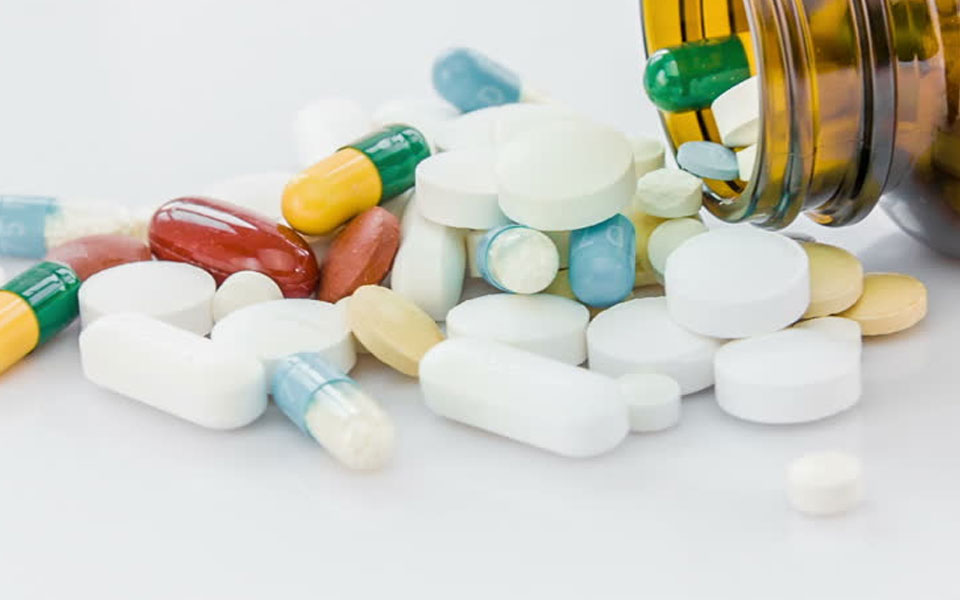
New Delhi, Jan 27 : In order to cut prices of patented medicines for cancer and rare diseases, a high-level government panel has made a series of far reaching recommendations including granting "compulsory license" to any Indian pharma company to produce drugs without the consent of the patent holding firms.
The report, a copy of which is with PTI, also recommended putting a ceiling price on life-saving medicines after analysing the Purchasing Power Parity (PPP) of various countries, a standard followed in majority of the western world to fix medicine prices.
Multinational pharmaceutical companies sell most of the patented drugs in India and they have been vehemently opposing any sort of price cap or grant of compulsory licensing to any other company to produce drugs being sold by them.
The Indian pharmaceutical market has an annual turnover of around Rs 2.3 lakh crore. While majority of these revenues come from sales of generic drugs, around 30 per cent of it comes from patented drugs.
The committee noted that the prices of patented anti-cancer and antifungal drugs are "on the higher side" and cited the example of Rs 1 lakh being the price for just one injection for cancer treatment.
It said there is a need to moderate the prices of patented anti-diabetic drugs and also recommended that patent owning companies should be "encouraged" to give "voluntary licenses" to other pharmaceutical companies.
Moreover, it has stated that the government should explore procurement of more drugs at lower rates for public health care systems through negotiations with pharmaceutical companies.
"The committee after a detailed analysis has come to the conclusion that it is important to put in place an effective mechanism to regulate the prices of patented medicines in India," the committee's report stated.
Officials said the government is examining the panel's report finalised around March last year.
If a company develops an innovative drug, it is granted an intellectual property right for 20 years in the form of a patent. During these 20 years, the patent-owner company can prevent any other company from manufacturing the same medicine, according to existing norms.
Worried about "high prices" and "unaffordability" of patented drugs in India, the Department of Pharmaceuticals (DOP) formed this inter-ministerial committee of Joint Secretaries to "suggest ways and means to fix the prices of patented drugs in the country".
According to a source, the committee submitted its report during February-March last year. However, on January 3 this year, the DOP announced new patented drugs as well as drugs used to treat "rare diseases" would be exempted from price control for a period of five years from the date it is marketed in the country.
Till the January 3 notification, the DOP had the powers to bring patented drugs under price control through powers given under the Drug (Prices Control) Order 2013.
However, the DOP or National Pharmaceutical Pricing Authority (NPPA) rarely used these powers to cap prices of patented drugs.The NPPA works under the DOP only.
"A scientific analysis based on the PPP index of different countries may enable setting a benchmark price for the medicines patented in India," the committee said.
It added: "Based on the relative PPP index vis-a-vis India, the ex-company sales price in these countries shall be adjusted, and thereafter, the lowest PPP adjusted price anywhere in the world shall be the ceiling price applicable in India. This will ensure that Indian patients get the lowest price in the world for a patented medicine."
Besides recommending compulsory licensing, the report added that "voluntary licensing arrangements between a patent holder and another party" in a country "may afford opportunities for significant cost-containment and therefore the same may be encouraged".
The Department of Industrial Policy and Promotion (DIPP), NPPA and the Ministry of Health and Family Welfare were also part of this committee.The Indian Patent Office works under the DIPP.
On November 29 last year, Union Health Secretary Preeti Sudan wrote to the DIPP and the DOP asking them to "bring drugs used for treatment of rare diseases under compulsory licensing so that their costs become reasonable and affordable to the patients".
The World Health Orgnaization (WHO) defines "rare disease" as often debilitating lifelong disease or disorder condition with a prevalence of 1 or less, per 1,000 population. Some common rare diseases are Haemophilia, Pompe disease, Thalassemia, Sickle-cell Anaemia and Gaucher's disease.
Let the Truth be known. If you read VB and like VB, please be a VB Supporter and Help us deliver the Truth to one and all.
Two tribal girls gangraped in Chhattisgarh's Surguja; three arrested, three juveniles detained

Ambikapur (PTI): Two tribal girls were raped allegedly by six persons, including three juveniles, in a village in Chhattisgarh's Surguja district, a police official said on Thursday.
Three accused have been arrested and three minors were detained in connection with the incident that took place on the night of April 24 under Sitapur police station limits, he informed.
"The motorcycle-borne accused intercepted the victims when they, along with two other friends, were returning home on foot after attending a wedding. Two of the girls managed to escape. The two victims, one aged 15 years and another 13 years, were forced onto a motorcycle, taken to a secluded place and sexually assaulted," he said.
One of the victims returned home the same night and informed her family the next day, following which a case was registered under Bharatiya Nyaya Sanhita and Protection of Children from Sexual Offences (POCSO) Act at Sitapur police station on April 26 for gangrape and other offences, he said.
Medical examinations of the victims were conducted at the Sitapur Community Health Centre on April 26 and 27, the official said.
"Initial medical reports did not confirm sexual assault. However, after the victims' families expressed dissatisfaction with the findings, the girls were sent for fresh medical examination at the district hospital in Ambikapur. Based on this medical report, all six accused were taken into custody by April 30," he said.
The arrested accused have been identified as Anand Bek (27), Vikas Tigga (24) and Manish Khalkho (18), all residents of the Sitapur area. The three juveniles, two of them aged 17 years, have been detained, he said.