Uttar Pradesh gets maximum berths in Modi 2.0 Cabinet, followed by Maharashtra, Bihar
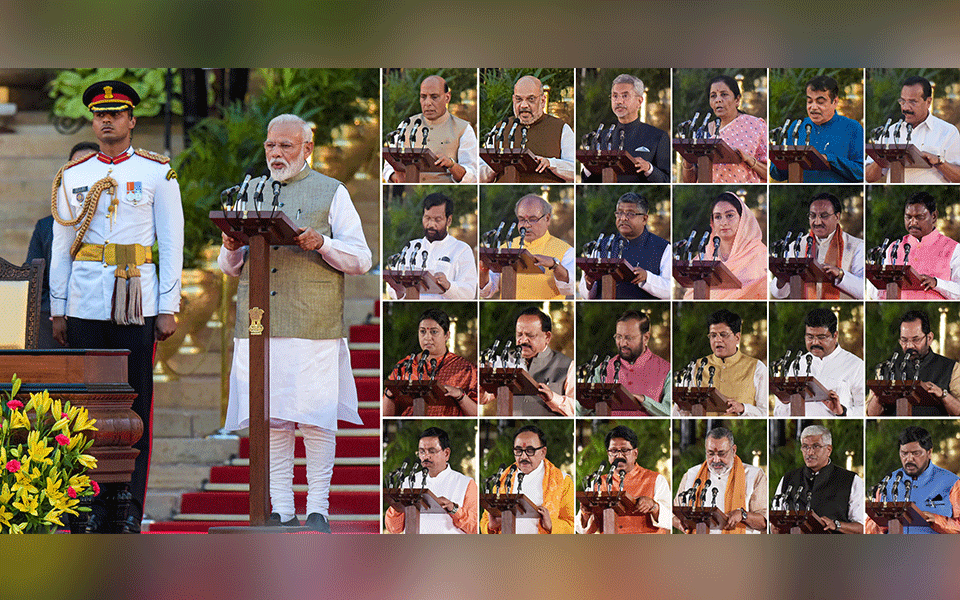
New Delhi: The second Narendra Modi-led government has the maximum representation of 10 faces from the politically crucial Uttar Pradesh, including Prime Minister Narendra Modi who represents Varanasi Lok Sabha constituency, followed by seven from Maharashtra and six from Bihar.
The Modi government 2.0 also has three ministers each from Gujarat, Rajasthan, Haryana and Karnataka followed by two each from West Bengal, Odisha and Madhya Pradesh.
The voters had given the BJP a clean sweep in Gujarat, Rajasthan and Haryana.
The states of West Bengal and Odisha gave massive gains to the Bharatiya Janata Party as it won 303 seats in the 543-member Lok Sabha in the national election.
West Bengal, where Assembly polls are due in 2021, gave the saffron party 18 MPs. However, it is being represented by only two ministers-- Babul Supriyo and Debasree Chaudhuri.
Odisha, where the BJP won eight seats, is being represented by Dharmendra Pradhan and Pratap Chandra Sarangi. Pradhan has been elected to the upper house from Bihar.
The new Council of Ministers has representation from almost all the states, except Andhra Pradesh and the north-eastern states of Nagaland, Manipur, Mizoram, Sikkim and Tripura.
Besides Modi, the ministers representing Uttar Pradesh are Rajnath Singh, Smriti Irani, Mahendra Nath Pandey, Sanjeev Balyan, Sadhvi Niranjan Jyoti, V K Singh, Santosh Gangwar, Hardeep Singh Puri and Mukhtar Abbas Naqvi. The BJP won 62 seats in the state while its ally bagged two.
Ministers from Maharashtra include Nitin Gadkari, Prakash Javadekar, Piyush Goyal, Arvind Sawant, Danve Patil, Ramdas Athawale and Shamrao Dhotre while those from Bihar Bihar include Ram Vilas Paswan, Ravi Shankar Prasad, Giriraj Singh, R K Singh, Ashwini Kumar Choubey and Nityanand Rai, while those.
Uttar Pradesh sends the maximum of 80 MPs to the Lok Sabha, Maharashtra and Bihar send 48 and 40 MPs respectively. Modi gave representation to members from Maharashtra, Haryana and Jharkhand as the states will be going to polls later this year.
Jharkhand is being represented by Arjun Munda while Naqvi, who is a Rajya Sabha member from the state, hails from Uttar Pradesh.
Despite the BJP bagging all seven parliamentary seats in Delhi, only Harsh Vardhan-- the winning MP from Chandni Chowk-- could find place in the Modi 2.0 cabinet.
Also inducted into the cabinet were Nirmala Sitharaman, a Rajya Sabha MP from Karnataka who hails from Tamil Nadu and with V Muraleedharan, who represents Kerala in the Council of ministers but has been elected to the upper house from Maharashtra.
Let the Truth be known. If you read VB and like VB, please be a VB Supporter and Help us deliver the Truth to one and all.
Trump says EU has until July 4 to approve last year's trade deal or it will face higher tariffs
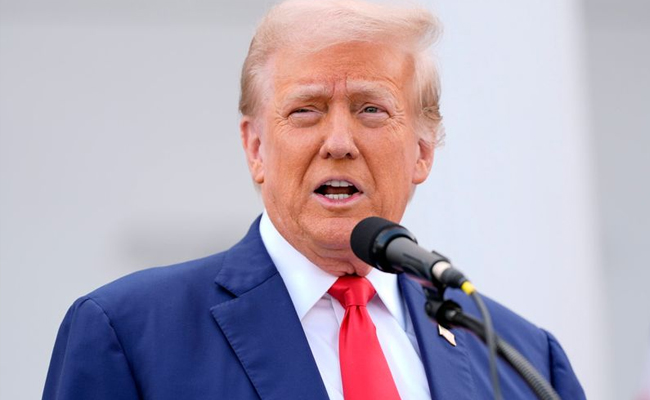
Washington (AP): President Donald Trump has said in a social media post that goods from the European Union would face higher tariff rates if the 27-member bloc fails to approve last year's trade framework by July 4.
The announcement on Thursday appeared to be a deadline extension after the president said last Friday that EU autos would face a higher 25 per cent tariff starting this week. Trump made the updated announcement after what he described as a "great call" with European Commission President Ursula von der Leyen.
Still, the US president was displeased that the European Parliament had yet to finalize the trade arrangement reached last year, which was further complicated in February by the US Supreme Court ruling that Trump lacked the legal authority to declare an economic emergency to impose the initial tariffs used to pressure the EU into talks.
"A promise was made that the EU would deliver their side of the Deal and, as per Agreement, cut their Tariffs to ZERO!" Trump posted. "I agreed to give her until our Country's 250th Birthday or, unfortunately, their Tariffs would immediately jump to much higher levels."
It was unclear from the post whether Trump was implying that the tariff rates would jump on all EU goods or the increase would only apply to autos.
His latest statement indicates he might be backing away from his earlier threat on EU autos by giving the European Parliament several more weeks to approve the agreement.
Under the original terms of the framework, the US would charge a 15 per cent tax on most goods imported from the EU.
But since the Supreme Court ruling, the administration has levied a 10 per cent tariff while investigating trade imbalances and national security issues, aiming to put in new tariffs to make up for lost revenues.