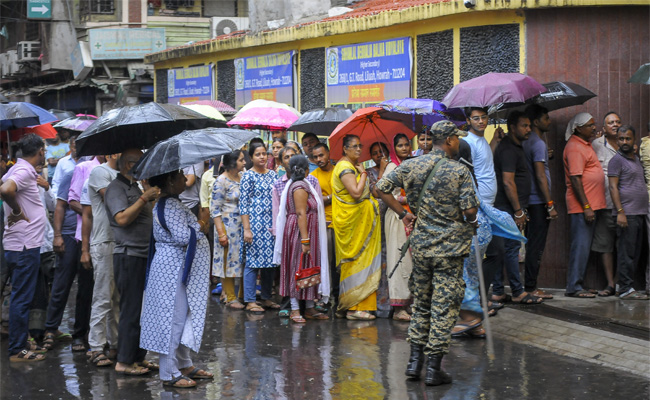
Uttar Pradesh third state to approve quota for poor among upper castes
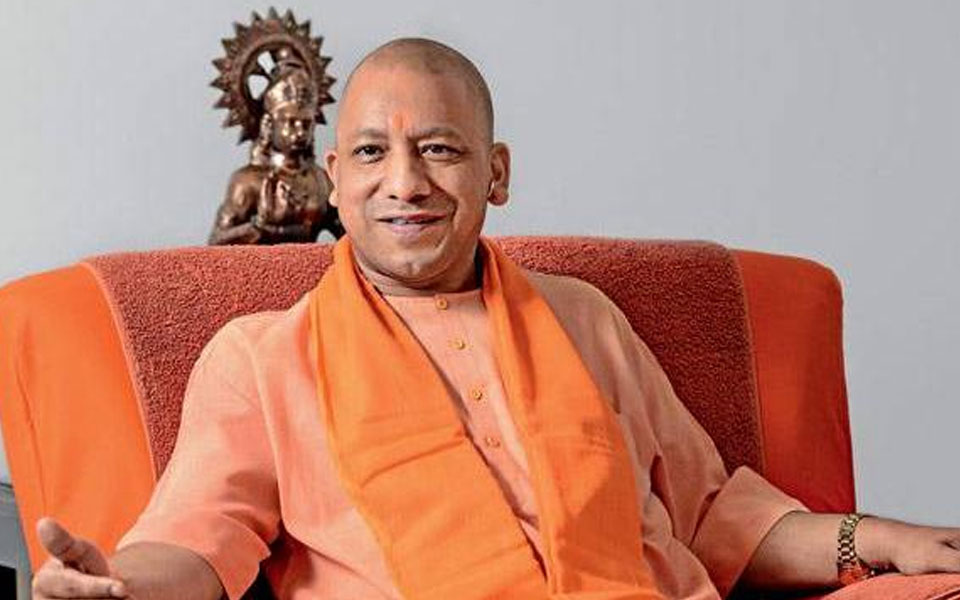
Lucknow, Jan 18 : The Uttar Pradesh government Friday approved 10 per cent reservation for economically backward among upper castes in jobs and educational institutions.
The nod was given at a meeting here of the state cabinet presided over by Chief Minister Adityanath, senior cabinet minister and UP government spokesperson Shrikant Sharma told mediapersons.
Uttar Pradesh became the third state after Gujarat and Jharkhand to approve the legislation which has to be ratified by at least half the state Assemblies in the country.
The Constitution (124 Amendment) Bill, 2019, providing for 10 per cent reservation in jobs and educational institutions to the economically weaker sections in the general category was passed by Parliament in its recently concluded winter session.
President Ram Nath Kovind has since given his assent to the bill.
"The cabinet meeting presided over by Chief Minister Adityanath approved the notification granting 10 per cent reservation to the poor among the upper castes which has come into effect on January 14," Sharma said.
"The UP government will implement the quota for the upper castes fully without touching the reservation for other sections of society," he said.
Meanwhile, a meeting between Deputy Chief Minister Dinesh Sharma, who holds the Higher Education portfolio, and state and private universities, approved a proposal for implementing the 10 per cent reservation for upper caste poor in higher education institutions after Cabinet approval.
There are 49 universities in the state, including four Central universities, 15 state universities and 27 private universities, together accounting for over 44,000 seats in various disciplines.
Let the Truth be known. If you read VB and like VB, please be a VB Supporter and Help us deliver the Truth to one and all.
Rickelton's ton in vain as SRH beat MI by 6 wickets
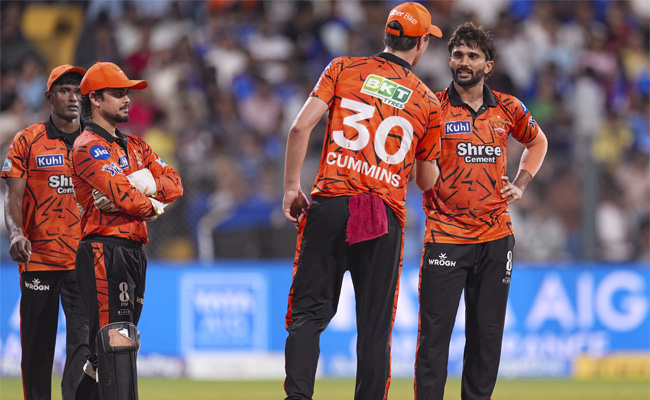
Mumbai (PTI): Ryan Rickelton's whirlwind unbeaten ton was overshadowed by Heinrich Klaasen's unbeaten 65 as Sunrisers Hyderabad defeated Mumbai Indians by six wickets in an IPL match here on Wednesday.
Chasing an imposing 244-run target, Travis Head (76 off 30) and Abhishek Sharma (45 off 24) shared 129 runs for the opening wicket to set the platform for SRH.
Klaasen (65 not out off 30 balls) then displayed his all-round hitting abilities to guide SRH home with the help of Nitish Kumar Reddy (21) and Salil Arora (30 not out off 10) in 18.4 overs.
Earlier, Rickelton's knock powered MI to 243 for five.
MI rode on a 93-run stand between Rickelton (123 not out off 55 balls) and Will Jacks (46 off 22) in 7.1 overs for the opening stand to power the side.
MI skipper Hardik Pandya scored a valuable 31 off 15 balls before being dismissed.
Praful Hinge (2/54), Eshan Malinga (1/29), Sakib Hasan (1/39) and Nitish Kumar Reddy (1/31) were the wicket-takers for SRH.
Brief Scores:
Mumbai Indian: 243 for 5 in 20 overs (Ryan Rickelton 123 not out; Praful Hinge 2/54).
Sunrisers Hyderabad: 249 for 4 in 18.4 overs (Travis Head 76, Heinrich Klaasen 65 not out; AM Ghazanfar 2/51).