Uttarakhand avalanche: Death toll climbs to five with recovery of one more body
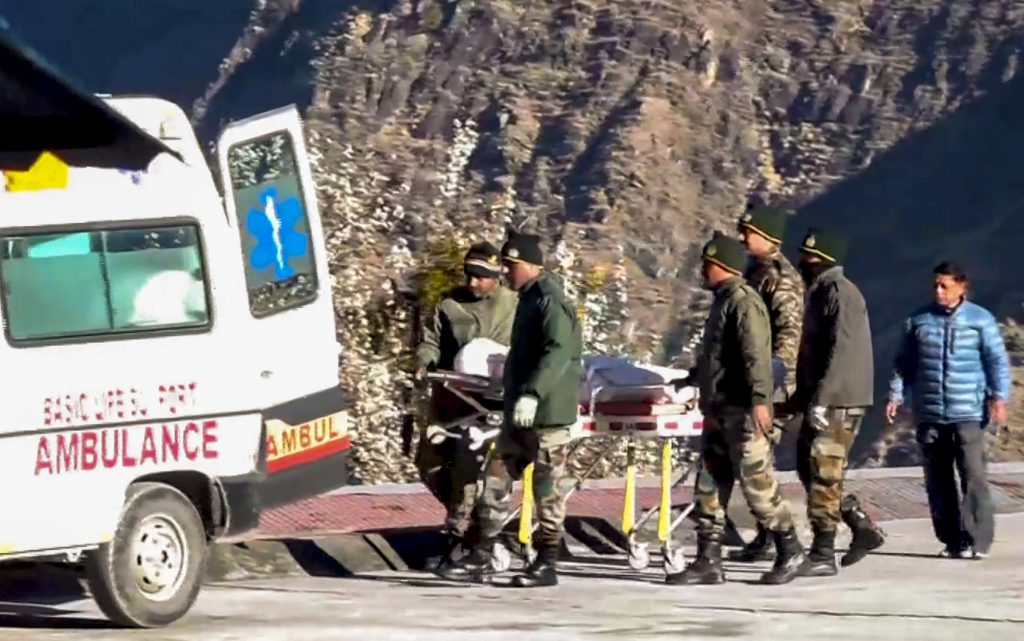
Dehradun (PTI): A missing labourer was found dead on Sunday at the site of the avalanche-hit BRO camp in Mana village of Uttarakhand's Chamoli district as rescuers carried out a search for the three other workers still missing with the help of sniffer dogs, thermal imaging cameras and helicopters.
With the recovery of one more body, the death toll in the disaster has climbed to five, district authorities said.
The avalanche hit the Border Roads Organisation (BRO) camp between Mana and Badrinath on Friday, burying 54 workers inside eight containers and a shed. Earlier, it was believed that the total number of avalanche-hit labourers was 55 but one of them was on unauthorised leave and had reached home safely.
Fifty labourers were pulled out of snow by Friday.
Army doctors said 46 workers have been brought to the military hospital in Jyotirmath while one with spinal chord injury was airlifted to AIIMS, Rishikesh.
Three of them are critical, Lt Col DS Maldhya said.
Chief Minister Pushkar Singh Dhami visited the Uttarakhand State Emergency Operation Centre here to take an update on the rescue operation.
Speaking to reporters, he said, "The ground penetrating radar (GPR) system is being sent to the avalanche site and help of modern tools like thermal imaging camera and victim locating camera are being taken to trace the labourers still missing. The weather may turn bad on Monday again. The effort is to trace the missing on Sunday itself".
In a post on X, Dhami said he has instructed officials to expedite the ongoing operation.
"The Indian Army, ITBP, NDRF, SDRF and other relief and rescue teams are working on a war footing at the site of the incident," he said.
Chamoli District Magistrate Sandeep Tiwari said the search operation is expected to gain pace as the weather is clear and GPR system from Delhi is expected to arrive here any moment to aid the efforts.
An Mi-17 helicopter is waiting in Dehradun to fly the GPR system to the avalanche site, he said.
State Disaster Response Force (SDRF) and National Disaster Response Force (NDRF) teams with a sniffer dogs are at the avalanche site to help in the search and rescue efforts, he said.
Lt Gen Anindya Sengupta, GOC-in C, Central Command, and Lt Gen D G Mishra, GOC, Uttar Bharat, are at the avalanche site to monitor the rescue operations.
Six helicopters -- three of the Indian Army Aviation Corps, two of the Indian Air Force (IAF) and a civil chopper hired by the Army -- have been engaged in the operation.
Located three kilometres from Badrinath, Mana is the last village on the India-Tibet border at a height of 3,200 metres.
Army officials said the rescue operation on Saturday was mostly carried out by the Army and IAF helicopters as the approach road was blocked by snow at several points, making vehicular movement nearly impossible.
The priority is to bring the rescued workers to the Army hospital in Jyotirmath and look for the four missing workers, they said.
If weather permits, specialised RECCO radars, unmanned aerial vehicles (UAVs), quadcopters and avalanche rescue dogs will be pressed into service to trace the missing workers, Lt Gen. Sengupta said.
"Everything depends on the weather," he added.
More than 200 personnel from the disaster management authority, ITBP, BRO, NDRF, SDRF, IAF, district administration, health department and fire brigade are engaged in the rescue operations, he said.
Let the Truth be known. If you read VB and like VB, please be a VB Supporter and Help us deliver the Truth to one and all.
Sujit Nair raises concerns over speculation of DMK-AIADMK understanding to block TVK
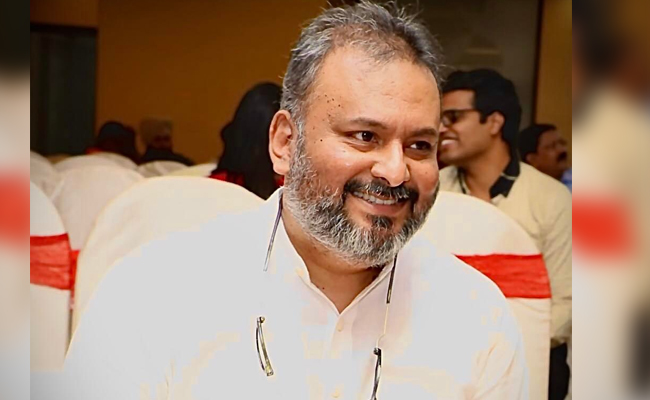
Chennai: Journalist and political commentator Sujit Nair has expressed concern over speculation that the Dravida Munnetra Kazhagam and the All India Anna Dravida Munnetra Kazhagam could explore a post-poll understanding to prevent Vijay-led Tamilaga Vettri Kazhagam from forming the government in Tamil Nadu.
In a social media post, Sujit Nair said the election verdict in Tamil Nadu reflected a clear public demand for political change and argued that the mandate should be respected irrespective of political preferences.
Referring to reports and political discussions surrounding a possible understanding between the DMK and AIADMK, he said he hoped such developments remained only speculative conversations and did not turn into reality.
Nair stated that if such an alliance were to take shape, it would raise serious questions about ideological politics in the country. He said TVK had emerged through a democratic electoral process and that the legitimacy to govern in a parliamentary democracy comes from the people’s verdict.
According to him, attempts to prevent an electoral winner from forming the government through unexpected political arrangements may be constitutionally valid, but many people could view them as politically opportunistic.
He further said that such a move could particularly affect the political image of the DMK, which has historically projected itself around ideology, social justice and opposition politics. Nair said that in ideological terms, the DMK appeared closer to TVK than to the AIADMK, and joining hands with its long-time political rival only to remain in power could weaken its broader political narrative.
He added that the same questions would apply to the AIADMK as well, as the party had spent decades positioning itself against the DMK and such an arrangement could create discomfort among its cadre and supporters.
Drawing a comparison with Maharashtra politics in 2019, Nair said he had expressed similar views when the Shiv Sena formed an alliance with the Indian National Congress and the Nationalist Congress Party after the Assembly elections.
He said post-poll alliances between long-standing political rivals often create a public perception that ideology and electoral mandates become secondary when political power equations come into play.
Nair also said such developments increase public cynicism towards politics and reinforce the belief among voters that ideology is often sidelined after elections.
He maintained that the Tamil Nadu verdict was emphatic and said respecting both the spirit and substance of the mandate was important for the credibility of democratic politics.