Vajpayee will be remembered for first stable non-Congress coalition government: Advani

New Delhi, Aug 16 : BJP veteran L.K. Advani, who had a long association with Atal Bihari Vajpayee and had jointly built the party from scratch, on Thursday expressed grief over his death, observing that the former Prime Minister will be remembered as the pioneer of the first-ever stable non-Congress coalition government at the Centre.
"I am at a loss for words to express my deep grief and sadness today as we all mourn the passing away of one of India's tallest statesmen, Atal Bihari Vajpayee. To me, Atalji was more than a senior colleague. In fact, he was my closest friend for over 65 years," Advani said in a statement.
Vajpayee and Advani, who had been the best of friends, were also political partners and colleagues for more than six decades of the shaping up of India's political landscape.
Remembering his long association with Vajpayee, Advani recalled that right from their days as volunteers of the RSS (Rashtriya Swayamsewak Sangh), to the inception of Bharatiya Jana Sangh, the struggle of the "dark months" during the Emergency that led to the formation of the Janata Party and later the emergence of the BJP in 1980.
"Atalji will be remembered as the pioneer of the first ever stable non-Congress coalition government at the Centre and I had the privilege of working as his deputy for six years," he said.
"As my senior, he always encouraged and guided me in every possible manner," said Advani, who first was the Home Minister and later the Deputy Prime Minister in the cabinet of Vajpayee.
The BJP veteran said Vajpayee had unmatchable leadership qualities, mesmerising oratory, soaring patriotism and above all, his sterling humane qualities like compassion and humility.
"Vajpayee's remarkable ability to win over adversaries despite ideological differences have all had a profound effect on him in all his years in public life.
"I will miss Atalji immensely."
Vajpayee and Advani worked together in the 1980s to build the BJP as a national political force. Due to their devotion and efforts, the BJP bounced back from its 1984 tally of two to achieve an impressive 86 seats in 1989.
Under their leadership, the party position moved up to 121 seats in 1992 and 161 in 1996 making the 1996 elections a watershed in Indian democracy. The Congress was dethroned from power and the BJP became the single largest party in the Lok Sabha.
In 1996, Vajpayee was sworn in as the Prime Minister of the country but only for 13 days. His second term came on March 19, 1998, and lasted 13 months, a period during which India stunned the world by undertaking a series of nuclear tests that invited global reproach and sanctions.
Although his tenure again proved short-lived, his and his government's enhanced stature following the world-defying blasts enabled him to return as Prime Minister for the third time on October 13, 1999, a tenure that lasted a full five-year term.
Later under the leadership of Prime Minister Narendra Modi, the BJP emerged victorious in 2014, getting majority of its own.
Let the Truth be known. If you read VB and like VB, please be a VB Supporter and Help us deliver the Truth to one and all.
Congress’ Umesh Meti wins Bagalkot bypoll
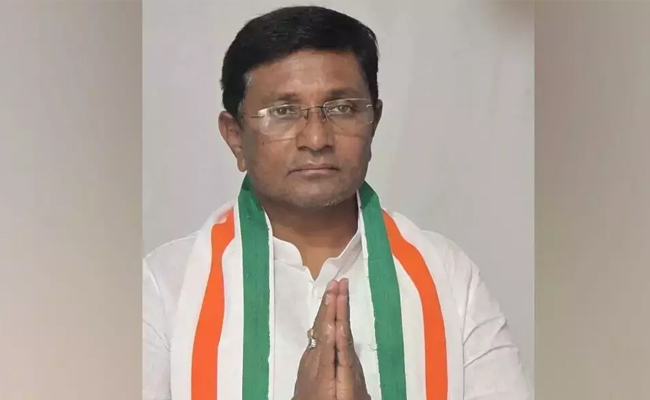
Bagalkot: The Congress has secured a victory in the Bagalkot Assembly by-election, with its candidate Umesh Meti winning the seat after maintaining a lead from the first round of counting till the end.
The seat had fallen vacant following the death of sitting MLA H Y Meti. Umesh Meti, his son, has now been elected to the Assembly.
Party leaders attributed the victory to a combination of factors, including sympathy votes, the state government’s schemes, and campaign strategies led by Chief Minister Siddaramaiah and senior leader Satish Jarkiholi.
The Congress maintained a consistent lead throughout the counting process, eventually securing a decisive win in the constituency.