Vajpayee's death not end, but continuation of his era: Jaitley
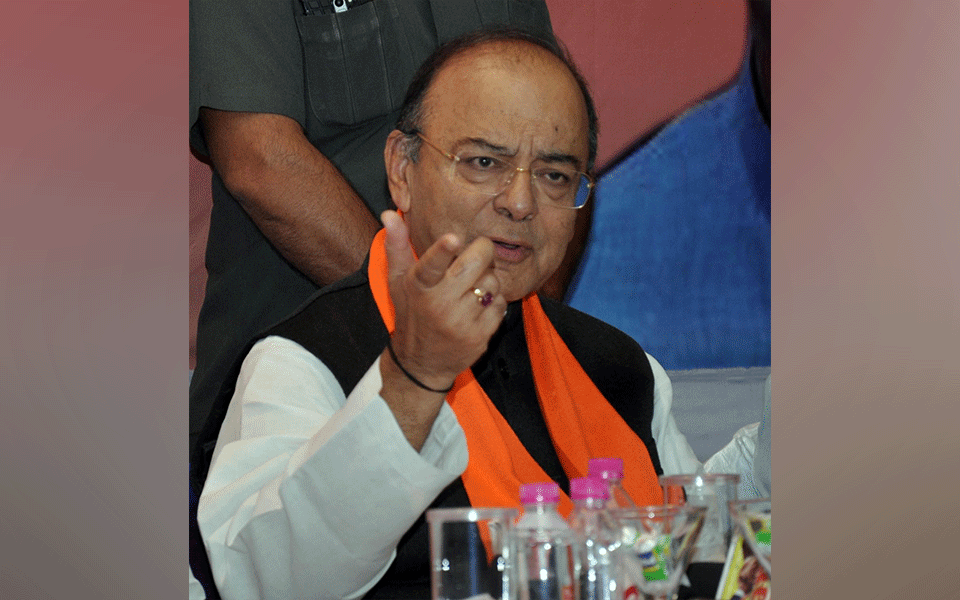
New Delhi, Aug 17 : BJP leader Arun Jaitley on Friday in his blog eulogised the late Prime Minister Atal Bihari Vajpayee and, disagreeing with many who termed his death "end of an era", emphasised that it would instead be "a continuation of the era" forged by the late leader.
"Atalji's demise is referred to by many as end of an era. I, however, consider it as a continuation of the era of which he was one who laid the foundation," Jaitley wrote.
He recounted Vajpayee's journey from a firebrand youth who cut his teeth with issues like "Kashmir Satyagraha" with Jan Sangh founder Syama Prasad Mookerjee, through the period when he strove to shape the Baharatiya Janata Party (BJP) as an alternative to the Congress, bit by bit.
"The essential aspect of his political journey, true to his name ‘Atal' was determination. In the world's largest democracy only the Congress party dominated in the first few decades. Atalji created an alternative, which in the last two decades became larger and bigger than the Congress," he wrote.
Jaitley, the former Defence Minister and now a Minister-without-a-Portfolio, lauded the wit, oratory, poetry and the famous conviviality of the leader with which he was able to make friends across all political parties.
"He had no personal enemies since he spoke mostly on issues rather than individuals. He was a wordsmith. He could use the facility of language to get out of any challenging situation. What he will be remembered for most will be is oration both in Parliament and outside," he said.
He termed Vajpayee, the Prime Minister, a "liberaliser", and as someone who always nodded in favour of the "liberal economic view" and "corrected the foreign policy imbalance".
On a more personal level, he reminisced about Vajpayee's love for food and politeness with which he handled bureaucrats or his ministers.
He called him a "patient runner" and an "iconic communicator" who was able to create an ideological alternative to the Congress in an era of "Nehruvian Congress".
"He was a patient runner. But for him, (Lal Krishna) Advaniji and their other colleagues, Indian democracy would have looked different -- dominated by one party, one family with a lot of scattered smaller parties. That did not happen.
"Atalji and his colleagues made the difference. Atalji has left the world. But the era of which he laid the foundation will prosper even more. That is the Vajpayee legacy," he summed up.
Let the Truth be known. If you read VB and like VB, please be a VB Supporter and Help us deliver the Truth to one and all.
Congress using hijab issue to pacify minority anger, alleges Karnataka LoP R Ashoka
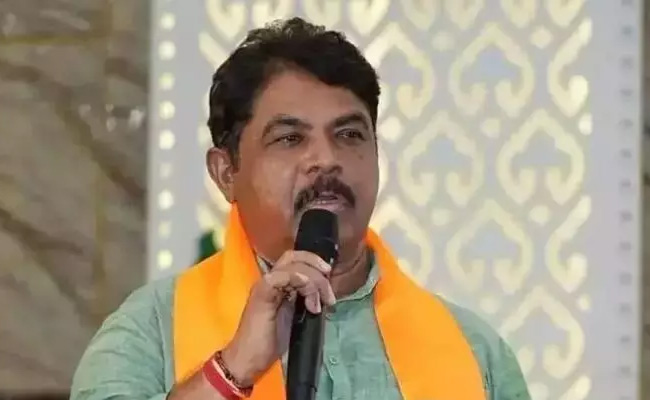
Bengaluru: Leader of Opposition in the Assembly R. Ashoka has accused the Congress government of using the hijab issue to placate what he described as discontent among minority voters after the Davanagere by-election.
In a post on X on Wednesday, Ashoka alleged that the state government, instead of addressing issues such as price rise, corruption, farmers’ distress and law and order, was attempting to retain its minority vote base by reviving the hijab issue.
Referring to the 2022 dress code introduced by the BJP government, which prohibited hijab in schools and colleges, Ashoka said the Karnataka High Court had upheld the policy and emphasised the importance of discipline in educational institutions.
He questioned the Congress government’s move to revisit the issue and asked whether setting aside the court-backed policy to benefit one community could be described as secularism.
Ashoka further alleged that while the government was willing to permit hijab, it continued to prohibit saffron shawls.
He accused the government of dividing students on religious lines rather than treating schools and colleges as spaces of equality.
Drawing a comparison with Mamata Banerjee’s government in West Bengal, Ashoka claimed that excessive appeasement politics had harmed the state and warned that the Congress in Karnataka could face a similar political response.
He said voters in Karnataka would teach the Congress a lesson for what he termed “vote-bank politics” and for compromising constitutional and judicial principles.