Varanasi Court to hear plea for ASI survey of unreached cellars in Gyanvapi Mosque on Feb 15
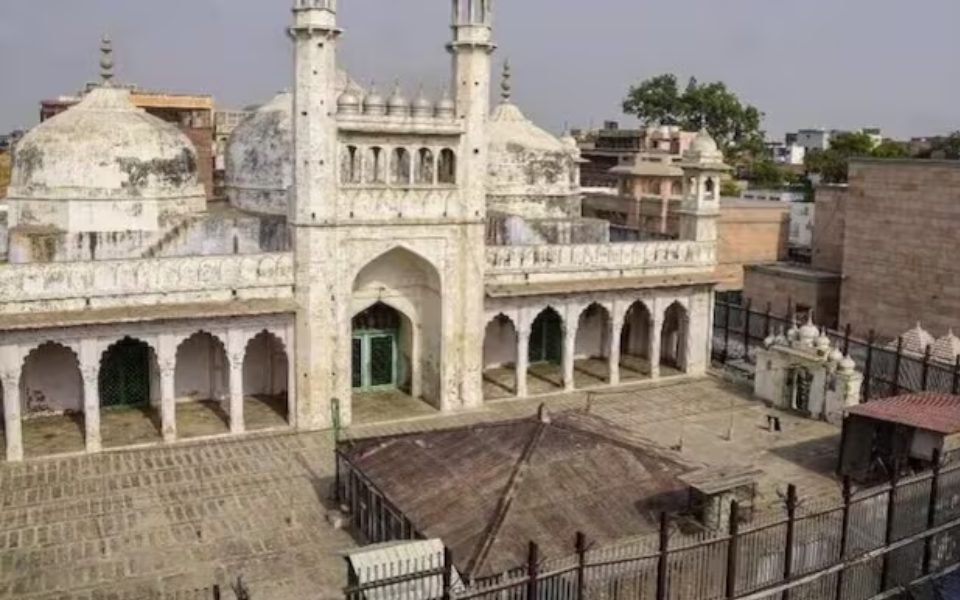
Varanasi: The Varanasi District Court is set to hear a plea on February 15, demanding a direction to the Archaeological Survey of India (ASI) to conduct a comprehensive survey of inaccessible cellars within the Gyanvapi Mosque premises. The application calls for the removal of blocked entrances and debris hindering access to areas not covered in ASI's recent survey.
Filed under Section 75 (e) and Order 26 Rule 10A r/w Section 151 of CPC, the plea was submitted by Rakhi Singh, plaintiff no. 1 in the Shringar Gauri Worshipping suit 2022 (pending before the Varanasi Court), through Advocate Saurabh Tiwary.
Singh argues that surveying the remaining cellars is crucial to determine the religious character of the Gyanvapi premises. The application highlights the existence of cellars N1 to N5 (in the north) and S1 to S3 (in the south) within the Gyanvapi premises. Notably, cellars N1 and S1 are entirely inaccessible due to blocked entrances.
Referring to ASI's recent report on the scientific survey of the Gyanvapi Mosque, Singh notes that the entrances to N1 are blocked, hindering knowledge of its dimensions and inner arrangement. The plea emphasizes that certain cellars inside the mosque premises remain unsurveyed due to blocked entrances, urging the ASI to conduct surveys without causing damage to the structure.
In a related development, the Varanasi District Judge recently permitted the regular worship of Hindu deities in the southern cellar of Varanasi's Gyanvapi Masjid by a family of priests who performed rituals there before 1993. Following this order, District Magistrate MS Rajalingam, along with government officials, entered the mosque complex and spent approximately two hours inside. Subsequently, the basement (tehkhana) was unlocked, and regular worship commenced, leading to devotees congregating outside 'Vyas Ji ka Tahkhana.'
The Anjuman Intezamia Masajid Committee, which manages the Gyanvapi mosque, has challenged the Varanasi District Court's order in the Allahabad High Court.
Let the Truth be known. If you read VB and like VB, please be a VB Supporter and Help us deliver the Truth to one and all.
Iran foreign minister Araghchi meets Pakistan Army chief Munir
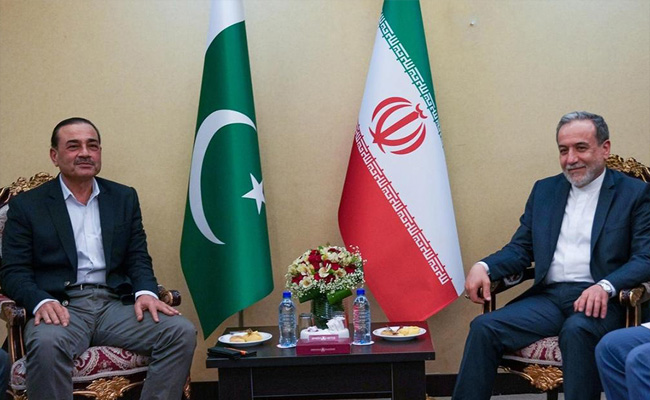
Islamabad (PTI): Iranian Foreign Minister Abbas Araghchi on Saturday met Pakistan Army chief Field Marshal Asim Munir here, as Islamabad continued its efforts to facilitate engagement between the US and Iran.
The meeting, according to a short video posted by the Iranian embassy on social media, was also attended by Iranian foreign ministry spokesperson Esmaeil Baghaei, and Iran's ambassador Reza Amiri Moghadam.
Araghchi calls on Munir, the embassy said in the video caption.
It did not provide further details about the discussions.
Araghchi arrived here late Friday for engagements with the Pakistani leadership. He was received by senior officials, including Munir, foreign minister Ishaq Dar and interior minister Mohsin Naqvi.
ALSO READ: Fire engulfs over 100 jhuggies in Delhi's Shakur Basti; no casualties
However, there is no clarity on whether direct talks between Washington and Tehran will take place during the visit.
"No meeting is planned to take place between Iran and the US. Iran's observations would be conveyed to Pakistan," Baqaei said in a social media post on Saturday.
Araghchi, before leaving for Islamabad, said that he was embarking on a timely tour of Islamabad, Muscat, and Moscow, and the purpose of his visits is to "closely coordinate with our partners on bilateral matters and consult on regional developments".
"Our neighbours are our priority," he said.
As the Iranian team landed in Islamabad, White House Press Secretary Karoline Leavitt said that US Special Envoy on the Middle East Steve Witkoff and President Donald Trump's adviser Jared Kushner would be leaving for Pakistan on Saturday "to engage in direct talks" with representatives of the Iranian delegation.
However, the US team has not yet arrived.
Meanwhile, Pakistan's Deputy Prime Minister and Foreign Minister Dar, in a social media post, expressed hope for "meaningful engagements" between the two warring parties to promote regional peace and stability.
The first round of US-Iran talks held on April 11 and 12 failed to produce a breakthrough, prompting a flurry of diplomatic efforts by host Pakistan to cool tensions and revive hopes for another round of dialogue.
On Tuesday, Trump extended the two-week ceasefire with Iran indefinitely to give Tehran more time to prepare a unified proposal to end the war, just hours before the truce was set to expire.
The Iran war began on February 28 with US-Israeli strikes.
_vb_19.jpeg)